Trump's Luxury Resorts Transform into Political Arenas, Generating Millions in Revenue
Since Donald Trump's inauguration, his luxury properties have evolved into unconventional political hubs, where access and influence are often exchanged for substantial financial gains. According to a recent analysis by Citizens for Responsibility and Ethics in Washington (Crew), elected leaders from around the globe, including Israel and Iowa, have made 145 visits to Trump's resorts. This trend underscores how these venues have become proxies for power, blending business with politics in unprecedented ways.
Political Spending at Trump Properties Exceeds $1.3 Million
Campaign finance records examined by the Guardian show that U.S. political campaigns and committees have disbursed at least $1.3 million at Trump properties since January 2025. However, this figure likely represents only a fraction of the total proceeds, as foreign governments and private corporations are not mandated to disclose their expenditures. The Republican National Committee and Maga Inc alone accounted for $985,449 across 39 occasions, though experts caution this is an undercount due to reporting gaps.
Rebecca Jacobs, a research manager at Crew, emphasized the implications: "President Trump has turned his properties into a hub for his allies and his own political committees to raise money, line his pockets, and curry favor." She noted that while buying presidential access is not new, the direct flow of funds into Trump's private businesses marks a significant shift.

Mar-a-Lago Emerges as Premier Venue for Fundraisers and Meetings
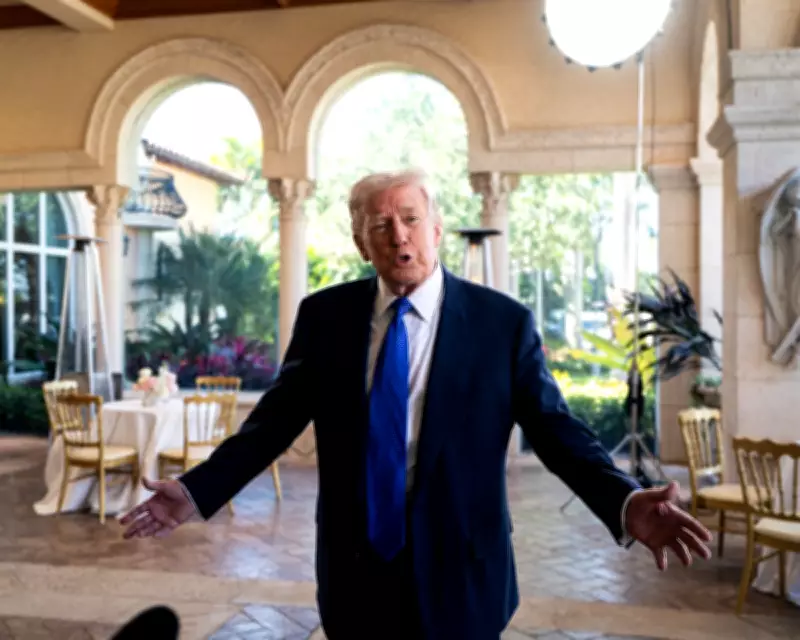
Following the closure of the Trump Hotel in Washington in 2022, business has shifted south to Mar-a-Lago in Palm Beach, Florida. Membership fees at this exclusive club have skyrocketed from $100,000 in 2016 to $1 million in 2024, attracting a wealthy clientele eager for proximity to the president. Florida congresswoman Kat Cammack, for instance, hosted a record-breaking fundraiser at Mar-a-Lago, citing its scenic appeal and Trump's influence within the Republican Party.
Andrew Espitallier, Cammack's communications director, remarked, "It's warm, it's beautiful, people love it," adding that Trump's sway in the GOP made the venue an attractive choice. This sentiment is echoed by many in Trump's circle, who view these properties as extensions of his administration.
Foreign Governments and Special Interests Flock to Trump Venues
Crew's analysis reveals that over 50 special interest groups have rented or catered events at Trump properties since January 2025, with much of the corporate spending centered around golf tournaments. Examples include Lockheed Martin's "Freedom Invitational" at Trump National Golf Club in Potomac and LIV Golf's Saudi-backed event at Bedminster. Additionally, foreign officials, such as those from Israel and Argentina, have frequented these resorts for high-level meetings.
Walker Davis, research director at Crew, explained, "Trump has established these places as an extension of his administration. By visiting and promoting his properties, he signals to foreign governments and special interests that patronizing his businesses is a priority."
Ethical Concerns and Legal Challenges Surround Presidential Profiteering
Traditionally, presidents like Jimmy Carter have divested from business interests to avoid conflicts of interest, but Trump has embraced his resorts as executive assets. His assets are held in a trust managed by his children, not a blind trust, raising ethical questions. A White House spokesperson defended this arrangement, stating there are no conflicts and that Trump acts in the public's best interest.
Jon Golinger, an attorney with Public Citizen, highlighted the lack of precedent for such self-dealing in modern history: "There are laws that effectively say if you want to be president, you shouldn't own properties where anyone can give you money, because it looks like you're enriching yourself." Efforts to investigate potential emoluments clause violations have been hampered by presidential immunity, though other individuals in Trump's orbit could face legal scrutiny.

Case Study: Seasonal Employment Alliance's Fundraiser and Policy Outcomes
The Seasonal Employer Pac's event at Mar-a-Lago illustrates how access can translate into policy benefits. The group, which lobbies for seasonal foreign workers, hosted a fundraiser offering special rates and emphasized Trump's frequent presence. Two weeks later, the Trump administration announced new slots for H2-B visas, a move aligned with the group's interests. The organization later appointed Trump's personal visa filing agent, Peter Petrina, as board chair, further cementing ties.
Gray Delaney, managing director of the Seasonal Employment Alliance, expressed honor in hosting at Mar-a-Lago, though the group did not disclose spending details. This case underscores the opaque nature of financial transactions at Trump properties, where transparency is limited.
Ongoing Scrutiny and Future Implications
Michael Beckel of IssueOne warned, "We might never get a full accounting of all the money that Trump's family and his companies have made from his time in the White House, and that's deeply troubling." Despite some investigative efforts, enforcement remains lax, with critics accusing authorities of being "asleep at the wheel."
As Trump continues to host events, such as upcoming World Cup and UFC gatherings, the blending of business and politics shows no signs of abating. His remark, "I'm sort of happy the way things worked out. It's turned out to be as good as it could be," reflects a contentment with this arrangement, even as ethical debates persist.