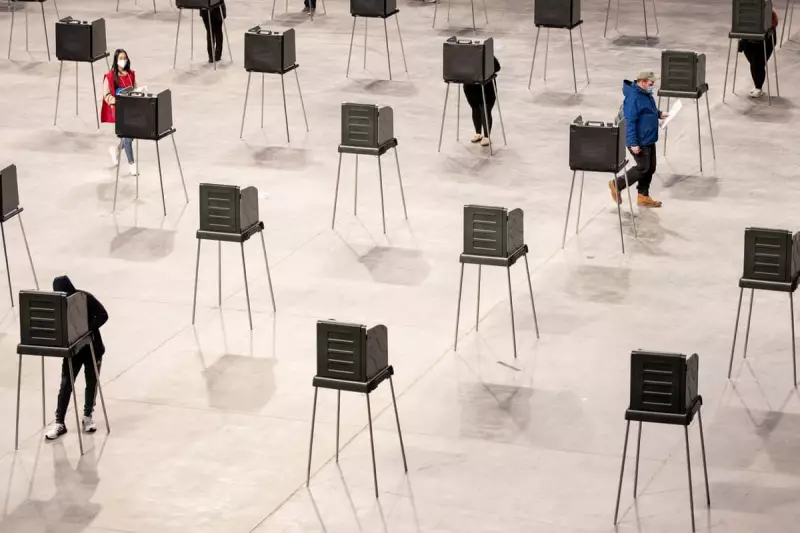
Former US President Donald Trump has expressed regret for not deploying the National Guard to seize voting machines following his defeat in the 2020 presidential election, a claim he continues to falsely assert was rigged.
Oval Office Discussions on Military Intervention
In a revealing interview with the New York Times published on Sunday, Trump revisited a controversial plan reportedly floated in the aftermath of his loss to Joe Biden. The idea involved using military or federal authority to impound Dominion voting machines in key swing states.
The proposal was allegedly discussed during a December 2020 meeting in the Oval Office. Advisers including lawyer Sidney Powell and former national security adviser Michael Flynn urged the then-president to take the drastic step. They aimed to conduct a recount in states where Trump had baselessly claimed voter fraud occurred.

According to 2022 reports, advisers even presented Trump with draft executive orders outlining the seizure process. One draft, reported by Politico, referenced conspiracy theories about Georgia and Michigan and would have directed the defence secretary to seize and analyse all election machines and records.
Internal Resistance and Ultimate Inaction
The radical proposal faced immediate and firm opposition from within Trump's own administration. Then Attorney General William Barr reportedly "immediately shot down" the suggestion. Faced with this internal resistance, Trump ultimately did not move forward with the plan to commandeer the voting equipment.
When questioned by the Times reporter about the unacted-upon threat, Trump replied, "Well, I should have." However, he then cast doubt on the capability of the National Guard for such a task, stating, "I don’t know that they are sophisticated enough. You know, they’re good warriors. I’m not sure that they’re sophisticated enough in the ways of crooked Democrats and the way they cheat, to figure that out."
Persistent False Claims and Legal Reality
During the same interview, Trump persistently repeated the unfounded claim that he won the 2020 election, boasting, "I won three times." While he has not questioned the integrity of the 2024 election, which he won against Vice-President Kamala Harris, he maintains the false narrative that the 2020 contest was stolen.
This stance directly contradicts the consensus of election integrity experts, who declared the 2020 presidential race the most secure in American history. Furthermore, dozens of legal challenges launched by Trump's campaign and allies failed to produce any evidence of widespread fraud that could have altered the election's outcome.
The revelation of Trump's regret highlights the extraordinary measures considered to overturn the 2020 result and underscores the enduring falsehoods about its legitimacy.