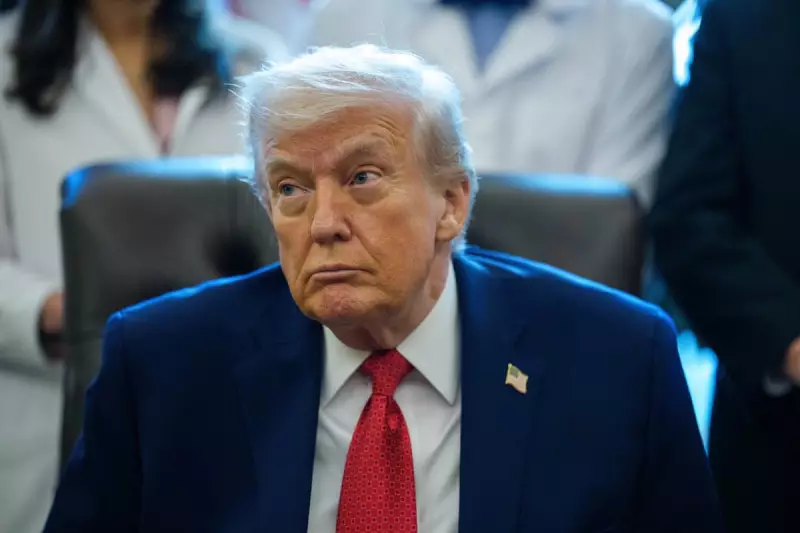
Former US President Donald Trump has issued a direct appeal to Republican senators to abolish the longstanding legislative filibuster, framing the move as a crucial step to avoid future government shutdowns and accelerate his party's political goals.
The Core Argument Against the Filibuster
In a recent interview with Politico, Trump labelled the procedural tool a hindrance to effective governance. The filibuster allows a minority of senators to block legislation, and Trump insisted its removal would empower the Republican majority. "The filibuster is hurting the Republican Party," he stated, urging lawmakers to eliminate it "without question."
He directly linked the rule to legislative gridlock, particularly regarding funding the federal government. "If you get rid of the filibuster, you're not going to have a shutdown," Trump asserted. "You can do everything. You can do great health care if you get rid of the filibuster. We can do everything we want."

Republican Reluctance and Political Calculus
Despite holding 53 seats in the 100-seat Senate against the Democrats' 47, the Republican party has shown little appetite for such a radical change. Historically, the party in the minority values the filibuster as a defensive tool, and senators are often wary of scrapping it, knowing the balance of power could shift and leave them vulnerable to a simple majority rule in the future.
This reluctance was evident last October when Trump previously called for ending the filibuster to reopen the government without Democratic backing. Republicans declined, resulting in a 43-day standoff and shutdown centred on healthcare costs. However, with the midterm elections looming in ten months, pressure to advance key Republican priorities—such as voter ID laws—could alter the political calculation.
Broader Political Context and Economic Messaging
Elsewhere in the Politico discussion, Trump shifted focus to the upcoming electoral battle, suggesting it would revolve around "pricing" rather than the Democratic focus on "affordability," which he dismissed as a "hoax." He expressed confidence that voters would respond to his narrative of rectifying an economic situation he attributes to President Joe Biden.
"I think it's going to be about the success of our country. It'll be about pricing," Trump said. "Because, you know, they gave us high pricing, and we're bringing it down." This commentary follows recent economic data indicating cooling inflation, yet polls consistently show American consumers remain economically anxious.
The debate over the filibuster underscores a deeper tension between short-term political advantage and long-term institutional stability, a dilemma that continues to define the modern US Senate.