Trump Asserts Iranians Support U.S. Strikes as Middle East Tensions Escalate
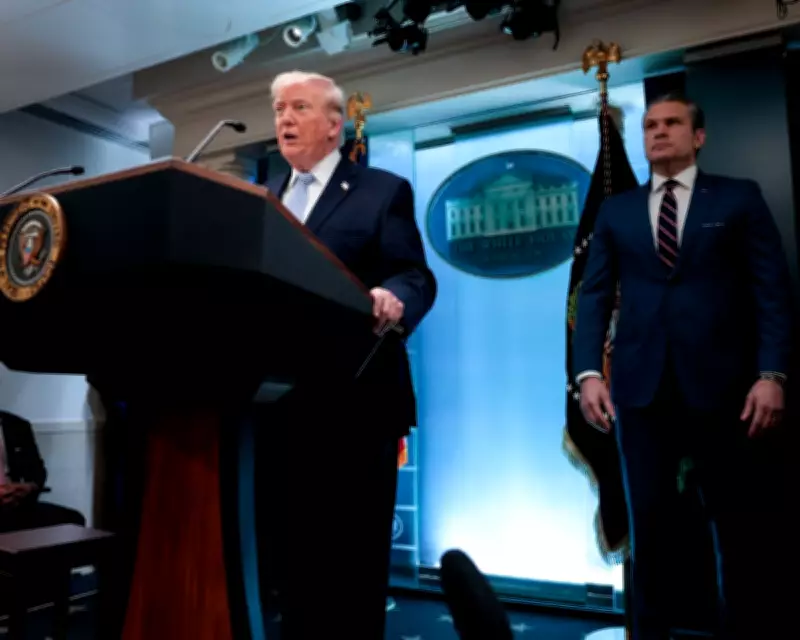
At a press conference on Monday, former U.S. President Donald Trump, accompanied by Pentagon Secretary Pete Hegseth and General Daniel Caine, claimed that Iranian civilians are "willing to suffer" the loss of power and basic services to achieve freedom from the Islamic Republic. This statement came without providing any concrete evidence to support the assertion, highlighting the ongoing volatility in U.S.-Iran relations.
Deadline for Iran and Threats Against Civilian Targets
Trump reiterated a strict deadline of 8 p.m. ET on Tuesday for Iran to reopen the Strait of Hormuz, warning of a barrage of strikes on energy facilities and bridges if the regime fails to comply. He ominously suggested that Iran could be "taken out in one night, and that might be tomorrow night," underscoring the precarious state of diplomatic negotiations aimed at halting the conflict in the Middle East.
When questioned about whether the war on Iran was winding down or ramping up, Trump responded ambiguously, stating, "I can’t tell you." This uncertainty reflects the broader instability in the region, as efforts to de-escalate tensions appear to be faltering.

Pentagon Announces Escalation of Strikes
Pete Hegseth, flanking Trump at the press conference, announced that under the president's direction, "today will be the largest volume of strikes since day one of this operation." He added, "Tomorrow, even more than today," signaling a significant escalation in military actions against Iran. This move raises concerns about the potential impact on civilian infrastructure and the humanitarian crisis in the region.
Lower Court Judges Challenge Trump's Policies
In a parallel development, U.S. lower court judges are increasingly issuing strong rulings that challenge the legality of many of Trump's policies and power grabs. Experts describe this as a "war on the rule of law," with judges blocking key policies at least temporarily and sparking angry responses from the president. Former judges and prosecutors note that this judicial pushback highlights growing tensions within the U.S. justice system under Trump's administration.
Additional Controversies and Political Moves
Trump threatened to jail journalists to identify the source of a report about a second missing U.S. airman shot down by Iran, adding to concerns about press freedom. He also endorsed Steve Hilton, a former Fox News host, in the California governor's race, potentially disrupting Republican strategies. Meanwhile, Jamie Dimon, head of the U.S.'s largest bank, urged the White House to strengthen allies economically in veiled criticism of Trump's policies.
In international relations, Trump compared UK Prime Minister Keir Starmer to Neville Chamberlain over Starmer's refusal to back U.S.-Israel attacks on Iran, further straining transatlantic ties. Other notable events included Artemis II astronauts breaking Apollo 13's distance record, Republican politicians being hoaxed by a fake image, and calls to end the "cruel collective punishment" of Cuba amid a U.S. energy blockade.
Public Health and Immigration Issues
As public health becomes increasingly politicized, some candidates are making it a central part of their campaigns, with grassroots organizations like Defend Public Health offering strategies. In immigration news, ICE agents reportedly detained the wife of a U.S. army staff sergeant at a military base in Louisiana, adding to the controversies surrounding Trump's administration.
These developments underscore the complex and often contentious landscape of U.S. politics under Trump, with implications for global diplomacy, justice, and humanitarian concerns.