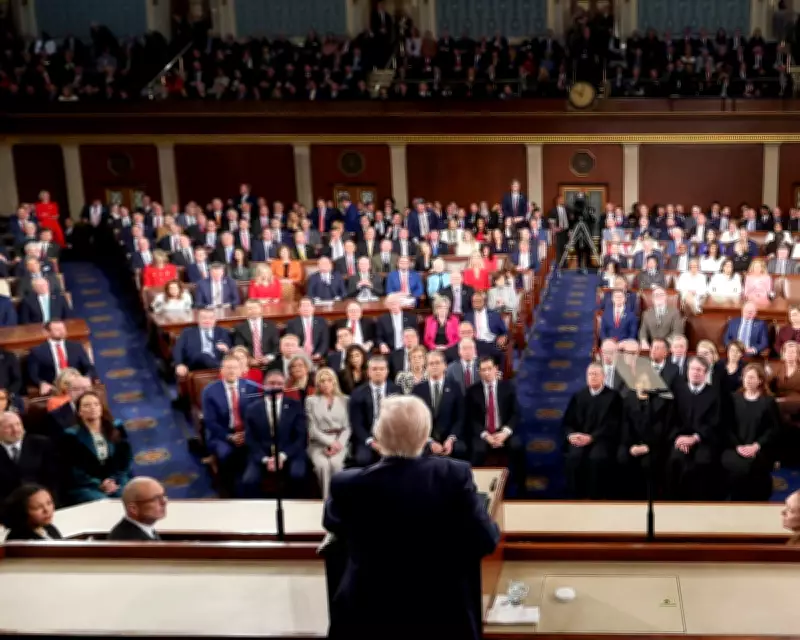
President Donald Trump's State of the Union address on Wednesday sparked a fierce political firestorm, with senior Democrats launching scathing attacks on his leadership and policies. The fallout from the nearly two-hour speech dominated headlines, highlighting the deep partisan divide in Washington.
Democrats Accuse Trump of Failing to Protect Americans
Senate Majority Leader Chuck Schumer led the Democratic charge, criticizing Trump's call for audience members to stand if they believed in protecting U.S. citizens over undocumented immigrants. Schumer asserted that Democrats were justified in remaining seated, stating bluntly to CNN: "Bottom line is very simple, we agree we need to protect Americans. He's not."
Congressional Protests and Republican Pushback
The address saw visible protests from Democratic representatives Ilhan Omar and Rashida Tlaib, who verbally challenged the president during his speech. Omar delivered particularly harsh criticism, declaring: "Donald Trump killed two of my constituents. He is a liar and should be ashamed of himself."

Republicans quickly seized on the Democratic refusal to stand as political ammunition. Senator JD Vance characterized the incident as a "shame" and a "sad commentary" on the Democratic party, framing it as evidence of partisan obstructionism.
Trump's Vitriolic Response on Social Media
The president escalated tensions with a provocative post on Truth Social, targeting Congresswomen Omar and Tlaib with inflammatory language. Trump described the lawmakers as "low IQ" and threatened to "send them back from where they came from – as fast as possible," despite both women being naturalized U.S. citizens.
Policy Announcements and Legal Challenges
Beyond the political theater, Trump's address covered substantial policy ground, including tariffs, border security, military recruitment, and energy production. The president painted an optimistic picture of the economy, claiming inflation was under control and a "golden age" was imminent – assertions that Democrats immediately challenged.
The administration faced significant legal setbacks on Wednesday, with a federal judge ruling that Trump's policy of deporting immigrants to "third countries" without established ties was unlawful. Judge Brian E. Murphy in Massachusetts ordered the policy set aside, though he granted a 15-day stay to allow for government appeals.
Additional Controversies and Investigations
Several other developments added to the day's political drama:
- Medicaid funding for Minnesota was temporarily halted as part of what Vance described as Trump's "war on fraud," affecting over a quarter-billion dollars in reimbursements.
- Casey Means, Trump's nominee for surgeon general, faced Senate questioning while sidestepping vaccine-related inquiries during her confirmation hearing.
- Whistleblower allegations emerged suggesting FBI investigations were being hindered by Director Kash Patel's personal travel and decision-making.
- Multiple states, including California, filed lawsuits against the Trump administration over rollbacks of childhood vaccine recommendations.
Arrest During the Address
Adding to the day's tensions, Capitol police arrested Aliya Rahman, a guest of Congresswoman Ilhan Omar, during the State of the Union. Rahman, a Minneapolis resident and U.S. citizen, had previously been subjected to aggressive immigration enforcement actions in January as part of the administration's intensified deportation efforts.
The political landscape remains deeply fractured following the address, with both parties offering starkly different interpretations of the president's performance and the nation's direction. As Democrats labeled Trump's claims "fiction" and Republicans praised his vision, the fundamental disagreements that have characterized this presidency showed no signs of abating.