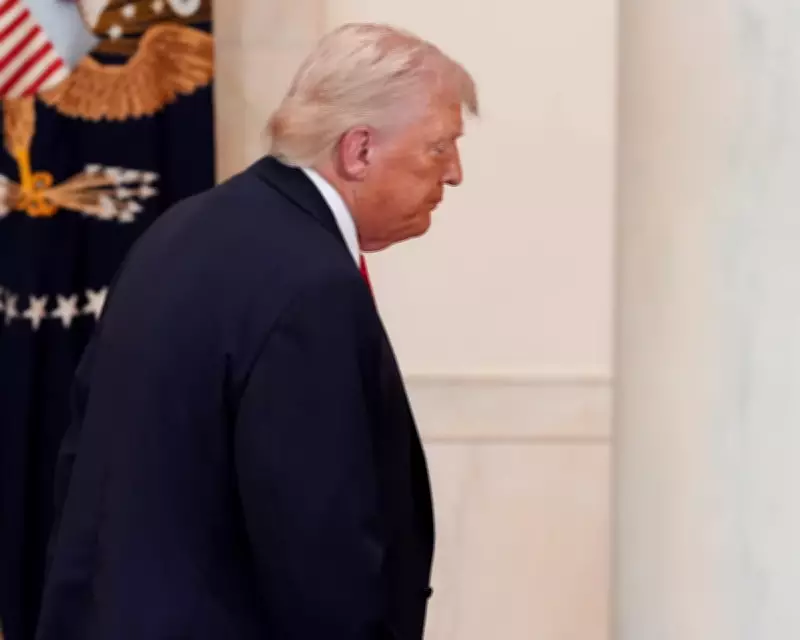
In a recent televised address on April 1, President Donald Trump was pictured discussing progress in the war on Iran, an image that has sparked renewed debate about his age and leadership. This visual moment underscores a broader crisis in American politics, where geriatric figures are increasingly recycled as symbols of stability, masking deeper systemic failures.
The Ageing Patriarch of a Decaying Order
Dr. Georgios Samaras of King's College London argues that Donald Trump represents not an anomaly but the culmination of a long-standing pattern in US politics. For decades, the system has promoted elderly men like Ronald Reagan and Joe Biden, presenting them as vessels of reassurance and national strength, even as concerns about their decline and judgment simmer beneath the surface. Trump, with his rambling performances, repetition, and shamelessness, embodies the ugliest version of this trend, where absurdity becomes part of the appeal in a culture that prioritizes identification over substantive governance.
A Screen for Political Fantasies
The presidency has evolved into a screen onto which a failing political order projects fantasies of rescue. This dynamic allows figures like Trump to thrive, as the system not only elevates them but also wraps them in myths of authority. The deeper issue is that American politics has spent years mistaking decline for wisdom, creating an environment where visibly unstable strongmen can rise to power. Asking whether the system can restrain such individuals is necessary, but it fails to address the root cause: a political culture that repeatedly rewards these patterns.

The Replacement Dilemma
Jim Hatley from Brighton, East Sussex, raises a critical point: while removing Donald Trump from the White House might make the world less dangerous, the question of who could replace him and whether they would be any better remains unanswered. Trump has followed the golden rule of bad management by appointing individuals who are often worse at their jobs than he is, complicating any potential transition. This highlights the systemic decay that extends beyond any single figure, suggesting that the problem is not just Trump but the entire political order that produces and sustains such leaders.
Broader Implications for US Governance
The debate over Trump's age and judgment is belated, reflecting a broader failure to confront the realities of a political system in decline. As the ageing patriarch of a decaying order, Trump holds all the cards, determined to impose his legacy on the future. This situation calls for a reevaluation of how American politics selects and supports its leaders, moving beyond superficial concerns to address the structural issues that enable such figures to dominate. The letters from Dr. Samaras and Jim Hatley underscore the urgency of this conversation, as the US grapples with the consequences of a system that has long prioritized myth over substance.