Trump Allies Defend US-Israel Strikes on Iran as Democrats Decry 'War of Choice'
Allies of former President Donald Trump reinforced the administration's messaging on the recent US-Israel strikes on Iran, while prominent Democrats condemned the action as a "war of choice" that necessitated congressional approval. The political divide sharpened as key senators took to Sunday talk shows to articulate starkly opposing views on the military intervention.
Democratic Concerns Over Justification and Consequences
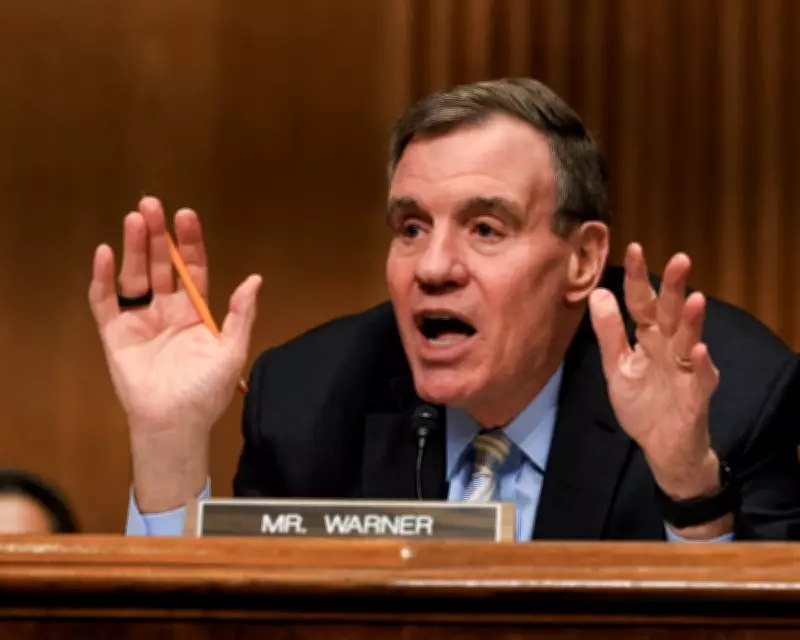
Senator Mark Warner, a Democrat from Virginia and vice-chairman of the Senate Intelligence Committee, expressed skepticism about the timing and rationale behind the strikes. "I'm not going to shed any tears over the death of the Iranian leadership," Warner stated on CNN's State of the Union. "The question is why now? Why not make the case to the American public?" He emphasized that Trump had initiated "a war of choice" without an imminent threat to the United States, urging the president to present a clear justification to Congress and the public.
Warner warned that the strikes risked dragging the US into another protracted conflict in the Middle East. He highlighted concerns about the lack of US intelligence regarding potential successors to Supreme Leader Ayatollah Ali Khamenei, fearing that a replacement could be even more hardline and accelerate Iran's nuclear program. "We have very little visibility into what happens next," Warner admitted, predicting that the entrenched Iranian leadership would fiercely resist any loss of power.

Republican Defense of Strategic Necessity
In contrast, Republican senators Tom Cotton of Arkansas and Lindsey Graham of South Carolina vigorously defended the strikes. Cotton, a member of the Armed Services Committee, argued on CNN that Iran's longstanding campaign of terror and revolutionary violence necessitated decisive action. "That's why it was so vitally necessary to put an end to Iran's 47-year campaign of terror and revolutionary violence once and for all," he asserted, referencing events since the 1979 hostage crisis.
Cotton framed the operation as a strategic move to neutralize Iran's military capabilities, particularly its missile arsenal. "It's much easier to kill the archer on the ground than it is to shoot his arrow out of the sky," he explained, indicating that future efforts would focus systematically on Iran's missile infrastructure. He also downplayed the prospect of large-scale US ground troops in Iran, stating that any deployment would likely be limited to search-and-rescue missions.
Graham, speaking on NBC's Meet the Press, challenged the characterization of the strikes as a war. "I don't know if this is technically a war," he said. "The leader of the largest state sponsor of terrorism and his inner team are dead. The mother ship that fuels the proxies is in sinking mode." He clarified that the goal was to alter the threat posed by Iran, not necessarily to achieve regime change, and rebuked criticism from figures like former Congresswoman Marjorie Taylor Greene, who accused Republicans of abandoning promises against foreign wars.
Broader Political Reactions and Implications
The debate extended beyond the Senate, with California Congressman Ro Khanna criticizing Graham's stance on NBC's Meet the Press. "He's been consistent, but he's been consistently wrong," Khanna remarked, referencing Graham's support for past interventions in Iraq and Libya. Khanna questioned whether the strikes truly enhanced American safety, raising concerns about potential civil war in Iran, financial costs, and risks to US troops.
As Democrats consider invoking the War Powers Act to force a congressional vote on the strikes, Cotton predicted "overwhelming Republican support" for the administration's decision. He called on Democrats to join colleagues like Senators John Fetterman, Josh Gottheimer, and Greg Landsman in backing the military action. The escalating discourse underscores deep partisan divisions over foreign policy and the use of military force, setting the stage for further political confrontation as details of the operation and its aftermath unfold.