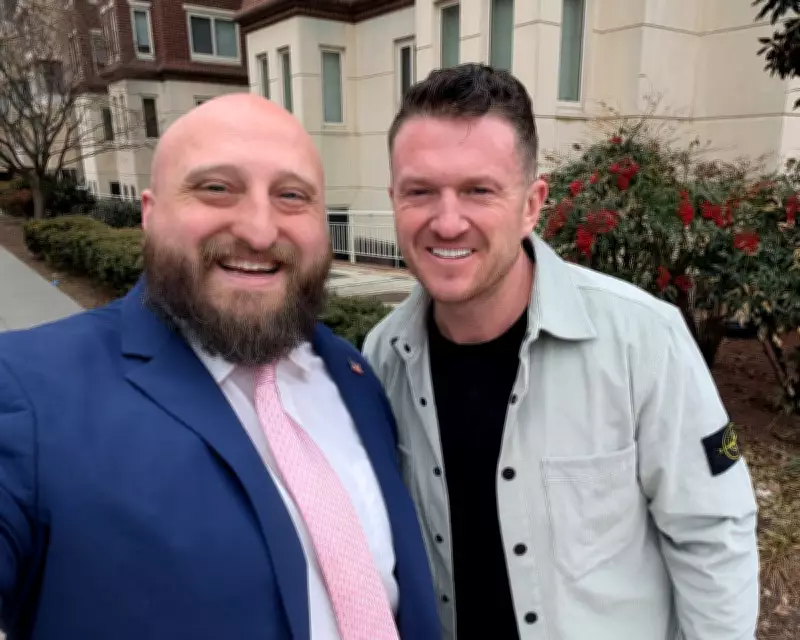
The Trump administration has hosted Tommy Robinson, a prominent UK far-right activist, for a meeting at the State Department in Washington, drawing sharp criticism from political figures who condemn the move as legitimizing extremism. Robinson, whose real name is Stephen Yaxley-Lennon, was invited by Joe Rittenhouse, a senior adviser at the State Department, highlighting a controversial alignment with figures known for divisive rhetoric.
Meeting Details and Reactions
Joe Rittenhouse publicly acknowledged the meeting on social media platform X, posting, "Honoured to have free speech warrior @TRobinsonNewEra at Department of State today. The world and the West is a better place when we fight for freedom of speech and no one has been on the front lines more than Tommy. Good to see you my friend!" This statement underscores the administration's framing of Robinson as a champion of free speech, despite his history of legal issues and inflammatory actions.
In response, Robinson shared on X, "In America making alliances & friendships, today I had the privilege of an invite to the @StateDept." His presence at such a high-level venue has raised eyebrows, given his criminal record, which includes convictions for assault, using a fake passport, mortgage fraud, and contempt of court. The latter stemmed from repeating false allegations against a Syrian refugee in breach of an injunction, actions that have fueled accusations of racism and Islamophobia.
Political Backlash and Concerns
The meeting has not gone unnoticed by critics. Maggie Chapman, a Scottish Green MSP, expressed deep alarm, stating, "This is a man who has built his profile on division, racism and Islamophobia, and whose politics are rooted in the most vile hatred and fascism, so it’s perhaps no surprise that Donald Trump’s White House are among his fans." She emphasized the timing, noting rising hate crime and far-right extremism in the UK, and warned that treating Robinson as a legitimate political actor by international allies is concerning.
Chapman added, "Instead of rolling out the red carpet for extremists, we should be rolling out legislation that ensures we work together internationally to tackle hate, defend human rights and build inclusive democracies that protect everyone." This sentiment reflects broader fears about the normalization of far-right ideologies in political discourse.
Background and Recent Developments
Robinson's visit to the US comes amid personal safety concerns. Earlier this month, he announced he had left the UK after police warned him of intelligence linking him to a publication by Islamic State Khorasan Province (ISKP), which encouraged violence against him. He posted a clip of a police phone call on X, where an officer mentioned his identification in the magazine Yalghaar, prompting his decision to relocate for the safety of his family.
In a related legal matter, Robinson was cleared of a terror-related offence in November after being accused of refusing to give police access to his phone during a border stop in Folkestone, Kent. Following his acquittal, he thanked Elon Musk, the US tech billionaire, for funding his legal costs, further highlighting his connections to influential figures.
Implications and Future Outlook
This meeting at the State Department signals a potential shift in how far-right activists are perceived on the international stage, with the Trump administration openly engaging with controversial figures under the guise of free speech advocacy. As communities grapple with increasing polarization, the event underscores the need for vigilance against extremism and the importance of fostering inclusive political environments. The backlash from politicians like Chapman suggests ongoing debates about the boundaries of free speech and the risks of empowering divisive voices in global politics.