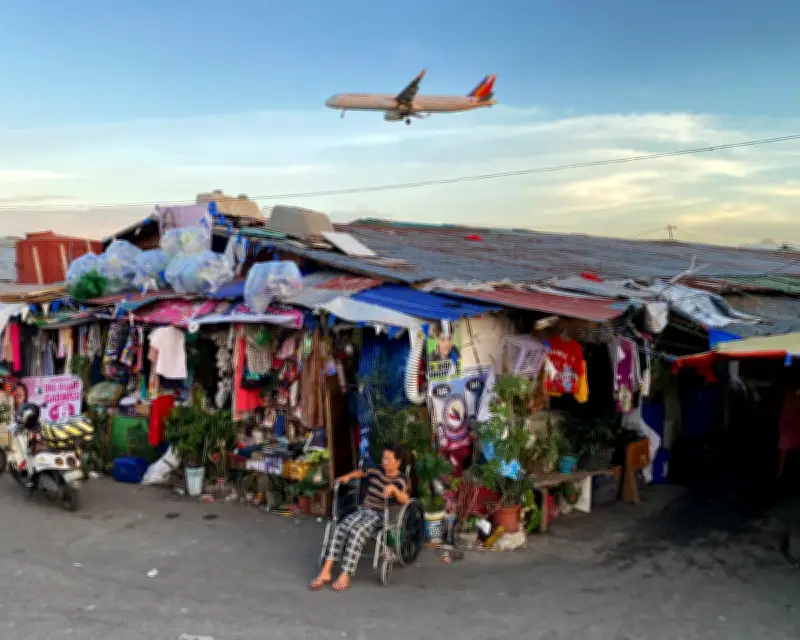
A plane flies over a slum in Parañaque, Metro Manila, the Philippines, highlighting the stark contrast between high consumption and poverty. Energy use, including air travel, is a major driver of the climate crisis.
Mega-consumers of food and energy cost environment $5.7tn a year, study finds
The top 10% of the world's population by consumption generate a climate and biodiversity damage bill that exceeds the economies of most countries, according to new research. The environmental damage caused by this group has reached up to $5.7tn annually—larger than the GDP of every nation except the US and China.
These mega-consumers are concentrated in the global north, accounting for more than half the population of the US and 40-45% of people in the EU. The damage tally, described by one researcher as "bonkers," surpasses global funding gaps for tackling climate and biodiversity crises, highlighting how economic priorities remain skewed towards depleting Earth's life-support systems.

The most destructive forms of consumption are linked to two main areas: food—particularly red meat, a primary driver of deforestation—and energy, including flights and heating and cooling homes, which typically rely on fossil fuels like gas, oil, and coal.
The $5.7tn figure, published in a paper by researchers at the University of Oxford and University of Leiden, was calculated using estimates of the monetary impacts of climate disruption, biodiversity loss, nutrient pollution, and freshwater use.
The study found that the average annual environmental damage bill for someone in the global top 10% ranges from $2,300 to $7,500. This figure rises to $19,000-$63,000 for those in the US. High-consuming households in emerging economies are catching up: the average environmental damage bill for the top 10% in China has overtaken that of the top 10% in Germany, the report says.
Biodiversity loss accounted for the largest share of the global damage bill, making up 47-56% of the total. The climate emergency was responsible for a further 36-45%. The authors said the findings strengthen the case for addressing biodiversity and climate crises together, rather than treating them as separate policy challenges.
The paper, published in Communications Sustainability, cautions that the true environmental cost by this group is likely even higher. The calculations cover only four of nine planetary boundaries and reflect direct consumption alone, excluding the likely greater impacts of investments.
"If anything, these numbers are conservative. The bill leaves out the emissions tied to wealthy people's investments," said Paul Behrens, a British Academy global professor at the Oxford Martin school and co-author of the study. "Research has shown that a large proportion of a rich person's carbon footprint comes from what they own, not how they live; meaning their stocks, bonds and other assets."
A Greenpeace study last week estimated that the assets owned by the world's richest 1%—often invested in greenhouse gas-intensive companies—are associated with a quarter of global emissions and cause nearly $1tn of climate damage each year.
The new report concludes that governments could target these high-consuming groups through taxes on luxury goods, wealth, and carbon, reducing emissions and pollution while raising revenue to support sustainability transitions and reduce inequality.
"The scale of the damage bill illustrates the potential revenue if polluter-pays principles were applied to high-consuming groups," the authors said. Behrens added: "The top 10% are important not only because they cause the most damage but also because they hold the most leverage to reduce it. They often have outsized agency, not only individually as consumers but also as investors, employers, trend makers, and market shapers. Their power to cut emissions is even larger than their share of them. The people in the top 10% should be braver and more courageous in making sure we have a future we can thrive in."