The Unraveling of Orbán's Hungary: A Regime Change in One Night
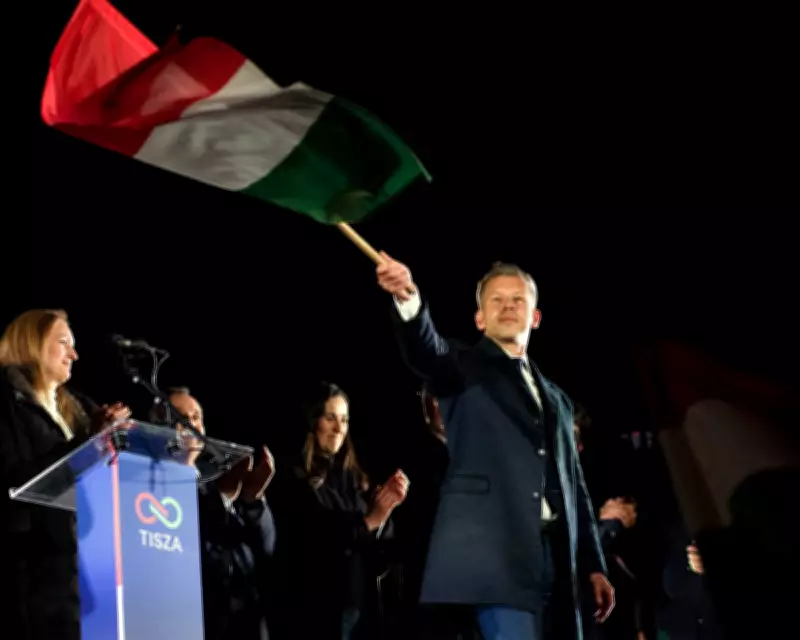
On April 12, 2026, Péter Magyar stood triumphant in Budapest, waving the Hungarian flag after securing an unprecedented electoral victory that ended Viktor Orbán's 16-year rule. With nearly 80% voter turnout and his Tisza party capturing almost 70% of parliamentary seats, this wasn't merely a change of government—it was a fundamental regime transformation compressed into a single election night.
The System That Backfired
Ironically, Orbán became the victim of his own political machinery. The electoral laws he engineered in 2011, designed to punish fragmented opposition and convert relative majorities into overwhelming parliamentary dominance, functioned perfectly—just not for their creator. Magyar didn't need to dismantle the system; he simply mastered its rules and turned its winner-takes-all mechanics to his advantage.
Three Levels of Erosion
The scale of Tisza's landslide victory reveals how time undermined Orbán's regime on three distinct levels:

First, political technology wore out. The communication machine that once allowed Fidesz to frame everything from migration to inflation as the fault of national enemies gradually lost its grip. After years of constant alarmism, warlike rhetoric lost its shock value. The antagonistic billboards remained, but they increasingly felt like background scenery rather than accurate reflections of reality. The technology of winning hearts and minds became less effective through sheer overuse.
Second, Orbán himself grew tired. Political analysis often avoids physical explanations, but the contrast was striking. The once-masterful campaigner appeared restrained and cautious, limiting himself to one controlled event daily. Meanwhile, Magyar operated with political hyperactivity—managing seven or eight appearances daily while maintaining intense online and offline presence. Supporters saw a choice between a routine-driven grandfather figure and a young, high-energy challenger who moved within social media as a native speaker.
Third, everyday realities reasserted themselves. Hospital conditions, the cost of living, and public service quality proved more stubborn than campaign slogans. Inflation replaced culture wars, and the desire for a functioning country supplanted the politics of enemy-making. Illiberal populism suddenly had to confront reality, revealing that even sophisticated disinformation ecosystems have finite shelf lives.
The Silent Force of Time
Viewing time as the primary driver clarifies this historic defeat. This wasn't the consequence of a single scandal or failure, but rather the culmination of slow, unmanageable erosion. Like a plastic bag filled with water that holds its shape for hours before suddenly tearing, political stability often masks accumulating tensions until collapse becomes inevitable.
This lesson extends beyond Hungary. Even perfectly polished political machines can become rigid and hollow. When regimes retreat into bubbles and exclude dissent, they lose renewal capacity. Stability becomes rigidity, and systems lose adaptation ability—appearing unchanged externally while growing increasingly fragile internally.
Time serves as a silent but relentless force of erosion, particularly dangerous for authoritarian systems compared to open societies. Democratic resilience stems from change capacity. The rigid system holds for a long time, then suddenly tears—as Hungary witnessed in April 2026.