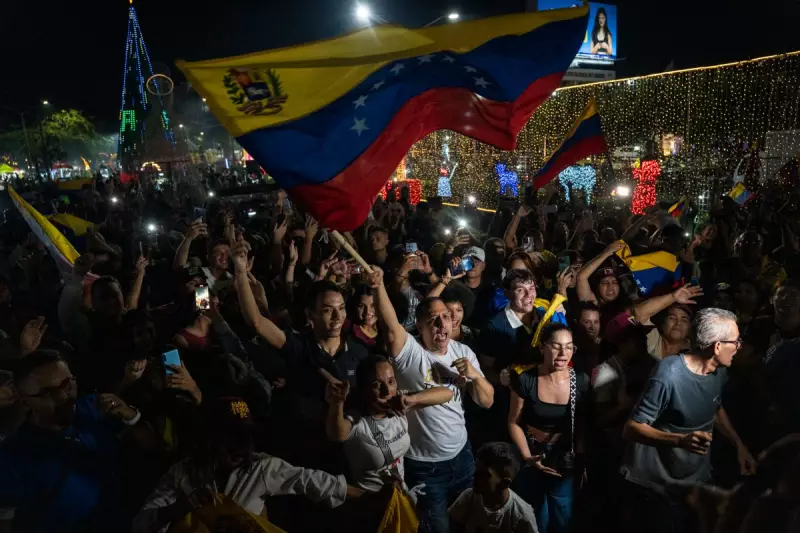
If history offers one clear lesson, it is that political forecasters are almost invariably incorrect. The recent, dramatic events in Venezuela serve as a potent case study, highlighting the inherent difficulty of predicting regime change and major political shifts.
A History of Failed Predictions
Until mere days before the American intervention, few anticipated the ousting of President Nicolás Maduro. The media landscape was notably absent of stories from proclaimed experts forecasting his imminent downfall. Maduro had rigged an election and commanded a powerful internal security apparatus to quash dissent. Furthermore, approximately one third of Venezuela's potential opposition had already fled the country, creating a misleading picture of stability.
This failure to foresee seismic political change is far from unique. Perhaps the most striking example since the Second World War was the rapid and unexpected disintegration of the Soviet Union and its Eastern European empire in the late 1980s. Remarkably, virtually no Western Kremlinologist saw this collapse coming.

Academic research underscores this point. American scholar Philip Tetlock compiled a database of over 80,000 predictions by experts on political and world events across two decades. His findings, detailed in the book Expert Political Judgment: How Good Is It? How Can We Know?, revealed that the average expert's forecasts were barely more accurate than random chance.
The UK Context and Economic Forecasting
This pattern is observable closer to home. In the immediate aftermath of the July 2024 UK general election, many political commentators lavished praise on the new Starmer government, with the phrase "the grown-ups are back in charge" becoming a common refrain. The contrast with the government's subsequent performance and a sharp decline in public popularity became starkly evident. Notably, Starmer's net popularity fell by 45 percentage points within three months of taking office.
While it has become fashionable to criticise economic forecasts from bodies like the Office for Budget Responsibility (OBR), economists at least acknowledge the profound challenges of prediction. Their forecasts are properly documented, allowing for transparent comparison with actual outcomes—a level of accountability often absent from political commentary.
Uncertainty Extends to Business and Tech
The difficulty of peering into the future extends decisively into the commercial world. Today's dominant tech giants present a challenge to those trying to envisage their potential decline. Consider MySpace, the forerunner to Facebook, which was the world's most visited website between 2005 and early 2008 before effectively vanishing by 2011.
Significant technological shifts are also unfolding in real-time. According to Ofcom, 1.6 billion fewer text messages (SMS) were sent in the UK last year compared to 2024, a drop exceeding 20 per cent. This decline is accelerating as traditional SMS is rapidly supplanted by messaging services like WhatsApp and Snapchat.
The late economist Friedrich Hayek argued that such uncertainty about the future is inherent in the very fabric of our economic and social systems, a theme he explored in his Nobel Prize lecture titled "The Limits to Knowledge".
Forecasts for 2026: A Sceptical Outlook
Despite the poor track record, demand for forecasts remains high. With appropriate caution, here are some predictions for the UK in 2026:
- Household saving will remain high while business investment stays low, triggering an economic recession.
- Inflation will drop substantially, driven by the weak economy and China's export of falling prices for manufactured goods.
- The economic slowdown will strain public finances, leading the government to implement further tax increases.
- By the end of the year, Labour's polling numbers will fall to close to single figures.
In the spirit of healthy scepticism, a belated Happy New Year.
Paul Ormerod is an honorary professor at the Alliance Business School at the University of Manchester.