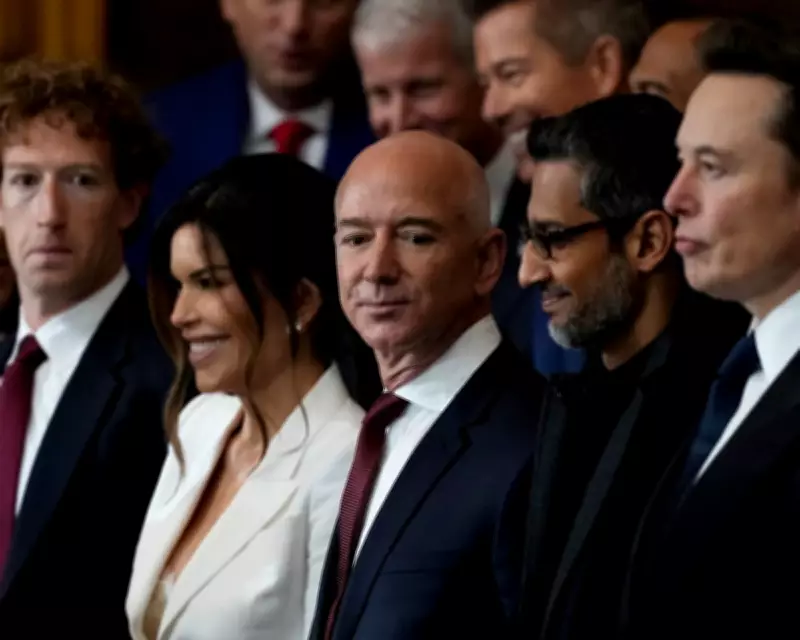
Billionaires today are unusually aggressive in hoarding cultural and technological influence, says Mordecai Kurz, a Stanford economist whose research links monopoly power to political and economic inequality. In his new book, Private Power and Democracy’s Decline, publishing 19 May, he argues the US is living through an extreme version of a pattern repeated since industrialization: technological power concentrating in a few hands, eroding democracy.
Tech moguls see themselves as superior beings
According to Kurz, technological moguls have long seen themselves as superior beings whose natural role is to shape society, so they have no problem disrupting democracy. During the first Gilded Age in the late 19th century, wealthy industrialists like Andrew Carnegie and John D. Rockefeller “invented all kinds of theories about human evolution,” twisting social Darwinism to convince themselves their success meant nature had selected them to influence society. Now, Anthropic CEO Dario Amodei has suggested his technology has mystical potential to become a transcendent good, while also acknowledging it could lead to mass unemployment.
Economic disenfranchisement fuels political shifts
Voters turn toward fascist leaders when democracy no longer serves workers, Kurz says. New Deal reforms during the Great Depression limited monopoly power and provided benefits to the vulnerable. According to Private Power and Democracy’s Decline, these reforms precipitated a “half-century of sustained innovations, rapid economic growth and stable income distribution.” Reagan-era reversals led to what Kurz calls the “second Gilded Age,” where tech firms accumulated monopoly power and wealth while most Americans, especially blue-collar workers without college degrees, saw wages stagnate as living costs rose. This economic disenfranchisement, rather than cultural forces, led to the rise of MAGA, according to Kurz.

Tech giants diminish voter power
The book describes how today’s tech giants diminish voter power through economic and cultural influence. Small startups and bigger companies like Microsoft and OpenAI prefer to collaborate rather than compete, Kurz says. New tech companies are formed not to challenge existing players but with the explicit aim of being acquired by one. This is a symptom of monopoly power so extreme that no innovator can survive without an established monopoly’s blessing. David has no choice but to work with Goliath. This monopoly status gives tech giants enormous lobbying influence; politicians who rely on their money are unlikely to rein them in.
“When you use strategies designed to manipulate knowledge to create market power, you go way beyond what we should be willing to accept,” Kurz said.
Social media and AI exacerbate polarization
Tech giants use their largely unregulated social media networks to drive polarization for profit, Kurz says. “Social media activity is profitable, and sometimes you generate activity by creating falsehoods, which are not good for democracy,” he said, adding that tech companies should be held legally liable for misinformation. Unregulated AI could further entrench disillusionment as it seeks to displace even more workers—not just those without college degrees but doctors, lawyers, and engineers.
Hope for reform after crisis
Still, Kurz is optimistic that a better democracy will rise again, though the road may be difficult. “Trumpism will not go in a whimper,” Kurz says. “There may be a big recession or a big depression or some other crisis before we can complete a new reform cycle.” He notes that extreme consolidation of technological power has eventually led to reform in the past, and conditions are ripe for it to happen again. “If you talk to any normal, intelligent American, they will tell you something is wrong in America and something has to change,” he said. The MAGA coalition combines old-fashioned Republicans, white supremacists, and disenfranchised blue-collar workers; specific economic circumstances brought them together, and they will fall apart again.

When reform comes, Kurz outlines in Private Power what it should look like: the government should tax and redistribute excess wealth accumulated by tech firms due to monopoly power. When workers are displaced by AI, education to help them learn new, relevant skills should be government-subsidized, as should companies that hire them. New policies should ensure AI assists workers but doesn’t replace them.
“We want capitalism to support democracy. Capitalism has to become more humane. It has to be more regulated. And in democracy, we don’t leave anybody behind,” he said.