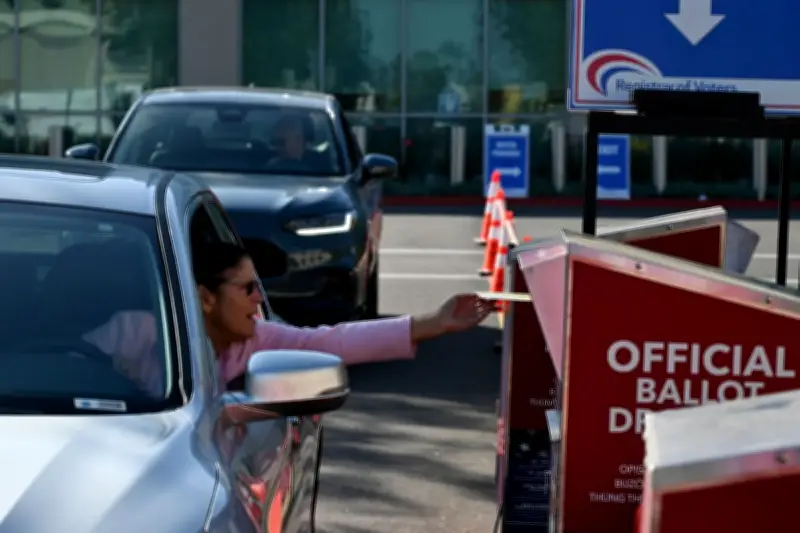
The US Supreme Court ruled 5-4 on Monday to uphold a Mississippi law that allows mail-in ballots postmarked by Election Day to be counted if they arrive within five business days after. The decision rejected a challenge by the Republican National Committee (RNC) and President Donald Trump's administration, preserving similar laws in over a dozen states.
Majority Opinion and Key Justices
Conservative Justice Amy Coney Barrett wrote the majority opinion, joined by Chief Justice John Roberts and the three liberal justices—Sonia Sotomayor, Elena Kagan, and Ketanji Brown Jackson. Barrett stated: “Nothing in the federal election-day statutes requires ballots to be received by election day.” Justice Samuel Alito authored a dissent, joined by Clarence Thomas and Neil Gorsuch, with Brett Kavanaugh joining in part.
Impact on State Election Laws
The ruling affirms states' authority to set election procedures. Fourteen states, Washington DC, and three US territories have similar laws allowing late-arriving ballots to be counted. Mississippi, a red state, defended its 2020 pandemic-era law against the RNC's argument that the grace period violates federal statutes designating the first Tuesday of November as Election Day.

Reactions from Voting Rights Advocates
Sophia Lin Lakin, director of the ACLU's Voting Rights Project, praised the decision: “A ballot mailed on time is a vote cast on time, and the court just affirmed what’s been true for over a century. These voters did everything right—they followed the rules and got their ballots in the mail. They shouldn’t lose their voice because a postal truck ran late, and now they won’t.”
Trump and RNC Response
Trump called the ruling a “tremendous loss” on Truth Social and reiterated calls for Congress to pass the Save America Act, which would require proof of citizenship for voting. RNC Chairman Joe Gruters said: “Democrats are inviting chaos at the ballot box by allowing elections to drag on for days and weeks after voters cast their ballots. Republicans are not going to be deterred by this decision.”
Legal Arguments and Dissent
During oral arguments in Watson v. Republican National Committee, conservative justices probed hypothetical fraud scenarios. Barrett noted that “plaintiffs’ policy arguments about election integrity and voter confidence are properly directed to legislatures, not courts.” In dissent, Alito argued: “Election day is a specified date, not a span of multiple days. Under the challenged Mississippi law, however, the collection of ballots continues for five more days, and therefore the ‘election’ is not held until the end of that period.”