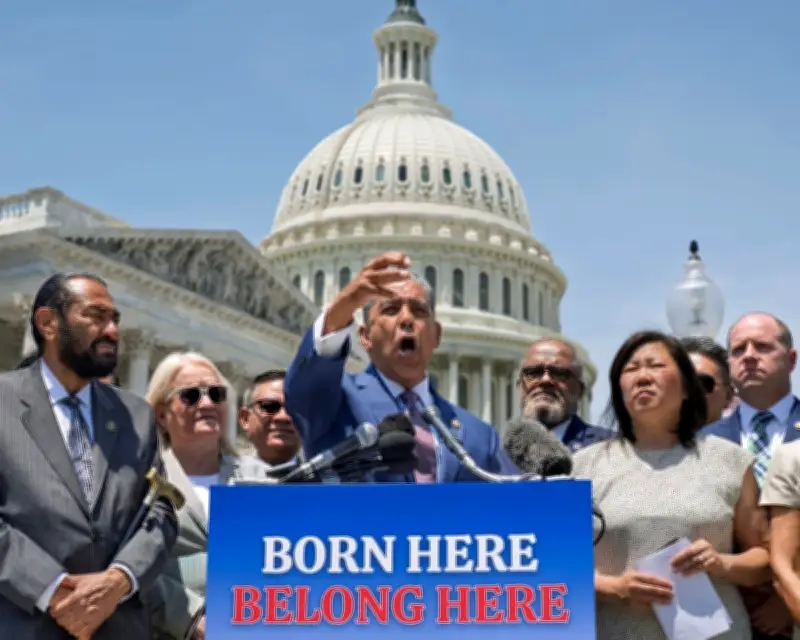
The US Supreme Court has upheld birthright citizenship, affirming that nearly all individuals born on American soil are entitled to citizenship. The decision struck down a central component of President Donald Trump's anti-immigration agenda, delivered on the first day of his second term via executive order.
Ruling Details and Dissents
Chief Justice John Roberts authored the majority opinion, joined by liberal Justices Sonia Sotomayor, Elena Kagan, and Ketanji Brown Jackson, along with conservative Justice Amy Coney Barrett. Justice Brett Kavanaugh concurred in the judgment but dissented in part. Dissenting opinions were filed by conservative Justices Clarence Thomas, Samuel Alito, and Neil Gorsuch. The ruling spans 194 pages, with Thomas's dissent alone comprising nearly 90 pages—the longest of his tenure.
The majority held: "Children born in the United States to parents unlawfully or temporarily present are 'subject to the jurisdiction' of the United States and are citizens at birth under the Fourteenth Amendment's Citizenship Clause." Trump had argued his executive order correctly interpreted the Constitution, despite the order's conflict with the 14th Amendment.

Trump's Response and Legislative Push
Reacting to the ruling, Trump posted on Truth Social: "Too bad for our Country," but added that Congress should take up the matter. "No long and unwieldy Constitutional Amendment is necessary! Congress should start TODAY to work on ending expensive and unfair to our Country, Birthright Citizenship. They will have my Complete and Total Support!"
This marks a continuation of Trump's efforts to dismantle birthright citizenship, a key facet of his platform. He attended oral arguments in person, marking the first time a sitting president has done so.
Other Supreme Court Decisions
In a separate ruling, the Supreme Court upheld laws in West Virginia and Idaho excluding transgender girls and women from female sports teams, overturning lower court decisions in favor of two transgender students. This decision hands Trump a significant culture-war victory and may set a precedent for similar bans nationwide.
The court also struck down limits on campaign spending by political parties, removing one of the last barriers for wealthy donors to funnel unlimited funds to federal candidates.
Trump's Crypto Earnings and Midterm Strategy
According to a federal filing released Monday, Trump earned over $1 billion from his cryptocurrency businesses in 2025, supplementing his income from legal settlements, real estate, and royalties. This aligns with his ambition to make the US the "crypto capital of the world."
Trump also announced a first-ever Republican national convention ahead of the midterm elections, aiming to energize voters as the party fights to retain its narrow congressional majorities.
Other Developments
An alleged Epstein victim and Trump accuser, known as Jane Doe 4, is living off-grid and fears retaliation from the Trump administration, according to a relative. The Trump administration is prioritizing religious freedom in health policy, potentially affecting reproductive and LGBTQ+ healthcare. A Roman Catholic nun was released from ICE custody after being arrested while walking to mass in Texas. NPR retracted a story claiming Justice Alito was retiring. Treasury Secretary Scott Bessent warned oil and gas companies to lower prices after Trump criticized them on social media. China has emerged as the sole beneficiary in Asia from the Strait of Hormuz crisis. FBI veterans allege Kash Patel violated protocols by prematurely disclosing arrests in a plot against an UFC event at the White House. Over $4 billion will be spent upgrading US military and spy bases in the UK, according to official documents.