Starmer's National Address Faces Criticism as Political Campaigning
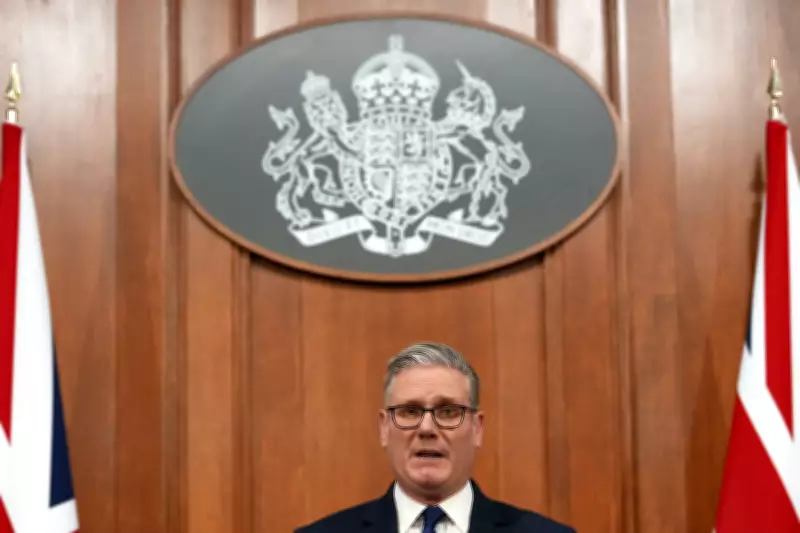
Prime Minister Sir Keir Starmer held a widely anticipated press conference yesterday, ostensibly to update the nation on the escalating Iran war and reaffirm Britain's official neutrality in the conflict. However, the address was swiftly condemned by observers as a thinly veiled local election campaign event, lacking substantive new policies or strategic direction regarding the international crisis.
Neutral Stance Amid Global Turmoil
Starmer repeatedly emphasized that "this isn't our war and we're not involved," positioning this declaration as his administration's central message regarding the Middle Eastern conflict. Despite this stated neutrality, the Prime Minister acknowledged the unavoidable consequences, stating that "the impact of this war will affect the future of our country." This admission came as citizens across the nation paused their daily routines to follow the address, with commuters gathering at train station screens, workers clustering around radios, and remote employees monitoring news feeds for significant announcements.
Domestic Policy Announcements Dominate Foreign Crisis Briefing
Rather than unveiling new diplomatic or defense initiatives, Starmer's speech focused predominantly on domestic policy measures already in the pipeline. He announced a one-year freeze on prescription price increases, touted upcoming minimum wage hikes, celebrated the elimination of the two-child benefit cap, and detailed new workers' rights legislation. When confronted with criticism that these were pre-existing plans, Starmer responded: "Some people may say, this isn't new, this was already planned – to which I say, yes, that is my point."

The Prime Minister argued that these social and economic policies were deliberately designed to prepare Britain for precisely the kind of global energy crisis currently unfolding. He reinforced this position by highlighting his administration's extension of the windfall tax on oil and gas companies, declaring: "We campaigned for a windfall tax on oil and gas companies, which we extended."
Confidence Contradicts International Warnings
Starmer expressed unwavering confidence in Britain's economic resilience, asserting that "no matter how fierce the storm, we are well placed to weather it." This optimistic assessment appears to contradict recent analyses from international organizations like the OECD and IMF, which have warned of significant economic challenges ahead. The Prime Minister's rhetorical approach emphasized determination over concrete strategy, exemplified by his declaration that "we are working at pace for de-escalation" – a phrase critics noted lacked Churchillian gravitas despite its historical echoes.
Diplomatic Response to Strait of Hormuz Crisis
The sole foreign policy announcement concerned the heavily mined Strait of Hormuz, a critical global shipping corridor threatened by the conflict. Starmer revealed: "Today I can announce that later this week the Foreign Secretary will host a meeting." This limited diplomatic initiative was met with skepticism by analysts who expected more substantial measures addressing the strategic implications of the Iran war for British interests and global stability.
The overall reception of Starmer's address suggests growing frustration with what critics perceive as political opportunism during an international emergency, raising questions about the government's capacity to navigate simultaneous domestic and foreign policy challenges.