In the fast-paced arena of contemporary geopolitics, significant events can quickly fade from public consciousness. For instance, just under two months ago, the world was gripped by a crisis sparked by Donald Trump's remarks on Greenland, with global leaders anxiously contemplating the potential for a U.S. invasion of a NATO ally's territory. Ironically, the one individual who seems to have moved on from the widespread alarm and tension is Donald Trump himself.
With his attention shifting from the Arctic to the Middle East, the U.S. President now anticipates that his allies will rally behind him as his military campaign in Iran descends into chaos. Instead, he is encountering leaders who are eager to distance themselves from the highly unpopular actions of a deeply divisive figure.
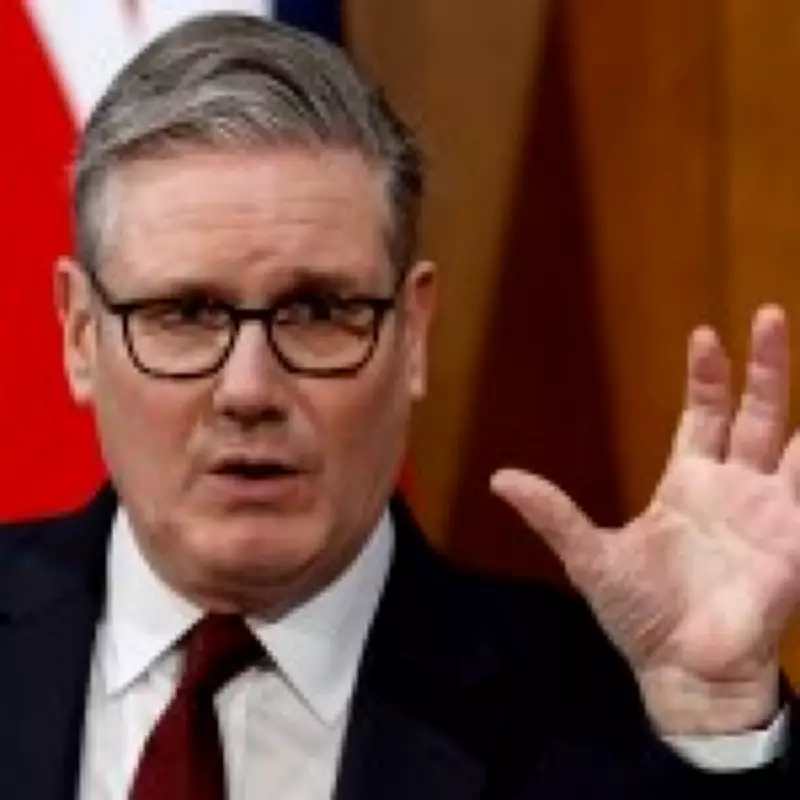
This dynamic was vividly on display during a press briefing at 9 Downing Street, where Prime Minister Sir Keir Starmer provided an update on the escalating situation. Remarkably, throughout his entire 14-minute address, Starmer made no mention of President Trump. When discussing a "viable collective plan" to reopen the Strait of Hormuz, he emphasized collaboration with the European Parliament, conspicuously omitting any reference to the United States.

One of his "clear and consistent" objectives, Starmer asserted, was to avoid being "drawn into the wider war." He dedicated substantial time to criticizing other political leaders who had previously advocated for increased British involvement in the conflict.
During the subsequent question-and-answer session with journalists, Starmer directly challenged Trump's recent threat that NATO would face severe consequences if it failed to assist in preventing Iran from blocking the Strait of Hormuz. "Let me be clear," the Prime Minister stated firmly. "That won't be, and it was never envisioned to be, a NATO mission. That'll have to be an alliance of partners."
Although Starmer maintained a composed demeanor, it must have been satisfying to inform a President who recently posed an existential threat to NATO that the alliance would not come to his rescue. Coincidentally, just before the press conference, Starmer had met with Canadian Prime Minister Mark Carney, a leader whose political rise was significantly influenced by widespread anti-Trump sentiment in Canada. Perhaps Carney offered insights on the advantages of standing up to the White House.
However, the United Kingdom is not alone in its reluctance to support Trump's Iran campaign. In a Truth Social post over the weekend, Trump urged nations to deploy naval vessels to the Strait of Hormuz to help secure this critical maritime passage. According to Reuters, Japan, Australia, and Italy have already declined this request, while South Korea and France remain undecided.
The most unequivocal rejection came from German Defence Minister Boris Pistorius, who questioned the rationale behind European involvement. "What does Donald Trump expect, from a handful or two handfuls of European frigates in the Strait of Hormuz that the powerful American Navy cannot accomplish there alone?" he asked. "I would think about that very carefully before we take that step, and I see absolutely no reason to do so. It's not our war. We didn't start it."
President Trump may soon discover the consequences when former allies prioritize managing the fallout from his conflicts over participating in them. This growing international isolation underscores a significant shift in global diplomacy, as nations increasingly resist being drawn into unilateral U.S. military endeavors.