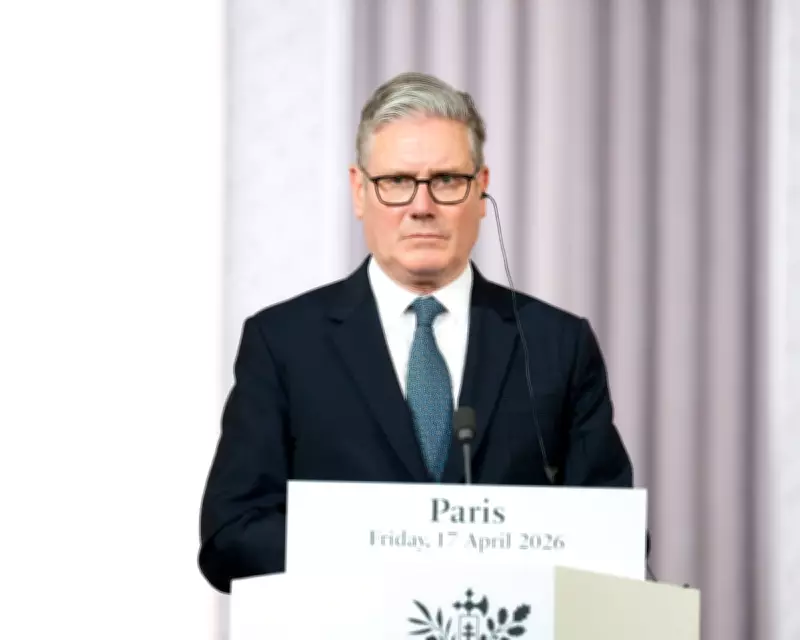
Starmer's Evolving Narrative on Mandelson Appointment Sparks Westminster Scrutiny
Prime Minister Sir Keir Starmer's handling of the controversial appointment of Lord Peter Mandelson as Britain's ambassador to the United States has developed into a significant political controversy, with shifting explanations raising fundamental questions about government accountability and transparency.
Contradictory Explanations Emerge
The prime minister's account has undergone multiple revisions since February, when he initially apologized to victims of convicted sex offender Jeffrey Epstein, stating he had "believed Mandelson's lies" before making the diplomatic appointment. By March, faced with evidence that warnings about "reputational risk" had been raised but ignored, Starmer acknowledged during a trip to Belfast that he "made a mistake."
This Thursday marked another shift in responsibility, with top Foreign Office civil servant Sir Olly Robbins forced out after revelations emerged that Lord Mandelson had been denied security clearance for the sensitive diplomatic role. Number 10 claimed it was not informed about this critical development, creating competing narratives about what exactly transpired during the appointment process.

Vetting Process Under Examination
Government ministers have suggested that security warnings were overridden during the appointment process, but constitutional experts challenge this explanation. The established protocol dictates that ministers typically receive only the final outcome of vetting procedures, not the underlying intelligence that informs those decisions. This system makes proper scrutiny exceptionally difficult once appointments are finalized and increases the risk that conclusions might align with predetermined decisions.
The attempt to attribute blame to Sir Olly Robbins for allegedly failing to share critical intelligence appears to many observers as justification after the fact. The risks associated with appointing Lord Mandelson to such a sensitive diplomatic position were not confined to classified documents; substantial information existed in the public domain and should have been accessible to the prime minister and his advisors.
Parliamentary Accountability at Stake
By endorsing Lord Mandelson's appointment in advance, Sir Keir Starmer seemingly transformed the vetting process from one of rigorous scrutiny to mere procedural delivery. In such circumstances, inconvenient facts often fail to reach decision-makers at the highest levels, creating systems where problematic information becomes buried rather than addressed.
This context makes "I did not know" an inadequate defense for ministers, who bear responsibility not only for information they receive but also for ensuring systems exist that allow truth to reach them. The suggestion that announcing the appointment before completing security vetting was necessary due to American approval requirements represents an attempt to shift focus from the core question: whether appointing Lord Mandelson was safe and appropriate for British interests.
Parliamentary Truthfulness Questioned
The fundamental principle of British politics demands truthfulness to parliament, yet Sir Keir Starmer has been accused of hiding behind procedural language. Conservative leader Kemi Badenoch directly questioned the prime minister in February about whether official security vetting mentioned Mandelson's ongoing relationship with Jeffrey Epstein, to which Starmer responded affirmatively.
If the prime minister now claims he lacked this knowledge, his previous parliamentary statement becomes problematic. Civil service warnings from December 2024 specifically highlighted risks associated with Mandelson's continued "relationship" with Epstein even after the financier's 2008 conviction for child sex offenses—information available before the appointment rather than discovered subsequently.
Political Consequences Loom
Sir Keir Starmer faces expectations to correct the parliamentary record to avoid potential contempt proceedings, a fate that ultimately ended Boris Johnson's premiership. Labour backbenchers may prioritize political stability over accountability, particularly with crucial local elections approaching in May, but this calculation risks future regret if transparency concerns continue to mount.

The Mandelson appointment controversy exposes deeper questions about governmental accountability, the relationship between ministers and civil servants, and the mechanisms through which critical information reaches decision-makers in Westminster's highest offices.