Starmer's 14th Premiership U-Turn Reinstates May Local Elections
Prime Minister Keir Starmer has executed his 14th policy reversal since taking office, abandoning plans to postpone 30 council elections scheduled for May 7, 2026. The dramatic U-turn came after Reform party leader Nigel Farage launched a legal challenge accusing Labour of attempting to avoid anticipated election defeats.
Legal Pressure Forces Government Retreat
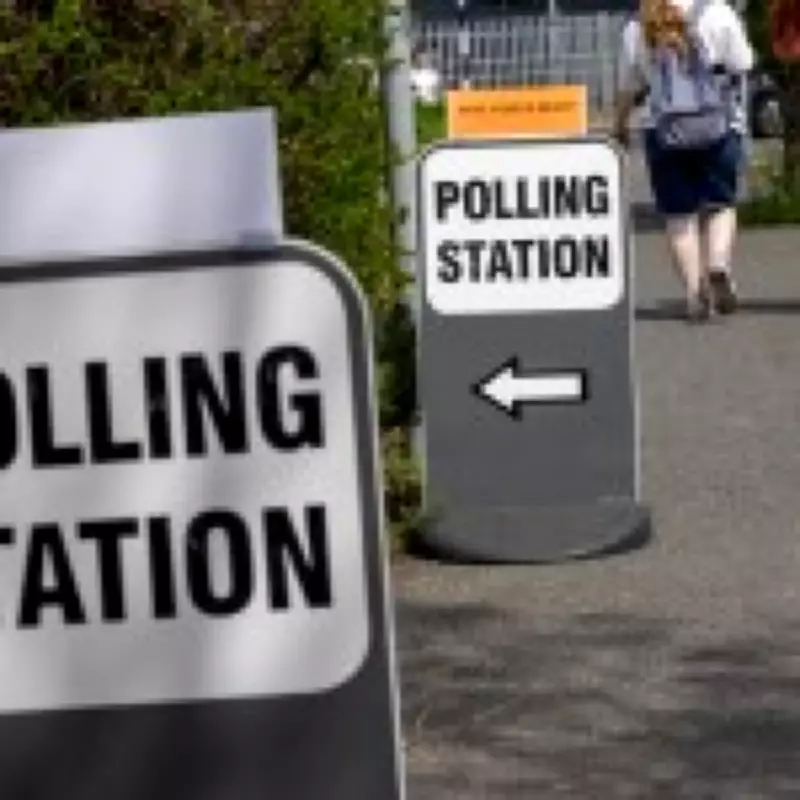
The government changed course after receiving legal advice concerning their impending court battle with Reform. A spokesperson for the Ministry of Housing, Communities and Local Government confirmed: 'Following legal advice, the Government has withdrawn its original decision to postpone 30 local elections in May. Providing certainty to councils about their local elections is now the most crucial thing and all local elections will now go ahead in May 2026.'
As part of the settlement, the government agreed to pay Reform's £150,000 legal costs for mounting the challenge. Additionally, the MHCLG will provide an extra £62 million to assist local authorities undergoing restructuring processes.

Farage Declares 'Victory for Democracy'
Nigel Farage, who spearheaded the legal fight against the postponement, celebrated the outcome. 'It's a victory for Reform, but more importantly, it's a victory for democracy in this country,' he stated. 'It seems to me that if a government minister does something illegal, they really ought to resign.'
Election Landscape and Political Stakes
The reinstated elections present significant challenges for all major parties:
- Labour must defend 2,558 seats across England, Scotland, and Wales
- Conservatives are hoping to maintain 1,362 seats
- Elections occur amid Labour's struggling poll ratings
Labour-led Worthing council expressed disappointment with the reversal. Council leader Sophie Cox told Metro: 'Concerns about our capacity to deliver local government reorganisation whilst also holding elections...remain entirely valid. It is therefore frustrating that financial compensation is now being offered, when this option was not put forward at the time those concerns were raised.'
Comprehensive List of Affected Authorities
Elections will proceed across multiple categories of local government:
County Councils
- East Sussex
- Essex
- Hampshire
- Norfolk
- Suffolk
- West Sussex
District Councils
Numerous districts including Adur, Basildon, Basingstoke & Deane, Brentwood, Broxbourne, Burnley, Cambridge, Cannock Chase, Cheltenham, Cherwell, Chorley, Colchester, Crawley, Eastleigh, Epping Forest, Exeter, Fareham, Gosport, Harlow, Hart, Hastings, Havant, Huntingdonshire, Hyndburn, Ipswich, Lincoln, Newcastle-under-Lyme, Norwich, Nuneaton & Bedworth, Oxford, Pendle, Preston, Redditch, Rochford, Rugby, Rushmoor, South Cambridgeshire, St Albans, Stevenage, Tamworth, Three Rivers, Tunbridge Wells, Watford, Welwyn Hatfield, West Lancashire, West Oxfordshire, Winchester, and Worthing.
London Boroughs
All 32 London boroughs will hold elections, including Barking & Dagenham, Barnet, Bexley, Brent, Bromley, Camden, Croydon, Ealing, Enfield, Greenwich, Hackney, Hammersmith & Fulham, Haringey, Harrow, Havering, Hillingdon, Hounslow, Islington, Kensington & Chelsea, Kingston upon Thames, Lambeth, Lewisham, Merton, Newham, Redbridge, Richmond upon Thames, Southwark, Sutton, Tower Hamlets, Waltham Forest, Wandsworth, and Westminster.
Metropolitan Boroughs
Major metropolitan areas including Barnsley, Birmingham, Bolton, Bradford, Bury, Calderdale, Coventry, Dudley, Gateshead, Kirklees, Knowsley, Leeds, Manchester, Newcastle upon Tyne, North Tyneside, Oldham, Rochdale, Salford, Sandwell, Sefton, Sheffield, Solihull, South Tyneside, St Helens, Stockport, Sunderland, Tameside, Trafford, Wakefield, Walsall, Wigan, and Wolverhampton.

Unitary Authorities
- Blackburn with Darwen
- East Surrey (newly-created authority)
- Halton
- Hartlepool
- Hull
- Isle of Wight
- Milton Keynes
- North East Lincolnshire
- Peterborough
- Plymouth
- Portsmouth
- Reading
- Southampton
- Southend-on-Sea
- Swindon
- Thurrock
- West Surrey (newly-created authority)
- Wokingham
Logistical Challenges for Election Officials
The Association of Electoral Administrators (AEA) expressed 'extreme disappointment' that months of essential planning time had been lost. AEA deputy chief executive Laura Lock warned that returning officers, electoral registration officers, and administration teams 'face an uphill struggle to catch up to where they should be.'
'They have paused planning to avoid unnecessary cost, but this means they are now playing catch-up,' Lock explained. However, she expressed optimism that election stationery and polling booth venues would be prepared in time for May 7, noting: 'The sector as a whole is pulling together and rapidly getting back up to speed to administer these elections.'
The reinstatement of these elections marks a significant political development as parties prepare for what promises to be a contentious electoral battle across England, Scotland, and Wales, with Reform's legal victory establishing a precedent for challenging government election decisions.