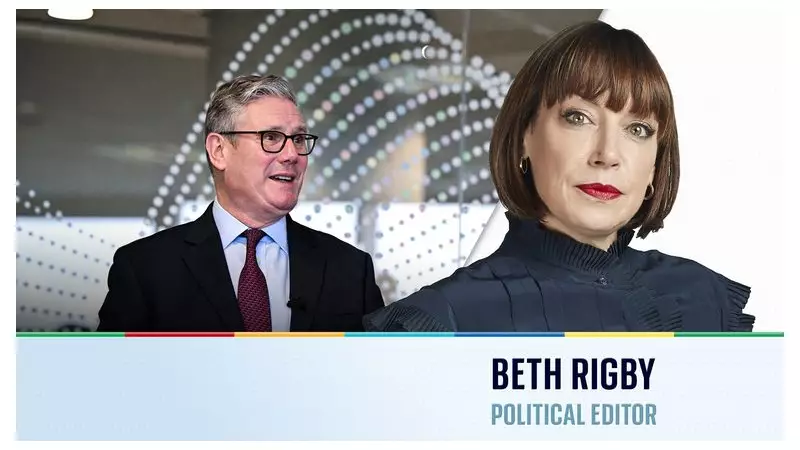
Prime Minister Keir Starmer finds himself navigating increasingly turbulent political waters as he approaches what could be the most challenging budget of his seventeen-month premiership.
Storm Clouds Gather Over Labour Leadership
The political climate facing Sir Keir Starmer turned visibly stormy during his recent overseas trip to Johannesburg, where thunderous weather forced broadcast interviews into a tin-roof hangar - an apt metaphor for the tempest brewing back in Westminster.
Fresh analysis reveals the Prime Minister now holds the lowest popularity ratings of any PM since records began, with open discussions emerging within his own party about whether he should lead Labour into the next general election.
Manifesto Promises Under Threat
During a brief interview on Friday, Starmer steadfastly refused to recommit to tax pledges made during the election campaign, despite being asked twelve times to reaffirm these commitments.
Just one year ago, before the October 2024 Budget, the Prime Minister had been unequivocal: "We made an absolute commitment that their income tax wouldn't go up, their national insurance wouldn't go up, their VAT wouldn't go up. I said that in the campaign, we're going to keep to those promises."
Now, the government appears poised to break these manifesto commitments, with one likely option being the extension of income tax threshold freezes for an additional two years. This measure would raise approximately £10 billion by dragging more workers into higher tax brackets as wages increase with inflation.
Chancellor's Previous Stance Creates Budget Dilemma
The potential policy reversal creates particular difficulty for Chancellor Rachel Reeves, who explicitly condemned threshold freezes in her previous budget speech.
"Having considered the issue closely, I have come to the conclusion that extending the threshold freeze would hurt working people," Reeves told Parliament last year. "It would take more money out of their payslips. I am keeping every single promise on tax that I made in our manifesto."
The Chancellor faces the challenging task of finding around £7 billion following government U-turns on welfare cuts and winter fuel allowance changes, all while the UK's productivity growth faces downgrades from fiscal watchdogs.
Mounting Political Challenges
Starmer's difficulties extend far beyond budgetary concerns. Recent months have seen:
- The resignation of Angela Rayner over stamp duty underpayment
- The sacking of Lord Mandelson due to his friendship with Jeffrey Epstein
- Ongoing leadership speculation surrounding Andy Burnham
- Tensions between Number 10 and the health secretary
These developments have rapidly depleted the Prime Minister's political capital, with MPs expressing growing despair about his leadership and operational management.
When confronted about the chaos within his administration, Starmer pointed to policy achievements including free childcare expansion, extended breakfast clubs, and frozen prescription charges.
"Every minute that we're not talking about the cost of living is a wasted minute," the Prime Minister insisted, expressing clear frustration about media focus on internal disputes rather than policy substance.
Despite the mounting challenges, Starmer remains determined to press forward with his agenda, telling journalists he will fight the next election and expects to be judged on whether his government has "been able to make people feel better off."
As the budget approaches, the Prime Minister maintains that he will take the "right decisions for the country," with NHS improvement and cost of living reduction as his guiding principles. However, with public and party enthusiasm for his premiership visibly waning, next week's fiscal announcement carries significant political risk for the embattled leader.