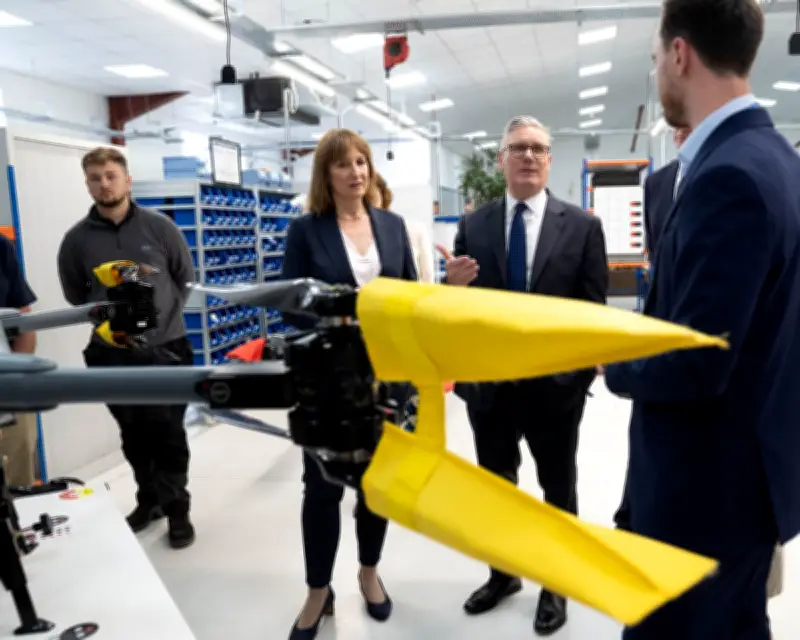
Keir Starmer's defence investment plan leaves behind a £4.7bn spending problem that his successor Andy Burnham will not be able to avoid. Military budgets will be well short of the UK's NATO commitments by the end of the decade, and European allies and the White House are likely to notice.
Finding further cash for the Ministry of Defence will require squeezing other departments, as raising taxes is fraught and headroom for extra borrowing is limited. Another option is to abandon Britain's residual ambitions to be more than a regional power, though allies are not keen on that move.
Multiple challenges at once
The complication is that the investment plan tries to tackle several major problems simultaneously. The post-Cold War peace ended more than four years ago with Russia's invasion of Ukraine, and as the plan document notes, “the world has changed”, with heightened threats from Moscow and volatility in the Middle East.

Labour ministers say their Conservative predecessors left behind a funding mess while increasing commitments by extending support to Ukraine and signing up to develop nuclear-powered submarines with Australia and the US, and fighter jets with Japan and Italy.
Defence Secretary Dan Jarvis said on Tuesday that 47 out of 49 major projects were delayed or over budget. The plan's core is massive investment in nuclear, accounting for 20% of the entire defence budget and rising to 25% as modernisation continues. A total of £47bn is being spent on nuclear submarines, principally Dreadnought boats to replace the Trident-carrying Vanguards.
Why Labour took so long
The mystery is why it took Labour so long to grip defence costs. The reckoning came after a lightweight review last year and a full three-year spending review. It was only towards the end of last year that the MoD's sprawling ambition was found to be £28bn underfunded, prompting months of bitter ministerial wrangling.
Meanwhile, Donald Trump arrived at the White House with fluctuating enthusiasm for NATO and a belief that European allies had been free-riding on US defence expenditure. Starmer tried to placate Trump by agreeing to slash overseas aid to increase defence spending to 2.5% of GDP by 2027, a limited rise that maintained UK leadership in NATO for a moment.
Trump wanted to go much further, to 3.5% by 2035, and NATO allies fell into line at the NATO summit last summer. Starmer did too, but the easy spending decisions had already been made. Amid a lack of headroom in UK public finances, ministers fell out, leaving the final settlement at 2.7% of GDP by 2030, well short of the NATO target.
Frustrating negotiations
Government sources said Chancellor Rachel Reeves found it frustrating to deal with former Defence Secretary John Healey because of his refusal to negotiate directly with her, choosing instead to talk to Starmer. Healey resigned in June because he was not happy with the money Starmer offered, and Jarvis was only able to obtain £1.5bn more in less than three weeks, leaving a final budget gap of £3bn.
Allies of Healey say he remained in touch with Treasury officials when working out the MoD black hole, but after that negotiations had to be decided by Starmer. They accused the chancellor of refusing to engage with the prime minister, leaving Starmer to go round individual cabinet secretaries to get them to agree to budget reductions.
Investment and risks
From a security perspective, the plan represents the first time for a generation that Britain is investing in its defence capability at a moment of genuine international need. There will be £5bn more for drones by 2030, badly needed by the British army to deter a Russian invasion of Estonia. At present, UK forces would run out of drones in a couple of days to defend a NATO ally.
But the question is whether the sums on offer match Britain's ambition to be a reliable international partner. The UK is poised to assist in peacekeeping in the Strait of Hormuz alongside France and others, with HMS Dragon, Typhoon jets, mine clearance robots and drones, if Trump can strike a peace agreement with Iran.

Now there is a risk that the UK will fall short of hitting NATO targets, policed vigorously by Trump's White House. Trump's term ends in 2029, but a Republican may succeed him, and the scale of the US's long-term commitment to defending Europe is uncertain. If it has been painful to lift defence spending to 2.7% of GDP, Andy Burnham may find it harder to go to 3%, never mind 3.5%.
Another option is to back out, though that is not what others are doing. Germany, with financial headroom to borrow, wants to hit the 3.5% target as soon as 2029. Its military expenditure is intended to be €150bn (£130bn) that year, compared with the UK's planned £79.1bn agreed on Tuesday. But Berlin also wants the UK to play its part in international missions such as Hormuz and supporting Ukraine.