Prime Minister Sir Keir Starmer has issued a stark warning about the security challenges posed by China, while simultaneously delivering a pointed critique of the Brexit process and its political legacy.
A Dual Warning: Security Threats and Political Attitudes
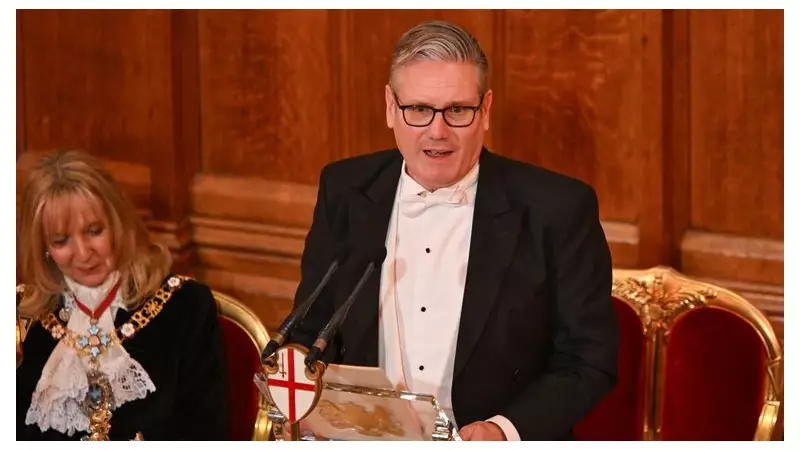
In a major foreign policy address delivered at the historic Guildhall in London on Tuesday 2 December 2025, the Labour leader framed the international landscape facing Britain. He stated unequivocally that China poses "real national security threats to the United Kingdom." This declaration comes amidst heightened tensions in Westminster following allegations of Chinese espionage within parliament and controversy over Beijing's proposed new "super embassy" in central London.
Alongside this security focus, Sir Keir turned his attention to domestic political discourse. He argued it would be "utterly reckless" to view Brexit as a blueprint for future foreign policy, criticising what he termed a "corrosive, inward-looking attitude" among some politicians. He specifically named former Business Secretary Kemi Badenoch and Reform UK's Nigel Farage, who advocate leaving the European Convention on Human Rights, as well as Green Party peer Zack Polanski, who has suggested exiting NATO.

Brexit: 'How it was sold and delivered was simply wrong'
The Prime Minister offered a blunt assessment of the UK's departure from the European Union. He told the audience at the annual Lady Mayor's Banquet that "wild promises" made before the 2016 referendum had gone unfulfilled. "How it was sold and delivered was simply wrong," Sir Keir asserted. "We are still dealing with the consequences today."
He accused politicians promoting isolationist policies of offering "grievance rather than hope" and possessing "a declinist vision of a lesser Britain, not a Great Britain." Despite his criticism, the Prime Minister, who campaigned for Remain, stressed he respected the democratic outcome of the vote, calling it "a fair, democratic expression." He said his government had made "a decisive move to face outward again" to rebuild British influence.
A 'Sober Realism' Approach to China
Sir Keir outlined a nuanced strategy for engaging with Beijing, moving away from what he described as the previous vacillation between a "Golden Age" of relations and an "Ice Age". "We reject that binary choice," he said. His government's approach would be "grounded in strength, clarity and sober realism," driven neither by fear nor illusion.
He made a clear distinction between security and economic interests. "Protecting our security is non-negotiable - our first duty," the PM stated, adding that robust security measures would enable cooperation in other areas. He defended his plans to visit China in the new year, arguing that a failure to engage with the world's second-largest economy would be "staggering" and a "dereliction of duty."
He pledged to support British businesses in sectors like financial services, pharmaceuticals, and luxury goods to seize export opportunities in China, describing it as "a nation of immense scale, ambition and ingenuity."
Sky News understands the Prime Minister is poised to approve the contentious plans for China's "super embassy" on the former Royal Mint site near the Tower of London, with a final decision expected on 10 December.
Political Reaction and Analysis
The speech drew immediate criticism from political opponents. Shadow Foreign Secretary Dame Priti Patel accused Sir Keir of "kowtowing to China" and pursuing a "naive one-way street" that risked British security. She labelled the speech a "love letter to the Chinese Communist Party" and a desperate ploy for economic growth after the recent budget.
Political analysts noted the speech's significance as one of Sir Keir's most substantial foreign policy addresses to date. It is likely to please advocates of a more interventionist UK global role but will anger Conservative and Reform UK "China hawks" and staunch Brexiteers. The Prime Minister's attempt to chart a middle course—firm on security but open to engagement—defines his government's emerging international posture.