St Bride’s Church, the so-called 'Phoenix of Fleet Street', has withstood its fair share of disasters. But now a new threat has emerged: Sunday parking charges.
From the plague to the Great Fire of London and bombing during the war, the church, which is closely associated with the newspaper industry, continues to serve despite the damage and destruction it has suffered over the years.
St Bride's boasts a history and long list of cultural connections that are the envy of most London sites, with 'London Living History' placing it in the top 10 of London's most historic churches.

Polly Nichols, considered to be Jack the Ripper’s first victim, was married at the church, as was Rupert Murdoch when he tied the knot with Jerry Hall in 2016. The parents of Edward Winslow, one of the original Pilgrim Fathers, were also married at St Bride’s, while famous writer Samuel Pepys was born in a house next door.
After the medieval church burned down in the Great Fire, its replacement was designed by Sir Christopher Wren, including the famous ‘wedding cake’ steeple. Following bombing in 1940, the structure was again rebuilt, sticking to Wren’s original drawings.
New threat: Sunday parking charges
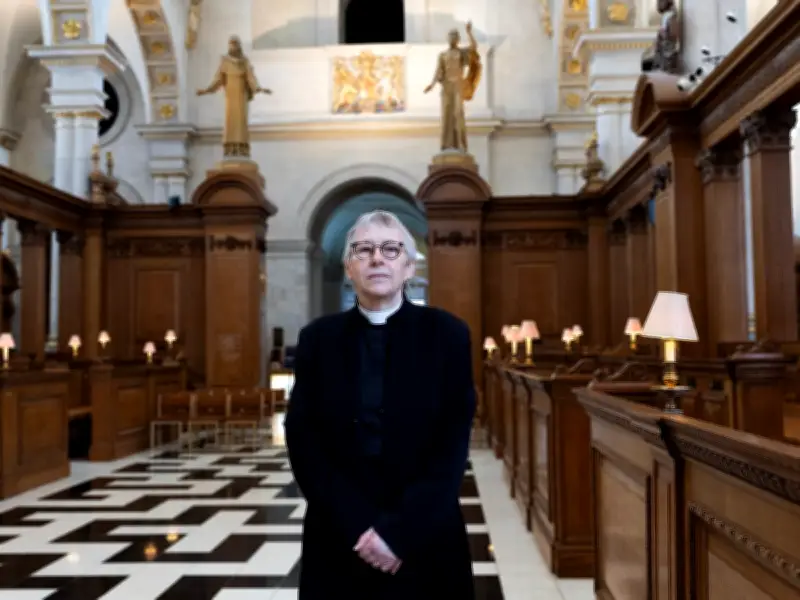
Reverend Canon Dr Alison Joyce, who has been the Rector at St Bride’s for 12 years, however fears that a potential new threat may spell disaster for the church: Sunday parking charges.
The City of London Corporation, the governing body for the Square Mile, is consulting on a range of proposed changes to parking rules. The online survey details how the Controlled Parking Zone was last reviewed 17 years ago, since when the City has grown and people’s travel patterns have changed.
A number of changes are being considered, including amending when people can park on single yellow lines and when parking charges apply. Among these is the proposed introduction of a Sunday charge, something Dr Joyce has warned will impact the stability of the church.
She described the Sunday congregation as “the core building block that enables everything else to happen”, providing not just financial support but also filling officer and volunteer roles. “The whole edifice depends on us having a thriving Sunday congregation.”
Congregation relies on cars
Due to its location just off Fleet Street, St Bride’s congregation is formed largely of people having to travel in rather than living nearby. Dr Joyce said there are often issues with public transport on Sundays, a problem compounded by the fact roads are regularly shut to allow activities such as fun runs. All of which means that for many of those attending services at St Bride's, driving in is often the only option.
“We would absolutely love it if our congregation could all get here by public transport on Sundays but they can’t,” she said. “It’s just not physically possible for a lot of people.”
Dr Joyce said there is an anxiety about being able to keep the congregation going if the charges are introduced. She said: “We are custodians of one of the most amazing bits of London heritage that there is. This church has been here for 1,500 years. Downstairs in the crypt there’s a Roman pavement dating back to AD 180. We care for this unfunded on behalf of the City and its people.”
Dr Joyce said the church has already taken hits to its numbers due to policies such as the Congestion Charge being extended to Sundays and the introduction of the Ultra Low Emission Zone (ULEZ). Covid also impacted the congregation, she said, with the church still attempting to get back to pre-pandemic levels.
“We’re struggling to rebuild the congregation. We lost a lot of people during Covid, as a lot of churches did. People got older, frailer, some died, some moved away. So the task of rebuilding the congregation, when you haven’t got a resident population, is a real challenge.”
Charges deemed unnecessary
Dr Joyce said regardless of the expected impact on St Bride’s congregation, she does not believe parking charges on Sundays are necessary due to the lack of traffic in the area. She showed the Local Democracy Reporting Service (LDRS) several photos taken on Sundays of Fleet Street in which few vehicles other than buses could be seen.

“It’s the fact that they’re unnecessary, and I simply don’t think they’ve looked at the impact. I don’t think they’ve done their research properly.”
A Corporation spokesperson said: “A public consultation on potential changes to the City of London’s Controlled Parking Zone is currently underway, and no decisions have been taken. As the consultation remains open, it would not be appropriate to comment further at this stage.”
The consultation is to run until July 1. A decision is expected to be made in September, with any changes to be implemented from next April.