SNP Unveils Controversial Price Cap Pledge in Election Manifesto
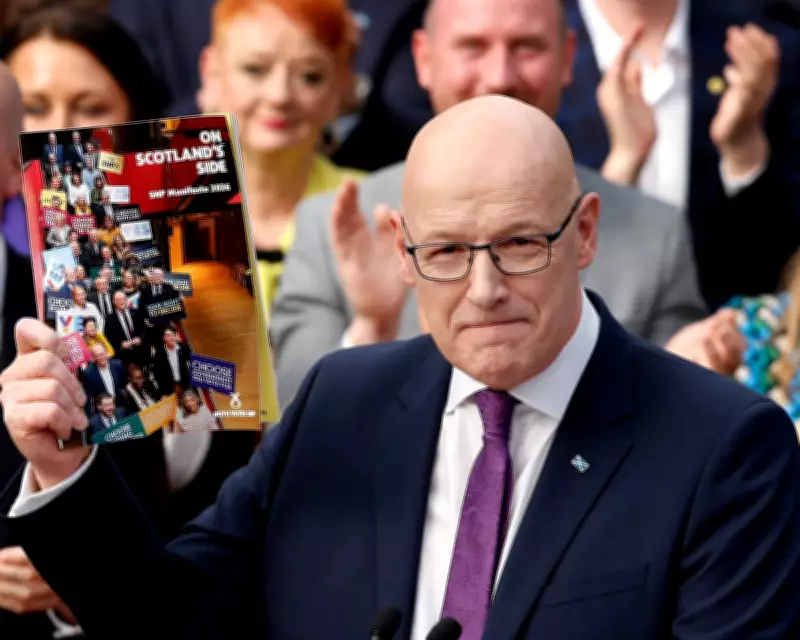
John Swinney launched the Scottish National Party's manifesto in Glasgow on Thursday, making the dramatic pledge to cap supermarket prices for essential goods like bread and milk if the SNP retains power in Scotland's parliamentary election on 7 May. The party leader described the cost of living as "the defining issue of this election" for Scottish voters.
Price Controls on Essential Goods
With polls suggesting the SNP is heading for a fifth consecutive term at Holyrood, Swinney announced plans to use devolved public health powers to fix prices on 20 to 50 essential items including bread, milk, cheese, eggs, rice and chicken. He argued that rising costs for these basic foodstuffs were "impacting our nation's nutrition" and required government intervention.
The eye-catching proposal was immediately dismissed by retail industry representatives as a "potty gimmick" that could breach the Scotland Act of 1998. Ewan MacDonald-Russell, deputy head of the Scottish Retail Consortium, warned that supermarkets already pay significantly higher business rates in Scotland - £162 million more over the next three years than their English counterparts.

Broader Cost of Living Measures
The manifesto includes several additional measures aimed at addressing living costs. The SNP proposes a £2 cap on bus fares for any journey in Scotland taken on a single service, with the party estimating this would cost £210 million by 2032. However, the Scottish Greens revealed that the SNP had rejected their proposal for universal free bus travel during budget negotiations last year.
Swinney also claimed that an independent Scotland would be able to control energy prices more effectively, arguing that cutting energy bills "will be on the ballot" at this election. While he couldn't name specific policies to reduce bills, he suggested domestic electricity could be made cheaper by ending the system where electricity prices are linked to gas costs from backup power stations.
Energy experts expressed skepticism about this proposal, noting the practical difficulties when gas remains essential to the energy market. Labour has countered that the best approach to reducing home energy bills involves accelerating the transition to renewable and nuclear power sources.
Independence and Leadership Positioning
Speaking to supporters at an arts venue in Glasgow, Swinney positioned himself as the serious candidate in an election campaign marked by political maneuvering between Scottish Labour and Reform UK. "At this moment Scotland needs experienced, principled, reliable leadership in the highest office in the land and that is what I offer this country," he declared.
The SNP leader suggested there was a "very realistic" possibility of a second independence referendum in 2028, though he didn't specify how this would be achieved given Westminster's consistent opposition to another vote. He emphasized that "a vote for the SNP on 7 May is a vote to put Scotland's future in Scotland's hands."
Additional Manifesto Commitments
The 72-page document contains numerous policy pledges beyond price controls:

- A commitment not to increase the number of income tax bands or rates during the next parliament
- A minimum income scheme for artists, mirroring a proposal from Scottish Labour, at an expected cost of £30 million annually
- Construction of 110,000 affordable homes by 2032, with 10% located in rural areas and islands
- A national mobile phone ban in all classrooms
- "Welcome to school" bags for all Year 1 pupils containing learning essentials like water bottles, books and stationery
- Expansion of subsidised childcare based on family income, covering children from nine months through primary school
- A £100 million first homes fund providing up to £10,000 in deposit support for first-time buyers
Funding Questions and Criticism
The Institute for Fiscal Studies raised serious concerns about how the SNP plans to fund its manifesto commitments, which the party estimates would cost an additional £1.4 billion by 2032. David Phillips, the IFS expert in devolved government spending, noted that substantial public sector efficiencies had already been planned to pay for existing policies.
"More likely in reality, paying for these plans would require further tax rises or deeper cuts to lower-priority spending," Phillips warned, describing the lack of precise funding details as a "familiar pattern" in Scottish elections.
The Scottish Grocers' Federation added to the criticism, warning that smaller shops could be put at a competitive disadvantage by the price cap proposals. Questions were also raised about whether discounting requirements might force supermarkets to reduce the prices they pay to farmers, potentially impacting agricultural communities.
As Scotland approaches its parliamentary election, the SNP's manifesto has sparked intense debate about economic intervention, constitutional questions, and the practical realities of governing amid ongoing cost of living pressures.