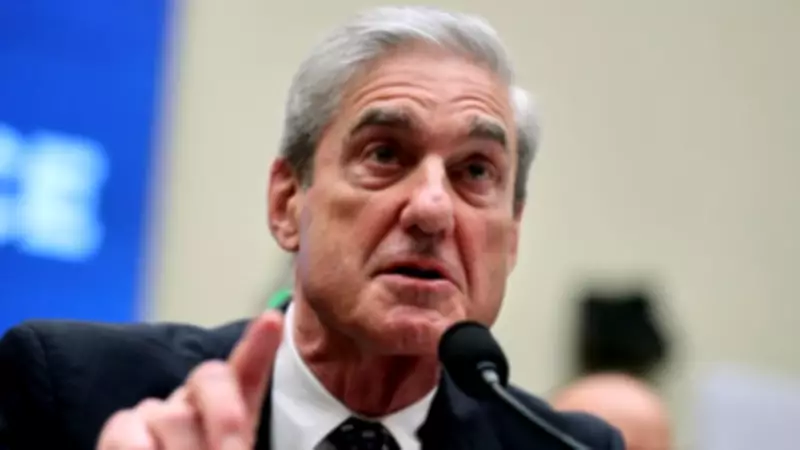
Robert Mueller, the former director of the Federal Bureau of Investigation who led the high-profile investigation into alleged ties between Donald Trump's campaign and Russia, has died at the age of 81. His family released a statement on Saturday confirming his passing with deep sadness, noting that he died on Friday.
Controversial Response from Donald Trump
Former President Donald Trump responded to the news on his social media platform, Truth Social, with a post that read: "Robert Mueller just died. Good, I'm glad he's dead. He can no longer hurt innocent people!" This statement has sparked immediate controversy and debate across political circles.
Mueller's Legacy and Career
Robert Mueller served as FBI director for 12 years, nominated by former Republican President George W. Bush in 2001, just one week before the September 11 terrorist attacks. His tenure was largely defined by the nation's response to terrorism, as he transformed the FBI into a more intelligence-focused agency with enhanced surveillance capabilities to combat threats from al Qaeda and other terror plots.

He remained director until 2013, becoming the second-longest-serving director in FBI history, behind only J. Edgar Hoover. Mueller also served under President Barack Obama's administration, continuing his work in national security and law enforcement.
The Trump-Russia Investigation
Mueller returned to public service as special counsel to lead the investigation into alleged Russian interference in the 2016 presidential election and potential connections to the Trump campaign. His team spent nearly two years conducting what became one of the most consequential and divisive investigations in U.S. Justice Department history.
The resulting 448-page report, released in April 2019, identified substantial contacts between the Trump campaign and Russia but did not allege a criminal conspiracy. It also detailed efforts by President Trump to seize control of the investigation and potentially shut it down. Mueller pointedly noted in his report that his team could not exonerate the president on obstruction of justice charges, stating: "If we had confidence after a thorough investigation of the facts that the president clearly did not commit obstruction of justice, we would so state. Based on the facts and the applicable legal standards, we are unable to reach that judgment."
Impact and Charges
The investigation led to charges against 34 individuals, including Russian intelligence officers and several Trump associates, such as his campaign chairman and first national security adviser. This underscored the complexity and far-reaching nature of Mueller's work, which has continued to influence political discourse and legal standards in the United States.
Strategic Changes at the FBI
During his time as FBI director, Mueller implemented significant strategic changes. In a speech to lawyers in October 2012, he explained that he had expected to focus on traditional areas like drug cases and white-collar crime, but instead had to prioritize long-term intelligence capabilities and technology upgrades. He emphasized building strong partnerships both domestically and internationally to address evolving security threats.
Among the challenges he faced were revelations that the FBI circumvented legal protocols to obtain phone records for terrorism investigations, highlighting the balance between security and civil liberties during his leadership.
Robert Mueller's death marks the end of a storied career that spanned critical moments in American history, from the post-9/11 era to the politically charged investigations of the Trump presidency. His legacy continues to be debated, reflecting the polarized nature of modern U.S. politics.