Robert Mueller, Former FBI Director Who Led Trump-Russia Probe, Dies at 81
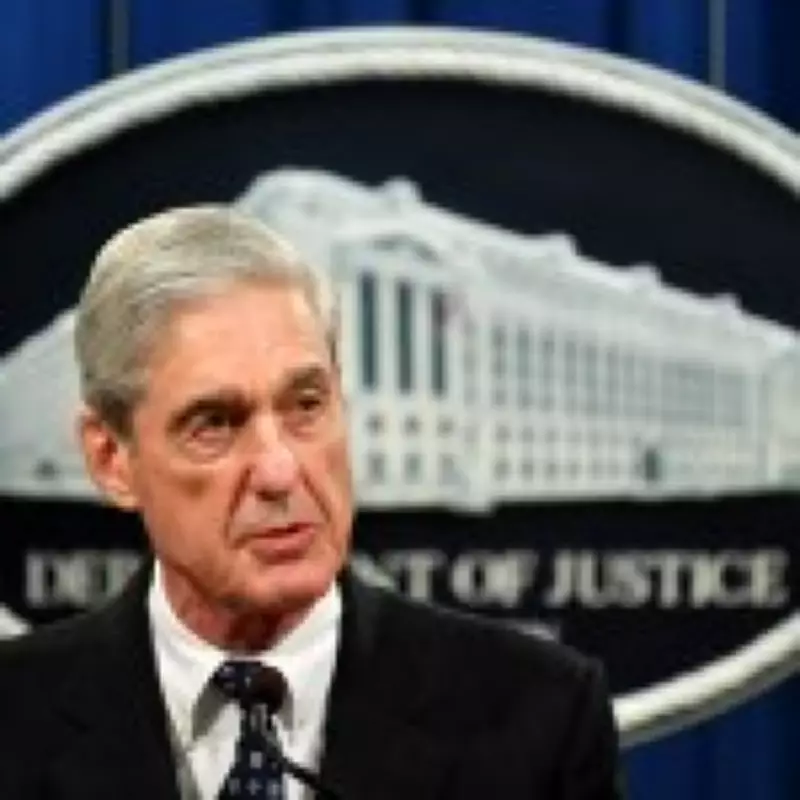
Robert Mueller, the former director of the Federal Bureau of Investigation who led the high-profile inquiry into ties between Russia and Donald Trump's 2016 presidential campaign, has died at the age of 81. A spokesperson for his family confirmed his passing on Friday evening, though the cause of death has not been publicly disclosed.
A Legacy Shaped by National Security and Political Scrutiny
Mueller's tenure at the FBI, which spanned from 2001 to 2013, was profoundly influenced by the September 11 attacks, occurring just days after he took office. This catastrophic event forced a dramatic shift in the bureau's focus from domestic crime-solving to terrorism prevention, a transition that imposed immense pressure on Mueller and the federal government to thwart nearly every potential plot.
After leaving the FBI, Mueller returned to public service in 2017 as special counsel for the Justice Department's investigation into alleged coordination between the Trump campaign and Russia. Over nearly two years, his team conducted a meticulous and divisive probe, resulting in criminal charges against six of Trump's associates, including his campaign chairman and first national security adviser.

The Mueller Report and Its Aftermath
The 448-page Mueller Report, released in April 2019, detailed extensive contacts between the Trump campaign and Russia but did not establish a criminal conspiracy. It also outlined instances where Trump attempted to influence or terminate the investigation, though Mueller declined to make a definitive judgment on obstruction of justice, citing department policy against indicting a sitting president.
Mueller stated, 'If we had confidence after a thorough investigation of the facts that the president clearly did not commit obstruction of justice, we would so state. Based on the facts and the applicable legal standards, we are unable to reach that judgment.' The report's conclusions led to political controversy, with then-Attorney General William Barr asserting that Trump did not obstruct justice, a view Mueller privately contested.
Early Life and Distinguished Career
Born in New York City and raised in a affluent Philadelphia suburb, Mueller earned a bachelor's degree from Princeton University and a master's in international relations from New York University. He served as a Marine officer in the Vietnam War, receiving a Bronze Star, Purple Heart, and two Navy Commendation Medals for his valor.
After his military service, Mueller obtained a law degree from the University of Virginia and embarked on a distinguished legal career. He rose through the ranks as a federal prosecutor in San Francisco and Boston, later overseeing high-profile cases as head of the Justice Department's criminal division, including prosecutions of Panamanian dictator Manuel Noriega and New York crime boss John Gotti.
In a surprising mid-career move, Mueller left a prestigious Boston law firm to join the homicide division in Washington, D.C., where he tackled unsolved drug-related murders in a city grappling with violence. His commitment to justice and public service remained unwavering throughout his life.
Following the announcement of his death, Donald Trump posted on social media, 'Robert Mueller just died. Good, I'm glad he's dead. He can no longer hurt innocent people!' This reaction underscores the polarized legacy of Mueller's work, which continues to resonate in American politics.