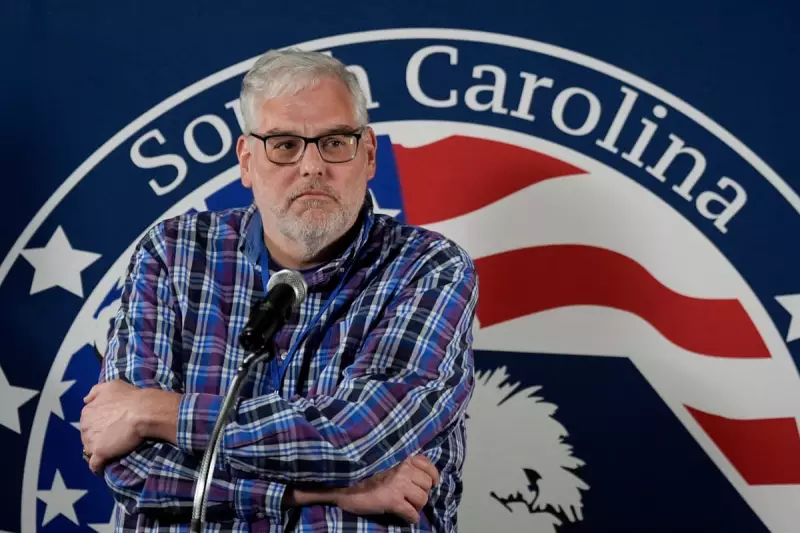
For over two decades, Associated Press reporter Jeffrey Collins has served as a silent witness to the ultimate act of state power. Based in South Carolina, Collins has observed 14 executions since 2002, becoming a crucial chronicler of capital punishment in a state that recently resumed the practice after a long hiatus.
The Solemn Duty of a Witness
Collins's role took on renewed significance when South Carolina revived executions in September 2024, following a 13-year pause caused by a shortage of lethal injection drugs. The state legislature passed a law shielding drug suppliers' identities, allowing officials to acquire pentobarbital. This veil of secrecy makes independent journalistic accounts, like Collins's, the primary impartial record of these state-sanctioned killings, often cited in legal proceedings.
"The people of South Carolina have decided through their elected representatives to have the death penalty," Collins told The Guardian in an interview. "People need to know what it looks like." He is one of three media witnesses mandated for each execution, acting as a pool reporter. Having witnessed 10 lethal injections, three firing squads, and one electrocution, he provides rare continuity and comparison across methods.

Behind the Glass: Documenting Death
Collins meticulously prepares for each execution, studying the case details. On the day, he arrives at the Broad River Correctional Institute in Columbia hours early. The witness room is intimate, with the condemned inmate mere feet away behind a glass partition. For lethal injections, he notes a consistent pattern: the inmate looks at witnesses, then at the ceiling, followed by slowed breathing and eventual stillness within 25 minutes.
He described one anomaly during a lethal injection in late 2024, where a Caucasian inmate turned blue 10-15 minutes into the process, a detail he had not observed before. His notes capture human moments amidst the procedure—a lawyer's tears, a final shared glance between a condemned man and his mother.
The Instantaneous Violence of the Firing Squad
With South Carolina now offering inmates a choice between injection, electrocution, or firing squad, Collins has witnessed three executions by shooting in 2025. The inmate is strapped to a chair, a red target placed over the heart, and a hood drawn over their head. After a tense wait of 40-70 seconds, a sudden bang echoes as three unseen shooters fire.
"They’re going to flinch, because there’s no warning or countdown," Collins said. He observed one execution where the target was "blown across the room." Another, the killing of Mikal Mahdi, raised questions. Collins heard Mahdi groan instantly and make further noises of apparent discomfort for about 90 seconds, a stark contrast to the first firing squad he witnessed. Lawyers later alleged the shooters missed Mahdi's heart, a claim the state denied.
The Weight of Witnessing and a Call for Transparency
After 23 years and 14 executions, Collins says the work inevitably affects him. He makes a point of doing something life-affirming the following day. He emphasises his role is to observe and report, not to influence. However, he is a vocal critic of the secrecy shrouding the process.
"I’m all for sunshine. I don’t think executions should be publicly broadcast, but I think they need to be videotaped," he argued. He notes that critical phases—like the insertion of IV lines or the placement of the firing squad target—occur out of view, preventing a complete public account. "The secrecy prevents the entire story from being told."
As South Carolina continues its accelerated execution schedule, Collins remains the dedicated AP witness, his notepad and state-issued pen the tools for documenting a process he believes the public has a right to understand in full.