Chancellor Rachel Reeves Declares End of Globalization Era
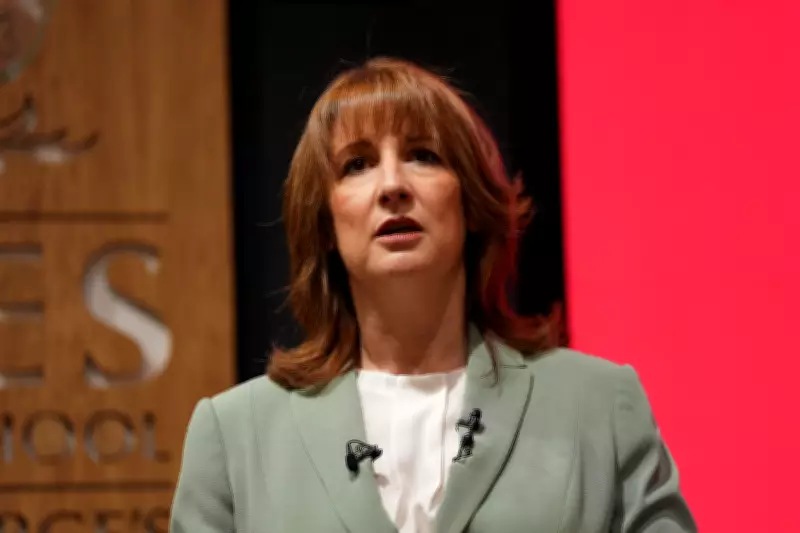
Chancellor Rachel Reeves has delivered a landmark address declaring that "globalization as we once knew it is dead" while outlining her vision for an "active and strategic" state to guide Britain's economic future. Speaking at Bayes Business School on Tuesday, the Labour Chancellor positioned her government's expansion of state intervention as a deliberate strategy to shape the UK's economic destiny in an increasingly unstable world.
'Securonomics' as the New Economic Framework
Reeves introduced "securonomics" as her government's guiding economic philosophy, built on the fundamental principle that "an active and strategic state, working with business, can build secure and resilient growth." She emphasized that this approach would be guided by three core priorities: stability, investment, and reform.
The Chancellor defended her government's decisions to increase tax revenue by approximately £68 billion while implementing deregulation in planning and energy sectors, arguing these measures were essential to establish a more stable economic foundation. "Our method is about making conscious and deliberate choices about the sectors we pursue, and in the capabilities we must protect or grow," Reeves stated.

Addressing Global Insecurity and Trade Disruptions
Reeves pointed to multiple global crises that have fundamentally altered international economic relations, including the 2008 financial crisis aftermath, the global pandemic, war in Europe, Middle East conflicts, energy crises, and trade disruptions. "These crises affirm the reality that globalisation, as we once knew it, is dead," she declared.
The Chancellor specifically referenced oil trade disruptions in the Middle East that would create "upward pressure" on prices, noting she had previously warned about these fundamental shifts in international trade patterns. "That easy optimism about global economic integration has faded, with shocks in one part of the world transmitted swiftly along fragile global supply chains, impacting prices and living standards here at home," she explained.
Major Fiscal Devolution Plans Announced
In what she described as a "genuine break with the past," Reeves announced comprehensive consultations on fiscal devolution that would continue until this year's Budget. These reforms would examine income tax alongside other taxes, initially targeting regions with the greatest capacity for implementation and potential for benefit.
"This is not about new taxes and it's not about higher tax rates – I will not ask taxpayers to pay more," Reeves emphasized. "Reforms will be fiscally neutral, focused on sharing and retaining a portion of existing revenues, with the proceeds of growth benefiting the places that generated that growth."
Rebuilding European Relations and Economic Priorities
The Chancellor dedicated significant attention to rebuilding UK-EU relations, acknowledging there was currently "no partnership between the UK and our European neighbours" and that Labour faced the challenge of "making, and winning, the political arguments" for closer alignment.
While drawing a "red line" against joining the EU's customs union, Reeves committed to expanding trade negotiations across multiple sectors including food standards, energy pricing, youth mobility, and defense. "I believe, absolutely, that closer alignment is the right course for Britain – a course chosen as a sovereign nation, a course chosen in our national interest," she asserted.
Political Opposition and Business Community Response
Shadow Chancellor Sir Mel Stride delivered a sharp rebuke of Reeves' economic management, stating: "Reeves wants to blame everybody else but herself for her dreadful management of the economy. Instead of owning the damage she's done, Reeves is dragging us back into the old Brexit arguments. The Chancellor is utterly deluded and gaslighting the public to cover her own failures."

Business leaders offered mixed reactions to the Chancellor's address. Shevaun Haviland, Director General of the British Chambers of Commerce, praised policy updates on the Oxford-Cambridge corridor and AI adoption as potentially able to "propel our economy to new heights" but warned that businesses had experienced a "rollercoaster ride" under the Labour government.
Stephen Phipson, Chief Executive of Make UK, highlighted energy prices as the "single biggest factor" affecting Britain's international competitiveness, cautioning that "so long as energy prices remain at current levels we will continue to face the threat of deindustrialisation and the loss of key industries."
Additional Government Initiatives Announced
The government revealed several additional economic initiatives, including:
- A steel strategy plan to be unveiled this week
- New summits connecting financiers with local businesses
- Creation of specialized AI institutions focusing on economics and scale-ups
- Continued emphasis on Labour's net zero drive and regulatory measures across labor markets
Reeves concluded by calling for "patience" in implementing her reform agenda while emphasizing that spreading economic growth across regions like the Oxford-Cambridge corridor and northern cities, combined with rapid AI adoption, would ultimately improve Britain's economic fortunes in this new era of global uncertainty.