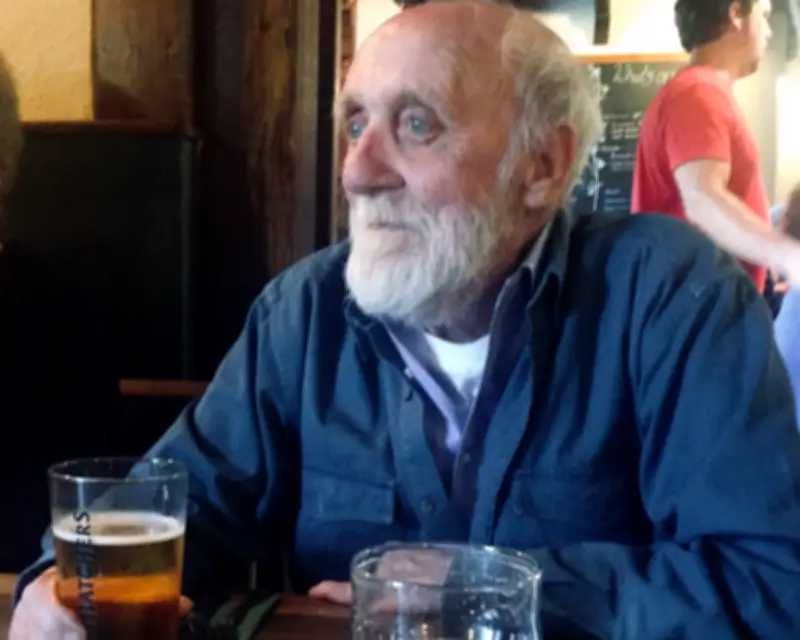
Peter Thomson, the first professor of drama at Exeter University and a transformative figure in British theatre education, has died aged 88. He was a key proponent of the 'learning by doing' approach, insisting that drama must be studied through performance as well as text.
Early Life and Career
Born in Poole, Dorset, to John, a Methodist minister, and Lily (née Hartnell), a teacher, Thomson attended Kingswood School in Bath. During national service with the RAF, he learned Russian, alongside writers Dennis Potter and Michael Frayn. He later studied at Jesus College, Cambridge, where his PhD on Byron was interrupted by a whirlwind romance with Rita Prince, whom he married in 1963.
In 1964, Thomson became an assistant lecturer at Manchester University's drama department, the second such department in the UK. There, he found tensions between traditionalist academics and practical practitioners like Stephen Joseph. Thomson argued that theory and practice were complementary routes to the same goal.
Practical Essays and Innovative Teaching
Thomson developed 'practical essays', where students creatively prepared and enacted seminal events in theatre history rather than writing traditional essays. One student recalled playing dissident dramatist Henry Fielding in a drama-documentary on the 1737 introduction of British theatre censorship, performed to celebrate its abolition in 1968.
In 1974, Thomson moved to Exeter University's drama department, where he found his ideas in full flower. Courses were delivered through five-week-long projects, conducted 'in footless tights and sleeveless leotards', as he noted with initial terror.
Defending the Discipline
Thomson's inaugural lecture challenged hierarchies between academic and practical work. He co-founded the Standing Conference of University Drama Departments (Scudd, now DramaHE) in 1972, and later a regular conference and the journal Studies in Theatre and Performance to defend the discipline.
In 1981, when the University Grants Committee, influenced by Margaret Thatcher's policies, invited 13 universities to drop drama, Thomson led a successful campaign of resistance. When Bangor closed its drama department, he arranged staff transfers to other universities. Scudd's reputation later helped incorporate practice as legitimate research in Research Assessment Exercises.
Notable Alumni and Legacy
Thomson's department nurtured graduates including Felix Barrett (founder of Punchdrunk), writers Abi Morgan, Jessica Swale, and David Eldridge. His voluminous writings include works on Shakespeare (Shakespeare's Theatre, 1983; Shakespeare's Professional Career, 1992), Brecht (a definitive study of Mother Courage and Her Children, 1997), and the co-authored Everyman Companion to the Theatre (1985), as well as a three-volume Introduction to English Theatre 1660-1900 (2006).
Thomson was also a passionate cricketer, making 584 appearances for Exeter University's staff team, the Erratics. He enjoyed poetry, cigarettes, and pints, and was unfailingly supportive to students worldwide.
His wife Rita, a CND activist, died in 2021. Thomson is survived by his children Jim, Kate, Stephen, and Annie, and five grandchildren.