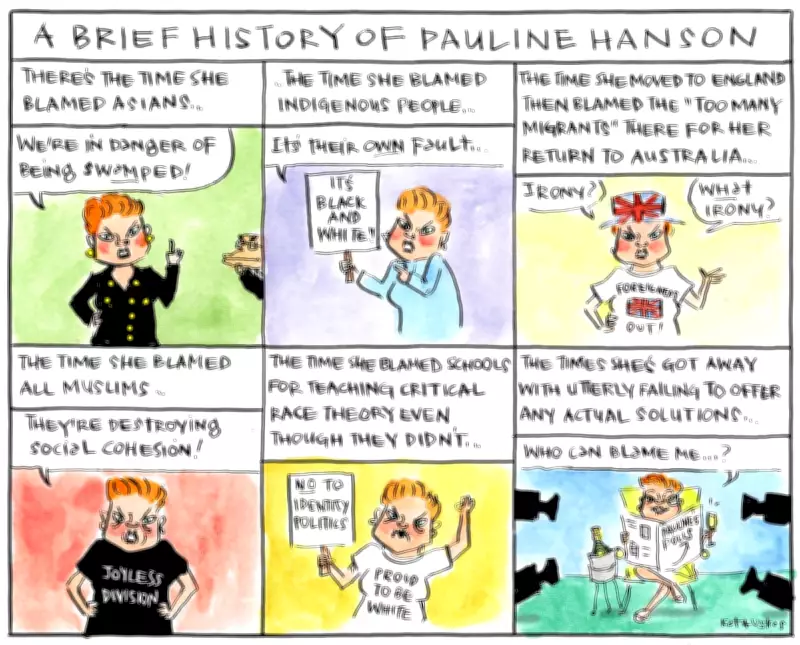
Pauline Hanson's Political Legacy: What Lessons Can We Learn?
The political career of Pauline Hanson, a figure who has stirred significant controversy in Australian politics, offers a rich tapestry of lessons for contemporary democracies. Her rise to prominence in the 1990s, marked by fiery rhetoric and polarizing policies, continues to resonate in political discourse today.
The Rise of Populist Rhetoric
Hanson's entry into politics was characterized by a populist appeal that tapped into widespread economic anxieties and cultural fears. Her One Nation party, founded in 1997, gained traction by advocating for protectionist economic policies and strict immigration controls. This approach highlighted how populist leaders can mobilize support by framing complex issues in simplistic, us-versus-them terms.
Observers note that her success underscored the power of connecting with voters who feel marginalized by mainstream political parties. The lesson here is clear: when established institutions fail to address public concerns, space opens for figures who promise straightforward solutions, regardless of their divisive nature.

Media Amplification and Public Discourse
A critical aspect of Hanson's impact was the role of media in amplifying her message. Her provocative statements often dominated news cycles, providing her with free publicity that far exceeded her party's initial resources. This phenomenon illustrates how modern media, driven by ratings and clicks, can inadvertently boost fringe voices.
The lesson for democracies is the need for media literacy and responsible journalism. By critically evaluating how coverage shapes public perception, societies can better navigate the fine line between reporting news and sensationalizing it.
Societal Division and Political Polarization
Hanson's tenure has been associated with deepening societal divisions, particularly around issues of race and immigration. Her comments often sparked heated debates, revealing underlying tensions in Australian society. This polarization serves as a cautionary tale about the long-term effects of divisive politics.
It teaches that while short-term political gains might be achieved through confrontation, such strategies can erode social cohesion and trust in democratic institutions. The challenge for future leaders is to foster inclusive dialogue that bridges divides rather than exacerbating them.
Enduring Influence and Electoral Dynamics
Despite numerous setbacks, including electoral defeats and legal challenges, Hanson has maintained a presence in Australian politics. Her ability to adapt and re-enter the political arena demonstrates the resilience of populist movements. This persistence highlights how certain ideologies can endure beyond individual leaders.
The lesson is that addressing the root causes of populism—such as economic inequality and cultural dislocation—requires sustained policy efforts. Merely opposing populist figures without tackling underlying issues may lead to their resurgence in new forms.
Reflections on Democratic Health
Ultimately, Hanson's career prompts reflection on the health of democratic systems. Her rise signals vulnerabilities in political structures that allow extreme views to gain legitimacy. It underscores the importance of robust civic education and engaged citizenship to safeguard democratic norms.
By learning from her trajectory, societies can strengthen mechanisms for inclusive governance and mitigate the risks posed by polarizing figures. The key takeaway is that vigilance and proactive engagement are essential to preserving democratic integrity in an era of rapid change.