Hungary's Orbán Faces Mounting Pressure Over Ukraine Loan Veto at EU Summit
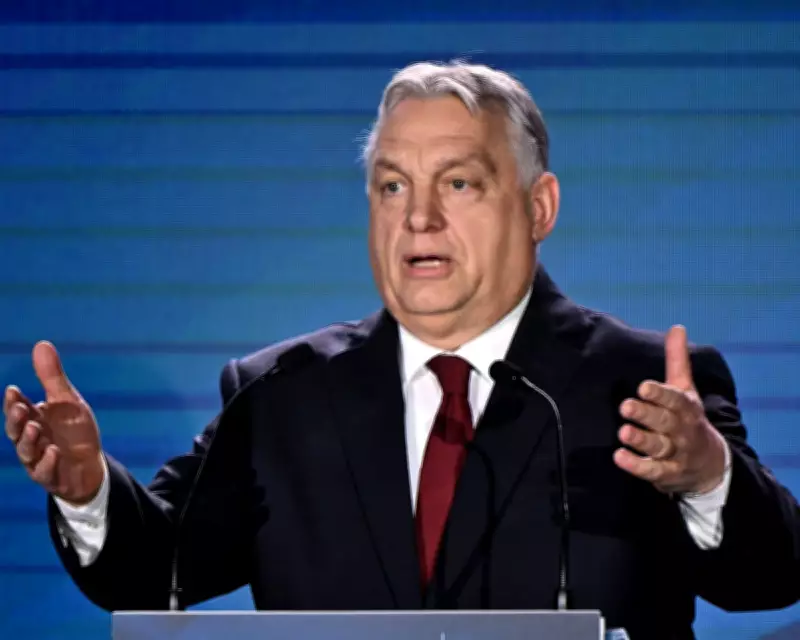
Hungarian Prime Minister Viktor Orbán is set to confront significant pressure from fellow European Union leaders during Thursday's summit in Brussels, as his last-minute blockade of a crucial €90bn loan package for Ukraine has ignited widespread frustration and anger across the bloc. Orbán's refusal to approve the financial assistance, which was agreed upon last December, centers on a political dispute regarding the damaged Soviet-era Druzhba oil pipeline that supplies Hungary with Russian oil via Ukraine.
"No Oil, No Money": Orbán's Firm Stance
In a video message released on Tuesday, Orbán explicitly stated his unwavering position, declaring, "If there is no oil, there is no money." He emphasized that Hungary would not permit the release of the €90bn loan until the Druzhba pipeline, also known as the Friendship pipeline, is fully repaired and operational. This stance comes despite a letter from Ukrainian President Volodymyr Zelenskyy assuring that "all possible efforts" are underway to restore the pipeline, which Kyiv attributes to damage from a Russian airstrike.
Orbán reiterated his demands to European Council President António Costa, asserting that Hungary's position remains unchanged. "If President Zelenskyy wants to receive his money from Brussels then he must reopen the Friendship oil pipeline," Orbán stated firmly. Meanwhile, Zelenskyy, during a visit to Madrid, expressed hope that EU leaders would honor their commitment to provide the €90bn loan, which is urgently needed for military supplies and general budget support in Ukraine.

EU Diplomats Insist: "A Deal Is a Deal"
The Hungarian veto has infuriated other EU member states, particularly since Orbán initially agreed to the funding deal in December under the condition that Budapest would not participate financially. Hungary, along with Slovakia and the Czech Republic, pledged not to obstruct a decision by 24 EU countries to secure the loan. This agreement was a hard-fought alternative after an initial proposal to use frozen Russian assets as collateral was rejected by Belgium and several other nations.
EU diplomats have been vocal in their criticism, insisting there is no room for renegotiation. "A deal is a deal," declared a senior EU diplomat. "So no plan B, no plan C, no plan D. This €90bn loan is what needs to happen." Another senior diplomat echoed this sentiment, warning that discussing alternatives would amount to yielding to blackmail. The frustration is palpable, with one official noting that criticism of the Hungarian government has become increasingly open and direct, marking a significant turning point in EU-Hungary relations.
Broader Implications: Sanctions and Elections
Beyond the loan dispute, Hungary and Slovakia are also blocking the EU's 20th round of sanctions against Russia, which were intended to be passed last month to commemorate the fourth anniversary of the full-scale invasion of Ukraine. This dual blockade complicates the EU's unified response to the ongoing conflict.
Domestically, Orbán faces a critical political challenge as Hungary approaches elections on April 12. Polls indicate that his main rival, Péter Magyar, is leading by up to 20 points, posing the most serious threat to Orbán's 16-year tenure. Orbán appears to be leveraging the pipeline dispute to galvanize support, with pro-government posters in Budapest bearing the message, "Let's not let Zelenskyy have the last laugh."
EU's Contradictory Pipeline Repair Offer
In a move aimed at resolving the impasse, the European Commission announced on Tuesday that EU funds and technical support would be available to restore the flow of Russian oil to Hungary and Slovakia. However, this offer has raised eyebrows, given the bloc's commitment to phasing out Russian oil imports by the end of 2027. Rihards Kols, a Latvian nationalist conservative MEP, described the policy as "delusional," questioning the logic of repairing a pipeline bombed by Russia to restart oil flows that the EU claims to be phasing out.

Summit Agenda Overshadowed by Disputes
The Brussels summit, originally focused on revitalizing Europe's competitiveness against the US and China, is now likely to be dominated by the Hungary-Ukraine dispute and the war in the Middle East. EU leaders are expected to call for "de-escalation and maximum restraint" in the Middle East, condemning Iran's military strikes and expressing deep concern about hostilities in Lebanon. While the statement will condemn Hezbollah, it notably omits direct references to the US or Israel regarding their roles in the conflict.
Despite these distractions, Spanish Prime Minister Pedro Sánchez affirmed unwavering support for Ukraine alongside Zelenskyy in Madrid. "We cannot deny that the crisis in the Middle East is monopolising conversation, and precisely for that reason I want to say to the government of Ukraine that nothing and no one will make us forget what is happening in Ukraine," Sánchez stated, underscoring the EU's continued commitment to Kyiv amid broader geopolitical tensions.