Orbán's Electoral Setback Puts UK Populist Right Funding at Risk
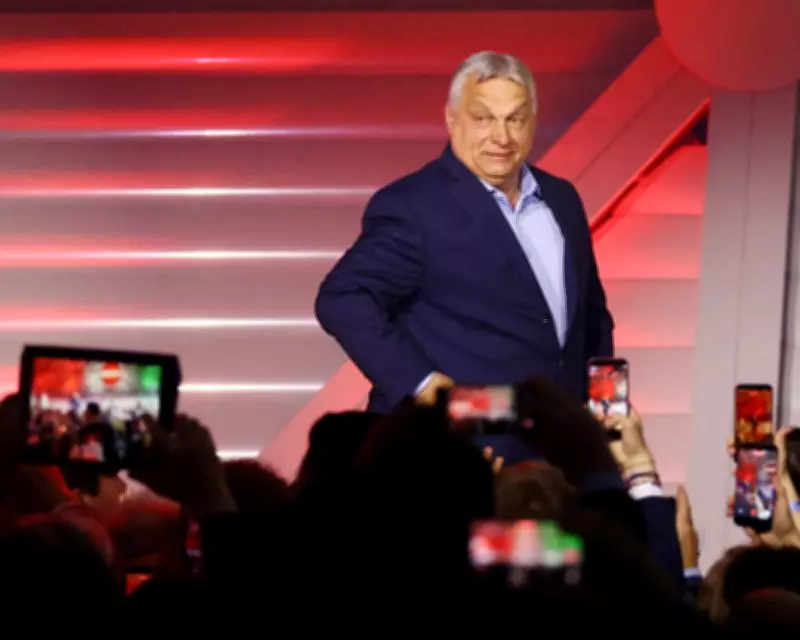
Viktor Orbán's arrival to address supporters in Budapest, following the announcement of partial parliamentary election results, marked a pivotal moment. His overwhelming defeat this week now threatens to abruptly halt Hungarian support for populist right individuals and thinktanks across Europe, including key British figures.
British Beneficiaries of Orbán's Regime
Over the past 16 years, Orbán's rule has been notably generous to several British political personalities. Individuals such as Matt Goodwin of Reform UK, Lord Frost, and James Orr have all benefited from the largesse extended by Hungary's self-styled "illiberal democracy," established by the ruling Fidesz party. Budapest has channeled millions annually to thinktanks and individuals associated with the harder right of British conservatism.
Frank Furedi, a British-Hungarian sociologist and leading ideological figure for the new right, commented on the impending changes. "We expect steps to be taken to try to deprive certain institutions of the funding they previously had, and in some cases, there will be attempts to close them down," he stated. Furedi heads MCC Brussels, a thinktank almost entirely funded since its 2022 establishment by a grant from Mathias Corvinus Collegium, a conservative Hungarian educational institution backed by Orbán's government.

Funding Sources and Controversies
The Collegium's shares in MOL, a lucrative Hungarian energy company that sources most of its oil from Russia, have led to accusations that MCC Brussels and other outposts effectively run on Russian oil. British beneficiaries include the Roger Scruton Legacy Foundation, which has received over half a million pounds since 2023 from MCC, accounting for more than 90% of its total funding. The foundation's board features influential figures like Michael Gove and James Orr, a key adviser to Nigel Farage.
Other associated individuals, such as Matt Goodwin, have been listed as "visiting fellows" by MCC, with leaked documents revealing payments ranging from €5,000 to €10,000 per month. Goodwin spoke at an MCC event shortly after Orbán's ousting, described by attendees as a sombre affair. Additionally, the Danube Institute, founded by Margaret Thatcher's former speechwriter John O'Sullivan, has provided tens of thousands of pounds to British figures for media appearances.
Future Implications and Reactions
Hungary's prime minister-elect, Péter Magyar, has vowed to suspend what he calls the "propaganda machine" of state media and criticized the mixing of party financing with government spending. "I believe the state should never have financed them in the first place," he asserted at a press conference. This stance signals a likely end to the flow of funds from Budapest to British and European allies of Orbán.
Furedi remains optimistic about adapting to potential funding cuts. "If we're deprived of our existing stream of funding, then we'll just have to go out with a cap and raise money and find new ways of operating that are more economical," he said, insisting on his organization's autonomy. Marietta van der Tol, an assistant research professor at Cambridge, noted that thinktanks might seek alternative funding from corporate sources or even the US, given its strategy to cultivate resistance within European nations.
As Hungarians demand regime change, the uncertainty surrounding Péter Magyar's intentions adds to the concerns of those who have long benefited from Orbán's support. The broader network that evolved during Orbán's rule now faces a significant upheaval, with implications for the populist right's influence in the UK and beyond.