Orbán Removes Veto on €90bn EU Ukraine Aid Package
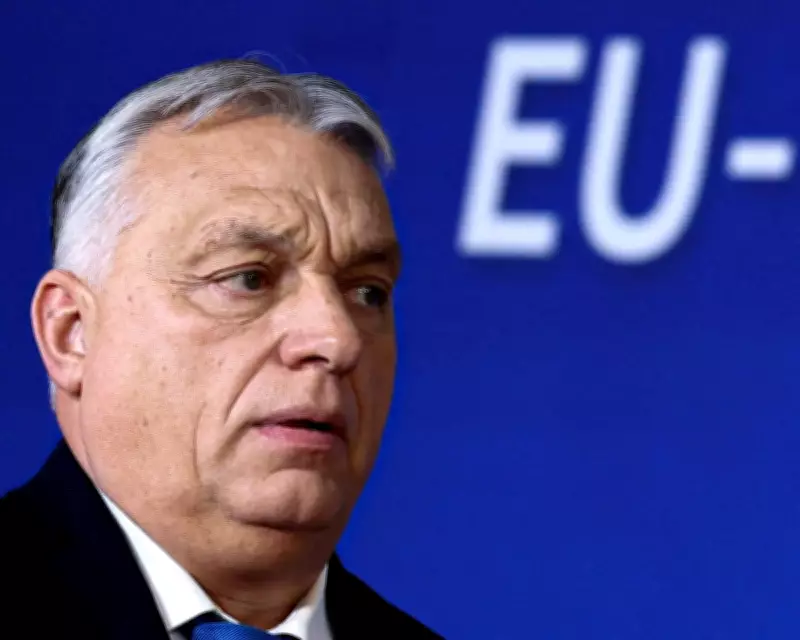
In a significant diplomatic shift, Hungary's outgoing Prime Minister Viktor Orbán has announced he will no longer block the European Union's €90 billion aid package to Ukraine. The decision comes as Orbán prepares to exit power following his electoral defeat, with caretaker status until his successor takes office.
Pipeline Resolution Clears Path for EU Support
Orbán stated that Hungary received assurances through Brussels that Ukraine would restore oil deliveries via the damaged Druzhba pipeline, which transports Russian oil through Ukraine to Hungary. "Once oil deliveries are restored, we will no longer stand in the way of approving the loan," said Orbán, who had previously cited the pipeline issue as his reason for blocking the financial assistance.
However, European observers note that Orbán had repeatedly impeded EU support for Ukraine well before pipeline concerns emerged, with his government maintaining friendly relations with Russian President Vladimir Putin throughout the conflict.

New Hungarian Leadership Promises Brussels Alignment
Peter Magyar, who secured a sweeping electoral mandate to replace Orbán, has committed to smoother relations with European institutions. Magyar has publicly criticized his predecessor for bowing to Russian influence and pledged a more cooperative approach within the EU framework.
French President Emmanuel Macron expressed optimism about the loan's progress following Orbán's political departure. "We can be reasonably optimistic about the sound progress and implementation of the EU loan," Macron stated on Monday, highlighting the changing political landscape in Hungary.
Germany Confronts Russian Threats Amid Support for Ukraine
Meanwhile, Germany summoned the Russian ambassador over what Berlin described as "direct threats from Russia" against targets within Germany. The German foreign ministry declared these threats "an attempt to undermine our support for Ukraine and test our unity," adding firmly: "We will not be intimidated."
The diplomatic confrontation follows Russia's defense ministry publishing a list identifying at least three German companies as suppliers of unmanned aerial vehicles (UAVs) to Ukraine, with suggestions these firms could become targets. The list included 21 companies Moscow considers either subsidiaries of Ukrainian defense companies or suppliers of critical components.
Security Incidents and Humanitarian Concerns
In separate developments, Russian authorities announced the arrest of a German woman in Pyatigorsk, accusing her of participating in an alleged Ukrainian-backed plot to destroy a services facility. The FSB security agency claimed she possessed an explosive device in her backpack at the time of arrest.
The death toll from Saturday's mass shooting in Kyiv rose to seven on Monday as another wounded victim succumbed to injuries. The attacker, a Russian-born man, opened fire on passersby with an automatic rifle before barricading himself in a supermarket with hostages, where police ultimately shot him dead.
Europol Tracks Deported Ukrainian Children
In a significant investigative effort, Europol's "hackathon" event successfully traced 45 Ukrainian children who were forcibly deported to Russia. Forty investigators from 18 countries gathered in The Hague last week, utilizing open-source intelligence (Osint) to locate some of the estimated 20,000 children Kyiv says have been taken.
"Some of these children have been adopted by Russian nationals, while others are being held in re-education camps or psychiatric hospitals," Europol reported, sharing the uncovered information with Ukrainian authorities for ongoing investigations. The International Criminal Court has issued war crime arrest warrants for Vladimir Putin and his "children's commissioner" Maria Lvova-Belova regarding these kidnappings.
EU countries are scheduled to formally move forward with unlocking the €90 billion loan to Ukraine on Wednesday, marking a pivotal moment in European support as Hungary transitions to new leadership less aligned with Moscow.