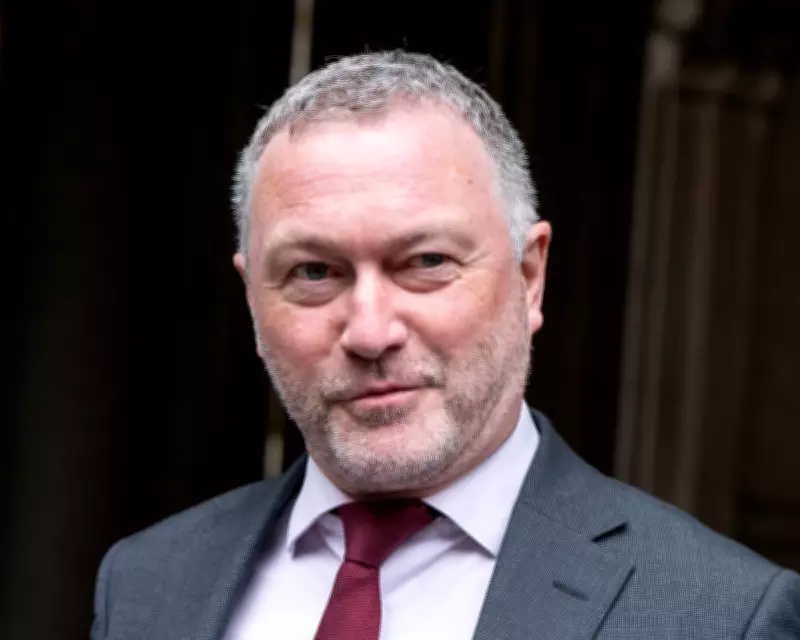
Norfolk Council Leader Accuses Government of Bullying Over Election Delay
Kay Mason Billig, the Conservative leader of Norfolk County Council, has launched a scathing attack on the government, accusing local government secretary Steve Reed of "bullying" her authority into postponing local elections in exchange for extra funding and powers. This dramatic accusation comes as Billig announced she is pulling Norfolk out of long-awaited devolution plans, throwing the region's political future into uncertainty.
"Two-Faced Bully" Allegation Rocks Local Government
In explosive comments that have sent shockwaves through local government circles, Billig labeled Reed a "two-faced bully" who allegedly forced the council to agree not to request local elections proceed as scheduled. She claims this pressure was applied in return for Norfolk's inclusion in the government's devolution priority programme, which would accelerate mayoral elections originally planned for 2026.
"The contract is broken," declared Billig. "The Conservative group is resolved that we will not be assisting this government to deliver local government reorganisation." She emphasized that the council cannot simultaneously manage elections and complex restructuring plans, stating: "As a result, devolution and LGR are off."
Government Denies Allegations as Election Chaos Deepens
The Ministry of Housing, Communities and Local Government swiftly denied Billig's claims, stating: "Norfolk's place on the devolution priority programme has never been contingent on the timing of local authority elections and we remain committed to working with all local partners on mayoral devolution in Norfolk and Suffolk."
This controversy emerges against the backdrop of the government's recent U-turn on postponing elections at 30 English councils undergoing reorganisation. The reversal came after Reform UK mounted a legal challenge, leaving officials scrambling to organize ballots for May polling day. Billig expressed frustration at the situation, saying: "Words fail me for describing the mess the government have created with their election hokey-cokey."
Wider Implications for Council Reorganisation
There are growing concerns that other council leaders might follow Norfolk's lead, potentially derailing what has been described as the biggest council shake-up in 50 years. Daniel Elmer, leader of South Norfolk Council, voiced skepticism about the promised benefits of local government reorganisation (LGR), which aims to merge two-tier councils into fewer unitary authorities.
"We were sold LGR as a mechanism for us to receive more money and powers locally," Elmer said. "So far, that has not materialised and I am therefore not sure that we should be spending more of our taxpayers money on this."
Political Fallout and Divided Opinions
The controversy has sparked intense political debate, with Reform UK leader Nigel Farage calling for Reed's resignation over the "election fiasco." Conservative MPs have demanded Reed quit if he cannot address questions about his "personal propriety as a minister" regarding the decision's handling.
Meanwhile, Labour MPs appear divided on the broader council reorganisation concept. Some backbenchers question the timing and wisdom of such complex changes, with one stating: "I just don't get why you would do something as complex and risky as this in a first term. It's a second-term project, at best." Others defend the plans, arguing the current two-tier system confuses residents.
Care minister Stephen Kinnock defended his colleague, asserting Reed was "doing an excellent job" and emphasizing the government's commitment to working "within the rule of law" despite the "not ideal" situation.
As Norfolk withdraws from devolution talks and accusations of bullying reverberate through Westminster, the future of local government restructuring in England faces significant uncertainty, with potential ramifications for communities nationwide.