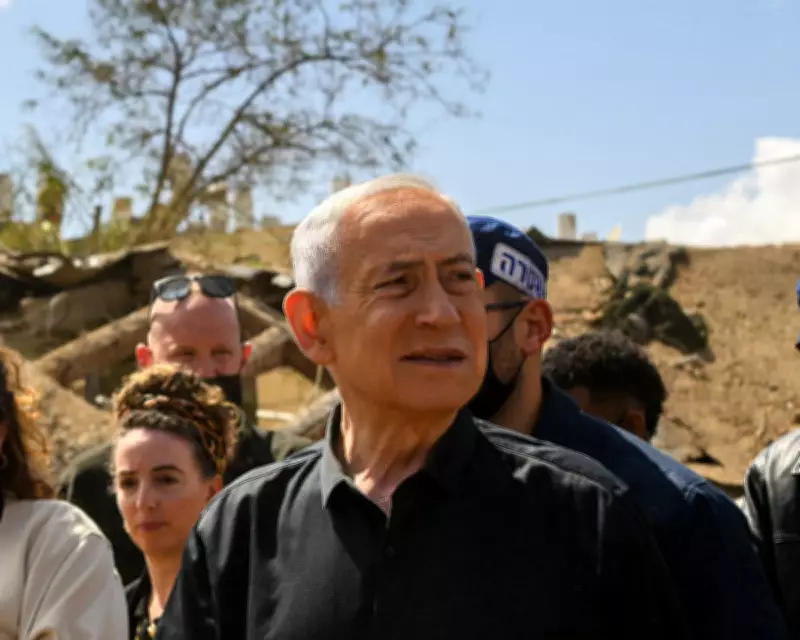
Netanyahu's Calculated Gamble: War with Iran as Political Lifeline
As Israeli Prime Minister Benjamin Netanyahu faces mounting political pressure and a looming inquiry into the October 7 attacks, his military campaign against Iran appears strategically timed to serve as both national security policy and personal political salvation. With his political career, legacy, and personal freedom potentially hanging in the balance, Netanyahu's approach to the Iranian conflict reveals complex calculations extending far beyond battlefield objectives.
War as Political Rehabilitation Strategy
"As far as Netanyahu is concerned, the road to the polling stations runs through Washington and Tehran," revealed a minister close to Netanyahu in comments to the Haaretz newspaper shortly before hostilities commenced. This statement encapsulates the prime minister's apparent calculation that destroying what he terms the Iranian "axis of evil" represents his best opportunity to rehabilitate his tarnished political image following the devastating Hamas-led attacks of October 2023.
Despite overwhelming public support for the war among Jewish Israelis—with the Israel Democracy Institute recording approval exceeding 90% in wartime polls—Netanyahu's personal political fortunes have shown little improvement. The prime minister astonished both allies and opponents by maintaining power after what became the bloodiest day in Israel's history, resisting calls to accept personal responsibility for security failures that prompted nearly every other senior official from that period to apologize and resign.

Domestic Consensus and International Skepticism
Within Israel, the war has produced remarkable political unity, with opposition politicians setting aside campaigning for autumn parliamentary elections to back the decision to attack Iran. This consensus stands in stark contrast to international perspectives, where concerns about regional escalation, spiraling energy prices, and economic disruption dominate coverage.
Public opinion researcher Dahlia Scheindlin noted a significant shift in Israeli perceptions: "One of the most important data points for me is that in June 2025, close to two-thirds of Israelis believed he had taken action for genuine security reasons. That makes a difference, given that for two years in the wake of the October 7 attacks, people thought he was taking major strategic decisions regarding the Gaza war for political reasons."
The American Dimension and Diplomatic Calculations
The U.S.-Israel relationship represents both potential asset and liability in Netanyahu's political calculus. While the prime minister has often campaigned on his standing as an international statesman, bipartisan support for Israel in the United States shows signs of erosion. Former National Counterterrorism Center director Joe Kent articulated growing skepticism when he resigned, stating: "Iran posed no imminent threat to our nation, and it is clear that we started this war due to pressure from Israel and its powerful American lobby."
A senior former Israeli intelligence official expressed concern about this trend: "I think the biggest risk in this war is losing the American people. If there are many Americans killed, soaring fuel prices, and it doesn't seem like a victory then it would just enhance those negative trends toward Israel that we are already seeing in the U.S."
Personal Stakes and Legal Vulnerabilities
Beyond political survival, Netanyahu faces substantial personal legal jeopardy. The prime minister continues to fight a long-running corruption case involving charges of bribery, fraud, and breach of trust. Should he lose power, he would face trial as a private citizen rather than as sitting prime minister. Netanyahu has pursued a pre-emptive pardon with enthusiastic backing from former President Donald Trump, raising the issue during his first wartime news conference despite justice ministry advice against dropping the charges.
Center-left legislator Naama Lazimi articulated widespread concerns: "Since Netanyahu became a criminal defendant, his political conduct has increasingly been driven by his personal survival. That is why there are legitimate concerns that, at times, his political considerations may outweigh Israel's national security interests."

Strategic Consequences and Regional Realities
The war against Iran has effectively muted coverage of ongoing humanitarian crises in Gaza and escalating violence in the occupied West Bank. Yet if current polling proves accurate and produces a hung parliament, Palestinian citizens' parties may offer the only viable path for opposition parties to form a government—a scenario mainstream Jewish opposition parties have vowed to avoid.
Eli Leon's commentary in Maariv captured the fundamental strategic dilemma: "If the price of bringing down the Iranian regime is breaking up the alliance with the United States ... that will be a victory that ultimately costs us our ability to survive in this region in the long term."
Despite the massive military undertaking, the conflict has produced minimal political benefit for Netanyahu thus far. Scheindlin observed: "There has been no significant rally for trust in the government, just a few points which quickly declined back to prewar levels. This war is potentially reorganizing the whole Middle East—and the Israeli public is barely raising an eyebrow."
As Israel approaches its first post-October 7 elections, Netanyahu's gamble on war with Iran as political salvation appears increasingly precarious, with military success potentially undermined by diplomatic isolation and unchanged domestic political realities.