Nationalist Parties Poised for Historic Wins Across Celtic Nations
In a potential seismic shift for British politics, nationalist parties aiming to reshape the United Kingdom could soon govern Scotland, Wales, and Northern Ireland simultaneously. With elections scheduled for May 7th, opinion polls consistently indicate that Plaid Cymru, the Scottish National Party (SNP), and Sinn Féin are on track to secure power in their respective nations. This unprecedented scenario would place England as the sole UK nation under a non-nationalist administration, flanked by restless center-left nationalist governments in Cardiff, Edinburgh, and Belfast.
Constitutional Challenges Loom for UK Government
The prospect of three nationalist first ministers presents significant constitutional disputes for Keir Starmer's Labour government in London, or potentially his successor if he is ousted after May's elections. Sources reveal that all three parties are already engaged in talks about combining forces to challenge the UK government on critical areas including spending, taxation, welfare policies, and rejoining the European Union. Meanwhile, Starmer will likely contend with more English local authorities controlled by Reform UK, which champions its own form of British nationalism.
Angus Robertson, a senior minister in the Scottish government, emphasized the transformative nature of this development: "The change will be seismic. It's really important to appreciate that if we are in a situation with three nationalist first ministers out of four nations of the UK, the status quo is not sustainable. There is going to have to be a massive step change in how the UK deals with the other nations of the United Kingdom."

Potential for Independence Referendums and Policy Demands
The disputes could escalate into open conflict if the SNP secures an overall majority in May and uses that mandate to demand a second independence referendum, potentially as early as 2028. While some polls suggest this outcome is realistic, it remains unlikely due to Holyrood's proportional voting system. Nevertheless, the nationalist victories would embolden demands for greater autonomy across the Celtic nations.
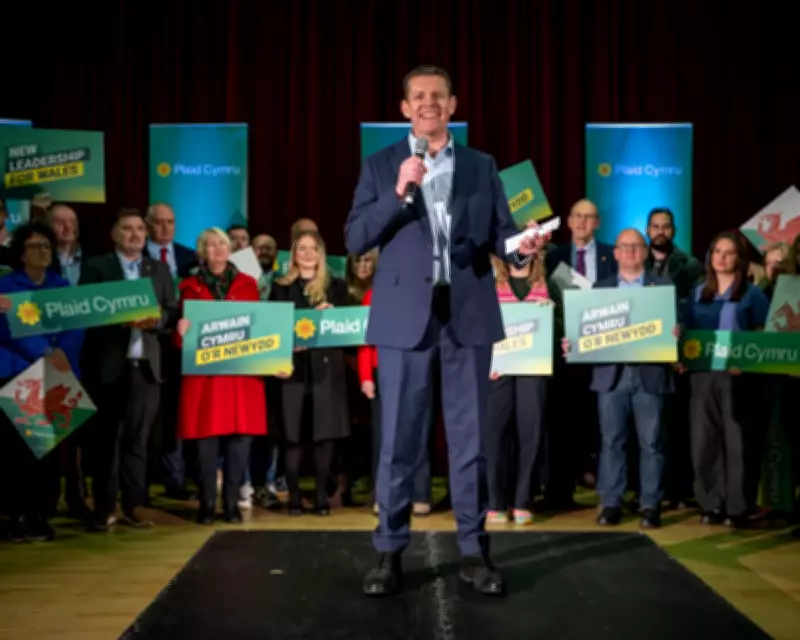
Rhun ap Iorwerth, the Plaid Cymru leader who aims to end 103 years of Labour domination in Wales, is preparing to demand that Starmer grant Wales powers long enjoyed in Scotland. These include devolved policing and justice systems, control over its seabed, and increased funding allocations. At Plaid Cymru's autumn conference, ap Iorwerth declared: "The Labour party became so preoccupied with holding on to power that it forgot where it came from and who it was there to serve. We don't have to believe Westminster when they tell Wales 'this is your lot' and that we should be ever grateful for what we're given. We can do things differently. [We] are not here to repair Labour. We are here to replace them."
Shifting Alliances and International Implications
In a further indication of the UK's evolving constitutional landscape, Scotland's First Minister John Swinney has tentatively aligned himself with Sinn Féin's deputy leader Michelle O'Neill, the First Minister of Northern Ireland's power-sharing government. This partnership, previously considered politically unthinkable, was highlighted when O'Neill supported Swinney's calls in mid-March for an emergency summit to address the energy crisis amid the Iran war.
There are expectations that Sinn Féin would leverage Plaid Cymru and SNP victories to amplify demands for a poll on Irish reunification by 2030, making this a central theme of its Northern Irish election campaign in May 2027. One senior Labour source has heard centrist politicians in Northern Ireland predict that if Nigel Farage and Reform win the next UK election, support for a border poll and reunification would increase sharply, even within their own ranks.
Expert Perspectives on UK Stability
These developments have unsettled some of the UK's western allies, with diplomats expressing concern that renewed constitutional conflict could weaken Starmer's government during a period of global instability. However, other diplomats and experts on British constitutional politics remain more sanguine about the risks to the UK's territorial integrity.

Michael Keating, an emeritus and honorary professor with Aberdeen and Edinburgh universities, argued that nationalist victories would test the UK Labour government's maturity rather than immediately threaten the UK's existence. He noted that in other countries like Canada and Spain, nationalist parties have governed regions without existentially threatening central governments. "It's high temperature in Spain, but they know what the rules are and they make it work," Keating observed. "[This] is normalising devolution; normalising the plurinational state. This is a democratic form of politics."
Brexit's Impact on Devolution Dynamics
Keating emphasized that Brexit has intensified the long-running conflict between Whitehall's desire to assert sovereignty through central control and the growing pressure for greater local autonomy in Scotland and Wales after 27 years of devolution. When Britain was part of the European Union, all UK nations followed the same EU regulations, but since Brexit, Whitehall has assumed ultimate authority over devolved matters, causing significant friction.
Starmer came to power in 2024 pledging to heal the deep divisions that marred relations between the Scottish, Welsh, and UK governments under the Conservatives. While closer working relationships initially endured, tensions have soured markedly under Scottish Secretary Douglas Alexander, widely regarded as a hawk when it comes to protecting Westminster's interests.
Internal Labour Tensions and Policy Conflicts
In March, ap Iorwerth brandished a leaked UK cabinet memo in the Senedd where Starmer implicitly acknowledged Labour could lose in Scotland and Wales but stated the UK should still avoid being "overly deferential" to devolved governments. Starmer wrote: "Each of us will maintain a professional and respectful working relationship with our counterparts in devolved governments. But we should be confident in our ability to deliver directly in those nations, including through direct spending, even when devolved governments may oppose this."
Eluned Morgan, Wales's Labour First Minister, has expressed frustration with Labour policies from Westminster, including attempts to cut winter fuel payments and disability benefits. Her colleagues are also angered that Starmer's government has failed to honor 2024 manifesto commitments to devolve youth justice and probation services, instead using post-Brexit internal market legislation to impose UK spending on town center modernization in Wales. One senior Labour source lamented: "Certainly, two years into that administration, there is next to nothing to show on issues which matter to Welsh Labour."
Governing Challenges for Nationalist Parties
Laura McAllister, a professor of public policy at Cardiff University, cautioned that collaboration between the three nationalist parties at the UK level might not proceed smoothly, and domestic success is not guaranteed for Plaid Cymru, the SNP, or Sinn Féin. A Plaid Cymru victory in May would represent "a pretty revolutionary change" for Wales, but the party must first demonstrate it can govern more effectively than Labour. Since devolution began in 1999, NHS and education standards in Wales have fallen below other UK nations, and poverty has deepened.
If John Swinney wins in May, he must address a £5 billion spending shortfall. The SNP has retained power by implementing expensive policies without proper budgeting, resulting in public confidence in services remaining lower than the party's 35% support in opinion polls. Both Plaid Cymru and the SNP would likely lead minority governments, heavily dependent on deals with other parties that have their own demands.
Sinn Féin's power-sharing government with the Democratic Unionist Party remains extremely fractious, with public confidence in Stormont and Northern Ireland's struggling public services deteriorating. There is no certainty their partnership will survive until next year's election, or that Sinn Féin's vote will increase.
Policy Divisions Between Nationalist Parties
McAllister noted that Plaid Cymru and the SNP disagree on key policy areas, particularly reforming the Barnett formula—the Treasury system that funds UK nations and regions. Plaid Cymru has long argued that Barnett unfairly penalizes Wales, which receives the lowest funding per head of the three devolved governments, but the SNP would strongly resist any changes that reduce Scottish spending.
"[Ap Iorwerth] knows his first term has to be about showing they can govern effectively, like the SNP did. In Scotland, the terrain and conversation has moved on drastically due to the SNP's electoral successes," McAllister explained.
UK Government's Response and Future Outlook
Scottish Labour sources were reluctant to speculate about challenges posed by potential nationalist governments across the three devolved nations. Party leaders maintain that Labour could still form the next Holyrood government depending on post-election arithmetic. A Scotland Office source stated that UK ministers would prioritize cooperation regardless of election outcomes: "Over the 25 years of devolution, the Scotland Office has, at different stages, been led by different parties and so too has the Scottish government. That is in the very nature of democracy. Whatever the outcome of the election in May—in which not a single vote has yet been cast—the UK government, as it has previously, will continue to engage constructively with the Scottish government to advance the best interests of Scotland within the United Kingdom."
As May's elections approach, the UK stands at a constitutional crossroads, with nationalist parties poised to reshape the political landscape and test the resilience of the United Kingdom's devolved settlement.