The dawn of 2026 has presented the United States with two profoundly contrasting visions for its future, setting the stage for a pivotal year in domestic politics. On one side, a landmark inauguration in New York City symbolised a generational shift towards progressive governance. On the other, a brazen military intervention abroad harked back to a more aggressive, imperial past.
A New Dawn in New York: The Mamdani Inauguration
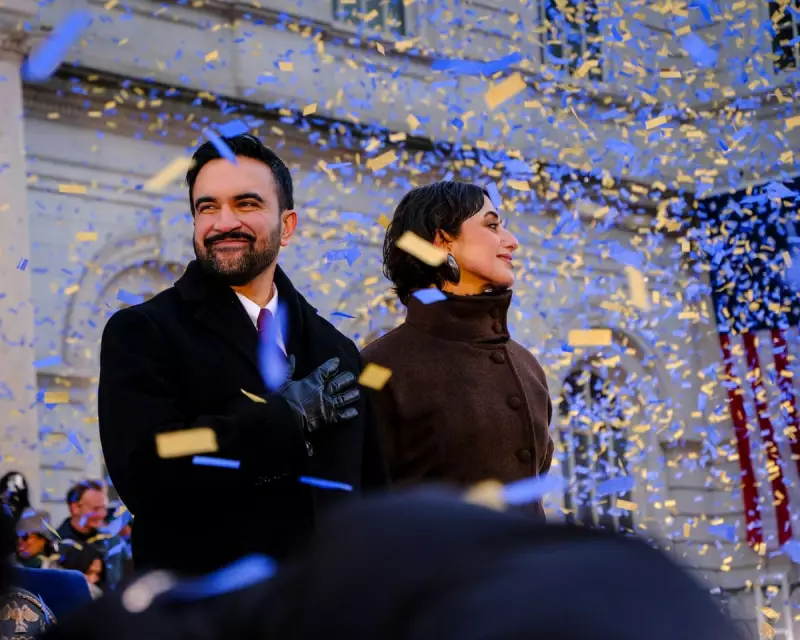
On 1 January 2026, in a ceremony brimming with optimism, Zohran Mamdani, the 34-year-old democratic socialist, was sworn in as the new Mayor of New York City. His speech boldly declared an end to the era of small government and centrist caution, promising instead a new dawn of ambitious social welfare programmes.
This moment is the culmination of a decade of growth for the insurgent left wing of the Democratic Party. It was powered by mass mobilisation among economically disenfranchised millennial and Gen Z voters in the nation's largest city. Widely hailed as a generational shift, Mamdani's ascent inaugurates a 21st-century vision for his party, with all eyes now on his ability to deliver tangible results.

An Echo of the Past: Trump's Venezuelan Intervention
Less than 48 hours later, from his Mar-a-Lago resort, former President Donald Trump announced a starkly different kind of action. His administration had facilitated a bombing campaign and the capture of Venezuelan leader Nicolás Maduro. Conducted without UN or congressional approval, the raid blatantly violated international law and the US constitution, aiming to force regime change and secure access to Venezuela's oil and mineral wealth.
This move, orchestrated with Secretary of State Marco Rubio and Defence Secretary Pete Hegseth, is seen by many as a desperate attempt by a politically weakened Trump to rally domestic support through foreign military adventure. It represents a return to the neoconservative playbook of the Bush era, a pantomime of imperial expansion most thought was over.
The Stakes for the 2026 Midterm Elections
These opening days of 2026 have rapidly reshaped the political landscape for the crucial midterm elections in November. The contrast could not be clearer: one project was born of grassroots organising promising greater dignity, while the other offered only vicarious domination.
Mamdani now faces the immense challenge of proving his concrete policy platform—rent freezes, free bus fares, and universal childcare—can be successfully implemented. His success or failure will be cast as a reflection on the entire Democratic Party, making him a symbolic figurehead for the left's governing potential.
Conversely, Trump and the Republicans, grappling with a struggling economy and broken promises, have retreated to the violent ambitions of their past. The Venezuela gambit is a high-risk strategy born of political weakness, with little regard for long-term consequences or exit strategies.
As the year unfolds, the American electorate is presented with a stark choice between two competing impulses: collectivism versus extraction, solidarity versus domination, and optimism versus cruelty. The standard-bearers for each party, Mamdani and Trump, have rarely looked so different, setting up a defining contest for the nation's soul in the 2026 midterms.