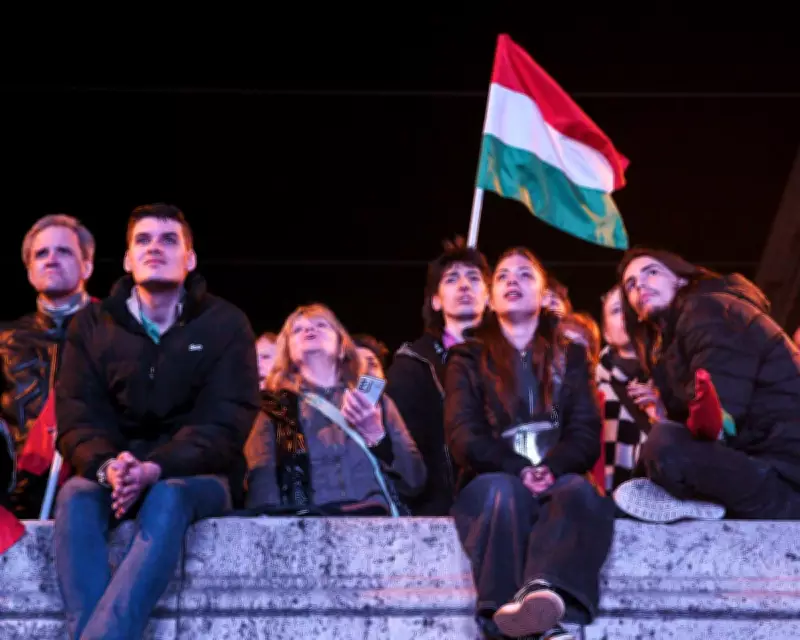
Péter Magyar's Historic Victory in Hungary Marks End of Orbán Era
In a decisive political shift, Péter Magyar has secured victory in Hungary's elections, ending Viktor Orbán's 16-year tenure as prime minister. The European Union has expressed palpable relief at Orbán's departure, particularly given his recent declaration of alignment with Vladimir Putin. Magyar's triumph was amplified by voters' rejection of Orbán's fear-based campaign, which attempted to link him to European Commission President Ursula von der Leyen and Ukrainian President Volodymyr Zelenskyy.
Urgent EU Questions: Ukraine Support and Sanctions
One of the most pressing issues for the EU is how quickly Magyar will lift Hungary's block on a critical €90 billion loan for Ukraine and the union's 20th round of sanctions against Russia. On Monday, Magyar indicated readiness to support the Ukraine loan under the same terms Orbán agreed to last December—with Hungary not participating. However, his lukewarm stance on Ukraine's EU accession, suggesting it might not happen "in the next 10 years," and his cautious approach to Russian sanctions have raised concerns among Kyiv's staunchest allies, including Poland and the Baltic states.
Magyar expressed hope for a swift end to Russia's aggression in Ukraine, after which Europe could "immediately" lift sanctions. He emphasized economic considerations, stating, "I understand the moral issues ... but let's not shoot ourselves in the leg." This perspective echoes sentiments from Belgian Prime Minister Bart De Wever, who faced criticism for advocating renewed access to cheap Russian energy. Privately, some Western EU members share anxieties about a rapid timeline for Ukraine's EU membership.

Frozen EU Funds: Magyar's Top Priority
For Magyar, a former diplomat in Brussels during the Orbán years, the most urgent task is fulfilling his campaign promise to "bring home" Hungary's frozen EU funds. Currently, €17 billion in economic development funds remain blocked due to Hungary's failures to meet EU standards on corruption, judicial independence, academic freedom, and its anti-LGBTQ law. Approximately €2.12 billion has been permanently lost. The clock is ticking: Hungary and the European Commission must agree on the use of nearly €10 billion in grants and loans by the end of August, with any extension requiring unanimous approval from all 27 member states.
Daniel Hegedüs, senior visiting fellow at the German Marshall Fund, highlighted the need for "constructive diplomacy" on both sides. He described the situation as "a sort of transactional standoff, but in a good sense," noting that the new government's legitimacy will hinge on how quickly and effectively it can recover the frozen funds. Hegedüs advised the EU to "trust but verify" in its dealings with Magyar's administration.
Energy and Foreign Policy Shifts
Energy policy remains a sensitive issue. While Magyar's Tisza party has pledged to phase out Russian energy imports by 2035, the EU aims to achieve this much sooner—by the end of 2027. Analysts suggest that Anita Orbán, a former diplomat unrelated to the outgoing prime minister and a likely pick for foreign minister, will play a central role. She has authored books on how the Kremlin uses energy as a foreign policy tool, indicating a potential shift in Hungary's approach.
Despite these tensions, Hungary under Magyar is expected to operate as a "normal" EU member state, advocating for its own interests rather than weaponizing vetoes to promote Russia's agenda. Hegedüs noted that Magyar, as a member of the centre-right European People's Party, understands that his political future is tied to Hungary's redemocratization.
Migration and Domestic Challenges
Asylum and migration policy may also strain EU-Hungary relations. Hungary faces daily fines of €1 million for flouting EU asylum rules, posing an early challenge for a government seeking fiscal stability. Magyar criticized Europe's "mismanagement" of migration, referencing the 2015 refugee crisis. However, his views align with the EU's increasingly hardline direction since then, including support for offshore migration centres and tougher deportation orders.

Domestically, it remains unclear how Magyar will address Orbán's anti-LGBTQ law and other contentious policies. EU leaders will soon gauge Magyar's leadership through his first foreign policy visits to Warsaw and Vienna—notably omitting Berlin, Hungary's main economic partner, which some analysts interpret as a diplomatic downgrade.
A New Chapter for Hungary and Europe
László Andor, a Hungarian former EU commissioner, emphasized that Hungary's reintegration into European policies and values is inevitable, particularly driven by the young generation. He highlighted Generation Z's decisive role in Magyar's landslide victory, noting their "meagre economic opportunities" and exclusion from programs like Erasmus due to economic stagnation and EU disputes. Andor stated, "They quietly waited for the moment when this could change electorally."
Von der Leyen, speaking on Monday, compared the election's significance to the 1956 Hungarian uprising and the 1989 dismantling of border fences. She affirmed the EU's readiness to "start working with the government as soon as possible" on the frozen funds and Ukraine loan. As Magyar takes office, the EU watches closely, balancing relief with cautious optimism about Hungary's new direction.