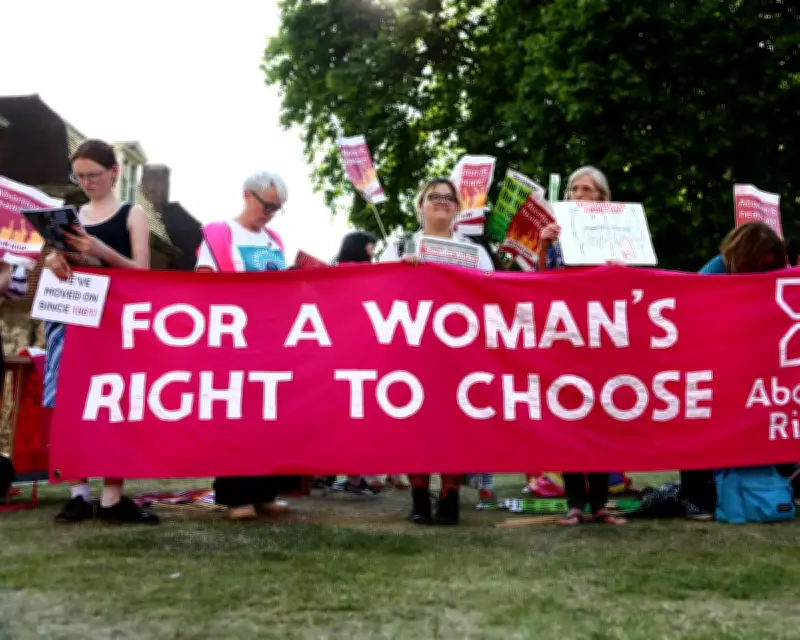
Lords Urged to Ensure Women Criminalised for Abortion Are 'Not Left Behind'
The House of Lords is set to consider critical amendments this Wednesday that could pardon women in England and Wales who have been arrested, investigated, or convicted under outdated abortion legislation. Campaigners are demanding that these women must not be overlooked as the law evolves to prevent future criminalisation.
Last summer, the House of Commons voted to end the criminalisation of women who terminate pregnancies outside the legal framework through a new clause in the crime and policing bill. Now, peers will debate amendments aimed at halting active police investigations into suspected illegal abortions and granting pardons to those already affected.
The Human Cost of Archaic Legislation
Elizabeth Barker, a Liberal Democrat peer who proposed one amendment, highlighted the severe impact on women's lives. She stated, "When I heard how the system has treated these women and girls at their most vulnerable, it was clear this cruelty had to be stopped." Barker emphasised that even without convictions, arrests for abortion offences—classified as violent crimes—can haunt individuals for decades, affecting job prospects and daily activities like renewing car insurance.

One poignant case involves Becca, a 21-year-old from northern England. At 19, she discovered she was six months pregnant after taking abortion pills, believing she was in early pregnancy. Following the birth of her premature son, Harry, she was arrested for attempted child destruction. Despite no conviction, the arrest record persists, complicating her aspirations to train as a nurse or midwife.
Becca recounted, "I didn't even know what that meant when they arrested me. The police acted like they were doing me a favour by not using handcuffs, but it didn't matter—I was still under arrest." Her partner was also arrested, and their electronic devices were seized, with social services barring unsupervised contact with their son for months. The investigation lasted 15 months before being dropped, but the stigma remains.
Broader Campaign for Justice
Nikki Packer, cleared of an illegal abortion charge last year, described the ordeal as life-ruining. "The police investigation and trial were by far the worst part," she said, urging the Lords to pass the decriminalisation vote on March 18. Packer added, "The current law is ancient; it's time it reflects modern society."
Medical and advocacy groups are rallying behind the amendments. Dr. Alison Wright, president of the Royal College of Obstetricians and Gynaecologists, called on peers to support clause 208 and amendment 426B, which would pardon women prosecuted under unjust laws. "It is vital that the harm already caused is addressed," she asserted.
Heidi Stewart, CEO of the British Pregnancy Advisory Service, echoed this sentiment, stating, "Pardoning these women and expunging investigation records would recognise the profound injustice of criminalising abortion. If the law is to align with modern values, those harmed must not be left behind."
As the Lords prepare for the debate, the focus remains on rectifying past wrongs while shaping a more compassionate legal framework for reproductive rights in England and Wales.