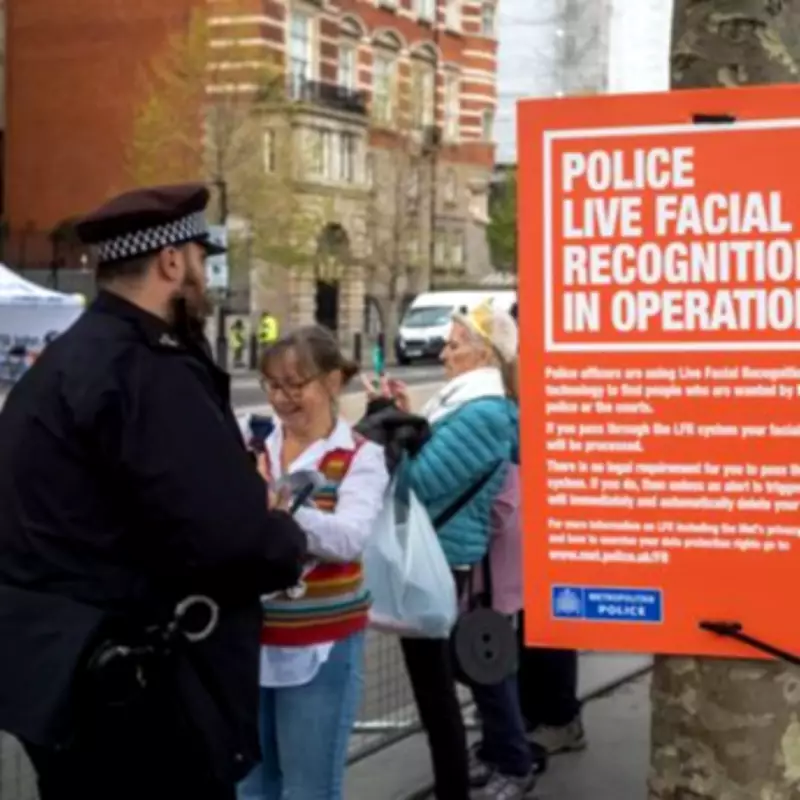
London Assembly Member Demands Immediate Suspension of Police Facial Recognition Technology
The Metropolitan Police must immediately cease using Live Facial Recognition (LFR) technology until comprehensive safeguards and regulations are implemented, according to a London Assembly Member. Zoe Garbett, representing the Green Party on the London Assembly, has issued a forceful call for the suspension of what she describes as a surveillance tool that undermines fundamental democratic principles.
Civil Liberties Versus Crime Fighting Claims
In a newly published report, Garbett argues that the Metropolitan Police's expanding use of facial recognition technology represents a dangerous erosion of civil liberties. "Facial recognition is a reversal of the presumption of innocence," Garbett stated. "The democratic principle that you shouldn't be spied on unless police suspect you of wrongdoing is being fundamentally undermined."
The Assembly Member compared the experience of Londoners to being placed in an involuntary identification parade. "Walking down a street in London and having your face scanned and compared against a list of wanted people is essentially being part of an identification parade without your consent or knowledge," she explained.

Disproportionate Impact on Minority Communities
Garbett's report highlights concerning patterns in how the technology has been deployed across London. Research indicates that the majority of 2024 LFR operations occurred in areas with higher-than-average Black populations, raising serious questions about racial bias in deployment strategies.
"The technology is being disproportionately used in areas that have more people of Black, Asian or Mixed ethnicities than the London average," Garbett asserted. She has demanded that the Metropolitan Police commit to ensuring future deployments are "free from bias" and publish comprehensive data about operational costs and deployment locations.
Metropolitan Police Defends Technology's Effectiveness
The Metropolitan Police has vigorously defended its use of facial recognition technology, citing significant crime-fighting successes. According to police statistics, LFR has helped remove more than 1,700 dangerous offenders from London's streets since the beginning of 2024, including individuals wanted for serious violent crimes against women and girls.
A Metropolitan Police spokesperson emphasized public support for the technology, stating: "This success has meant 85 percent of Londoners support our use of the technology to keep them safe. It has been deployed across all 32 boroughs in London, with each use carefully planned to ensure we are deploying to areas where there is the greatest threat to public safety."
Regulatory Vacuum and Legal Challenges
Currently, no specific legislation governs the use of Live Facial Recognition technology in the United Kingdom, creating what critics describe as a dangerous regulatory vacuum. The absence of legal frameworks means there are no established guidelines for appropriate deployment settings or operational limitations.
The Metropolitan Police is currently facing a High Court legal challenge from campaigners concerned about the technology's expansion without adequate safeguards. Despite this ongoing litigation, Home Secretary Shabana Mahmood has announced plans to significantly expand facial recognition capabilities nationwide, proposing to increase facial recognition vans from 10 to 50 across England and Wales.
Political Responses and Recommendations
London Mayor Sadiq Khan has previously expressed support for facial recognition technology, suggesting it "plays a vital role in supporting the Metropolitan Police Service to prevent and tackle crime and keep London's communities safe." However, the Mayor has also pledged to monitor deployments to ensure they remain "legal, ethical and effective, while maintaining public trust."
Garbett's report calls for specific actions including:

- Immediate suspension of all LFR deployments until proper regulations are established
- Publication of complete financial and operational costs associated with LFR technology
- Commitment to bias-free deployment strategies with transparent oversight
- Legislation restricting LFR use to investigations of "the most serious crimes" only
The Assembly Member referenced European approaches to facial recognition regulation as potential models for London. "The EU have used it as a helpful tool but restricted it to certain settings," Garbett noted. "We need to make sure it is being used correctly. Until those safeguards are in place, we should not be using LFR."
The debate over facial recognition technology continues as London balances public safety concerns against fundamental civil liberties, with no immediate resolution in sight as legal challenges proceed and political positions remain divided.