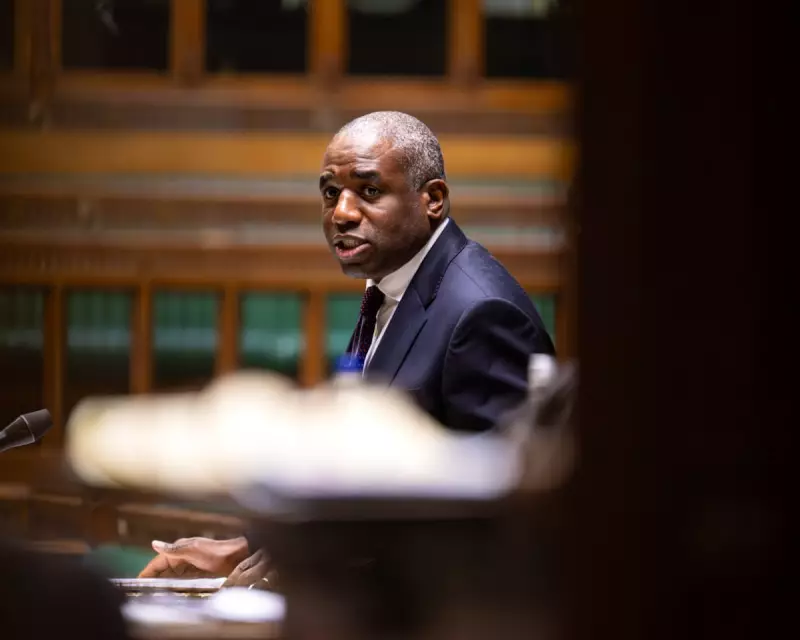
Justice Secretary David Lammy has unveiled a controversial plan to curtail the right to trial by jury in England and Wales, branding it a necessary "once-in-a-generation reform" for a system in crisis.
A System on the Brink of Collapse
Addressing the House of Commons, Lammy laid out a stark picture of a justice system falling apart. He revealed that the court backlog has now reached 78,000 cases and is on track to hit 100,000. He argued that defendants are exploiting these delays by pleading not guilty, hoping victims and courts will lose patience and drop charges.
Many observers might conclude that the obvious solution is significant investment: more court sitting days, repaired buildings, new facilities, and increased funding for legal aid and personnel. Lammy, however, dismissed this, stating that investment alone was not enough—or at least, not at the levels the government is prepared to commit. The result, he implied, is a reliance on "sticking plaster" solutions.

The Core Proposal: Scaling Back Jury Trials
The centrepiece of Lammy's statement was a proposal to introduce judge-only trials for "either-way" offences carrying a maximum sentence of three years. He framed this not as a reduction in rights, but as a boost for victims, invoking the Magna Carta principle that justice delayed is justice denied.
In a contentious defence of the move, Lammy suggested judge-only trials could be fairer, as judges must explain their reasoning, unlike a jury which simply returns a verdict. He also announced an increase in the sentencing powers of magistrates' courts to 18 months, arguing that magistrates, like jurors, are community-based.
Yet, the Justice Secretary seemed to undermine his own argument by noting that only 3% of all cases currently go to a jury trial, leading to questions about the measure's overall impact.
A Chorus of Criticism from All Sides
The proposal was met with scepticism and opposition from across the political spectrum. Shadow Justice Secretary Robert Jenrick, despite his own party's record on legal aid and sentencing, adopted a condescending tone in defence of jury trials, a position some saw as opportunistic.
More damning criticism came from Lammy's own benches. Veteran MP Diane Abbott warned that judge-only trials risked more miscarriages of justice, as judges often share similar backgrounds and unconscious biases. Richard Burgon raised the spectre of an authoritarian regime appointing compliant judges if such a principle were established.
Even a potential compromise from Conservative MP Jeremy Wright—making the change temporary—was brushed aside by Lammy, who instead called jury trials "a peculiar way to run a public service."
The debate highlights a government attempting to manage a systemic collapse with limited funds and politically difficult choices. Lammy, a former foreign secretary now in a beleaguered department, is advocating for policies he once might have opposed, underscoring the profound challenges facing the UK's justice system.