Lady Mayor Susan Langley Champions Openness as London's Core Strength
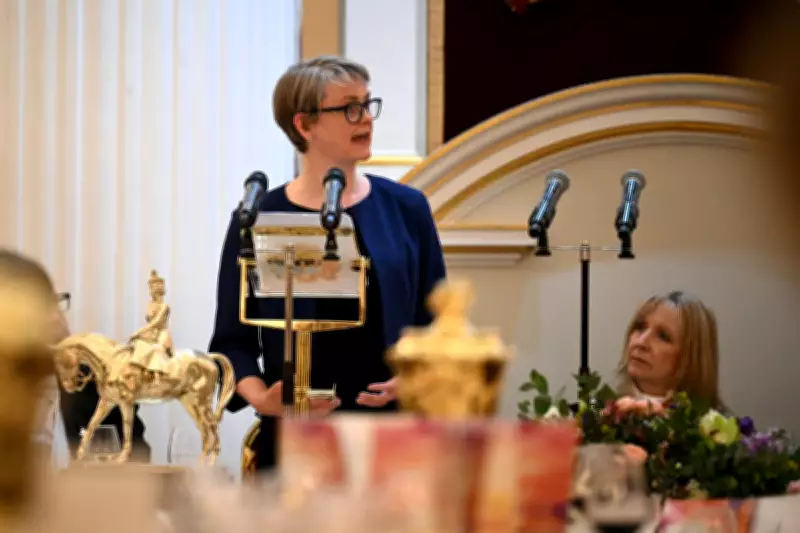
In a powerful address, Lady Mayor Susan Langley of the City of London declared that openness remains the city's greatest asset in an era marked by global volatility and uncertainty. Speaking at the annual dinner alongside the Foreign Secretary, which gathered ambassadors, high commissioners, and diplomats, Langley emphasized that London's success has never relied solely on its geography or traditions but on fostering robust relationships and maintaining a trusted environment for international collaboration.
Navigating an Age of Volatility and Interconnection
Recent world events, including geopolitical conflicts, technological disruptions, and climate challenges, have tested established global systems. Langley noted that these issues do not respect national borders, making isolated responses ineffective. She warned against the temptation for nations and businesses to retreat into protectionism, arguing that such short-term decisions only create an illusion of control and ultimately weaken collective resilience.
Instead, Langley advocated for open, practical partnerships grounded in trust as a non-negotiable necessity. She highlighted that disruption in one part of the world can reverberate globally within days, affecting supply chains, markets, and lives far beyond the initial shock. This interconnected reality demands cooperative solutions rather than fragmented approaches.

The City's Role in Building Global Resilience
At the heart of the City of London lies a philosophy that openness is a strength, enabling the exchange of ideas, capital allocation, risk management, and future-building. Langley pointed out that the UK remains a leading provider of financial and professional services, offering stability during times of instability. A key example is London's insurance market, which has doubled in size over the past decade, providing expertise to manage complex risks like cyber-attacks, supply chain disruptions, and climate-related events.
This technical work, though often underreported, serves as a bedrock for worldwide economic stability, Langley explained. She stressed that the transition to a low-carbon economy and enhanced energy security will require unprecedented levels of cooperation and investment. Mobilizing capital at scale, developing green finance solutions, and supporting cross-border infrastructure projects are essential for meeting global goals, with expert financial centres like London playing a crucial role in fostering these partnerships.
Trust as the Foundation for Success
Langley underscored that none of these efforts can succeed without trust—between nations, investors, and markets. Trust ensures that rules are applied fairly and consistently, allowing capital to flow, innovation to flourish, and long-term thinking to prevail over short-term panic. For generations, trust has been the City's most valuable export, enabling confident investment and collaboration from people worldwide.
While cooperation does not imply uniformity, with cultures and political systems often differing, Langley argued that the defining challenges of our time are too vast and interwoven for isolated responses. The choice, she concluded, is clear: turn inward or reach outward, act alone or together. Ultimately, our greatest strength lies not in individual power but in shared resolve to build a more stable and prosperous future.