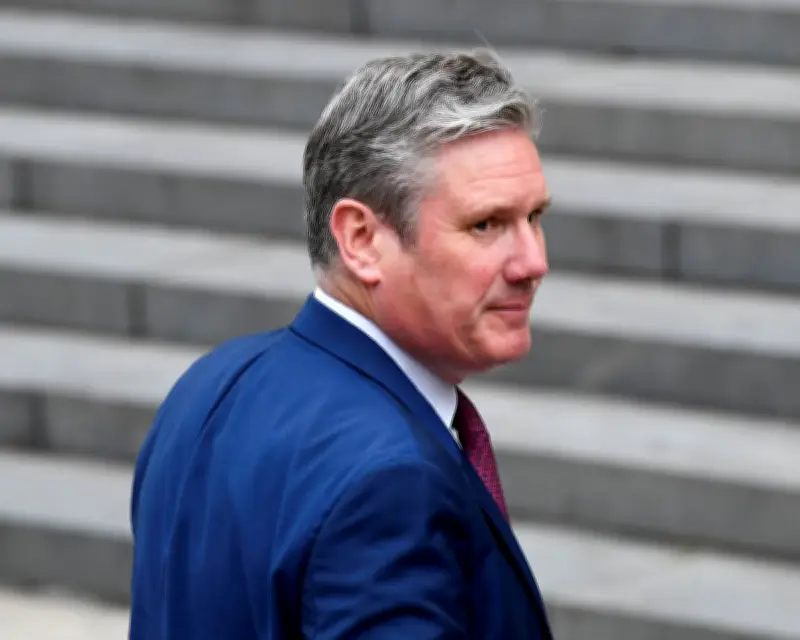
Keir Starmer has become the United Kingdom's new prime minister after leading the Labour Party to a landslide general election victory, sweeping the Conservatives from power after 14 years. The result, confirmed in the early hours of Friday, marks a seismic shift in British politics.
Landslide Majority
Labour secured more than 410 seats in the 650-seat House of Commons, giving Starmer a majority of over 170. The Conservatives suffered their worst defeat in modern history, winning fewer than 140 seats. The Liberal Democrats surged to over 70 seats, while the Scottish National Party saw its representation collapse to single digits.
In his victory speech, Starmer declared: "Change begins now. We have been given a mandate to rebuild Britain, to restore hope, and to put country first, party second." He promised to focus on economic growth, public services, and national security.

Conservative Collapse
Outgoing Prime Minister Rishi Sunak conceded defeat shortly after 4 a.m., saying: "The British people have delivered a sobering verdict. I am sorry. I take responsibility for the loss." Sunak will tender his resignation to King Charles III later on Friday.
The Conservative defeat was attributed to a combination of factors, including a stagnant economy, high inflation, and internal party divisions. Key cabinet members, including Defence Secretary Grant Shapps and Commons Leader Penny Mordaunt, lost their seats.
According to exit polls, Labour's support was broad-based, with gains across all regions, including traditional Conservative strongholds in southern England. The voter turnout was estimated at 60%, down slightly from the previous election.
Starmer's Agenda
Starmer, 61, a former director of public prosecutions, has promised a "decade of national renewal." His immediate priorities include stabilizing the economy, reducing NHS waiting lists, and cracking down on small boat crossings in the English Channel. He has also pledged to establish a new border security command and end the Rwanda asylum scheme.
The new prime minister is expected to appoint his cabinet later on Friday, with Rachel Reeves likely to become the first female chancellor of the exchequer. Other key appointments include Yvette Cooper as home secretary and David Lammy as foreign secretary.
International leaders quickly congratulated Starmer. US President Joe Biden said he looked forward to deepening the "special relationship," while European Commission President Ursula von der Leyen welcomed a "fresh start" for UK-EU relations.
Historical Context
This is Labour's first general election victory since 2005 under Tony Blair. Starmer's win is comparable to Blair's 1997 landslide, though with a slightly smaller majority. The result also ends a period of political turbulence that saw five Conservative prime ministers since the 2016 Brexit referendum.
Analysts note that Labour's victory was fueled by a desire for change after years of austerity, the COVID-19 pandemic, and the cost-of-living crisis. The party's campaign focused on competence and stability, contrasting with Conservative infighting.
The new government faces immediate challenges, including a sluggish economy, public sector strikes, and strained public finances. Starmer has ruled out increases in income tax, national insurance, or VAT, but has not specified how he will fund his spending pledges.
In his first address as prime minister, Starmer is expected to strike a tone of humility and determination, acknowledging the scale of the task ahead while urging the nation to unite behind his vision of a fairer, greener, and more prosperous Britain.