Federal Judges Mount Significant Challenge to Trump Administration Policies
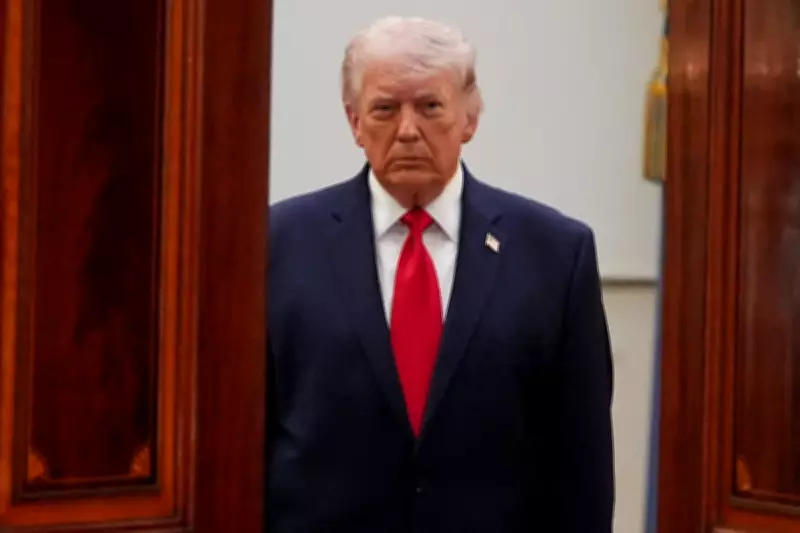
Since the beginning of Donald Trump's second term, federal district court judges across the United States have been increasingly issuing powerful rulings that challenge the legality of many presidential policies and executive actions. These judicial decisions have blocked key initiatives at least temporarily, sparking angry responses from Trump and his political allies.
Impact on Presidential Agenda
The impact of these court rulings has been substantial, significantly slowing or halting some of the administration's most extreme policy measures. This judicial pushback has prompted Trump and his supporters to respond with vindictive attacks that have reportedly contributed to threats against several judges.
Legal experts note that the surge of adverse court rulings has created a frequently toxic courtroom environment for administration lawyers, who have been sharply criticized by judges for presenting false or tenuous arguments in defense of Trump's policies.

Judicial Guardrails Against Executive Overreach
Former Department of Justice officials credit many district court judges with serving as crucial buffers against what they describe as Trump's power grabs and administrative disdain for established legal principles.
"District court judges around the country, appointed by both Republican and Democratic presidents, are serving as the strongest guardrail against incursions on the rule of law," said former DOJ inspector general Michael Bromwich. "In just one year, Department of Justice lawyers have lost the presumptions of regularity, competence and reliability that took decades to establish."
Quantifying the Judicial Pushback
A March 19 study from Just Security revealed more than 210 cases since early 2025 where courts issued strong rulings against administration conduct in three critical areas. The analysis found courts determined the administration was not in compliance with court orders in 34 instances, expressed distrust in government information in 90 cases, and found arbitrary and capricious conduct in administrative action in 91 cases.
Notable Judicial Opinions
Among the federal judges who have been outspoken critics of key administration policies are Matthew Brann in Pennsylvania, William Young in Boston, and James Boasberg in Washington DC—all of whom Trump has repeatedly attacked on social media platforms.
Judge William Young, appointed by Republican President Ronald Reagan, issued a blistering 161-page ruling in September that declared some of Trump's deportation policies illegal moves to deport non-citizen activists at colleges in violation of their First Amendment rights.
Similarly, Judge Matthew Brann last month issued a scalding opinion concluding that Attorney General Pam Bondi—ousted by Trump on April 2—illegally appointed an unusual leadership structure for a powerful New Jersey federal prosecuting office at Trump's direction.
Administration Response and Supreme Court Appeals
Facing proliferating rulings against his priorities, Trump has escalated attacks on judges, calling them "crooked" or "lunatic" at times. On March 25, he urged House Republicans to pass legislation that "cracks down on rogue judges," describing them as "criminals" in his remarks.
The wave of adverse rulings has spurred the administration to file emergency appeals to the Supreme Court, where conservatives hold a 6-3 majority. While the high court has mostly backed administration appeals, it delivered a significant blow in February by ruling against Trump's tariff policies, arguing that tariff authority belongs to Congress rather than the presidency.
Conservative Legal Voices Express Concern
Some former judges with conservative backgrounds say the surge in adverse lower federal court rulings has served as important checks on what they characterize as the Trump administration's attacks on constitutional principles.
"The president's and the attorney general's contempt for the constitution, rule of law, and federal judiciary has predictably backfired on them," said former appeals court judge J Michael Luttig. "The lower federal courts are the last line of defense of the constitution and rule of law in this president's war on the rule of law."

Growing Threats Against Judiciary
Chief Justice John Roberts addressed growing verbal attacks on judges in a March 17 speech at Rice University, stating that such rhetoric is "dangerous, and has got to stop." His comments followed multiple reports that threats of violence against judges have increased over the past year.
Former federal judge John Jones, appointed by George W. Bush and now president of Dickinson College, warned in a television interview: "This is such a toxic environment... In very plain English, if we're not careful we're going to get a judge killed. It's just that stark."
Long-Term Legal Consequences
Ty Cobb, a former federal prosecutor who served as special White House counsel during Trump's first administration, sees widespread legal repercussions from the administration's battles against the judiciary.
"For the first time since 1826, the government no longer gets the benefit of the doubt about the honesty of their representations before the lower courts," Cobb observed. "The longstanding 'presumption of regularity' has been forfeited because of the overwhelming number of lies which have increasingly infected administration claims."
Looking ahead, Cobb noted: "Trump's continuing attacks on the judiciary, over the clearly stated objection of the chief justice, is just fascism at work. He is purposely denigrating the branch of government that must apply the Constitution to his corruption and overreach in order to accumulate more power for himself."