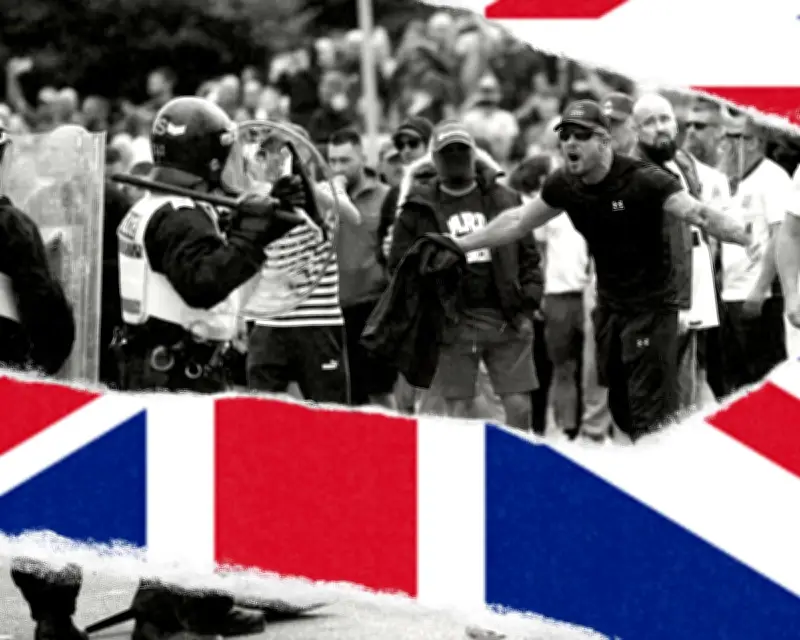
Riot police clashed with anti-migration protesters outside an asylum hotel in Rotherham in 2024, a stark reminder of the intolerance that has grown since Jo Cox's murder. The late MP's family, politicians, and academics reflect on the factors that have heightened division over the past decade.
The Unfulfilled Promise of 'Kinder Politics'
Ten years on from Jo Cox's murder, her sister Kim Leadbeater fears that the consensus around 'kinder, gentler politics' was short-lived. 'Sadly and regrettably, over the last decade things are worse,' she says. Cox, the Labour MP for Batley and Spen, was murdered in June 2016 by an English nationalist. In the aftermath, Jeremy Corbyn and David Cameron called for a more tolerant politics. However, just hours before her death, Nigel Farage unveiled the infamous 'breaking point' poster, cementing scapegoating in the Brexit campaign.
Intolerance Prevails
A decade later, intolerance appears to have prevailed. Police are encouraged to disclose ethnicity and nationality of offenders, and Britain braces for far-right unrest. After Henry Nowak's murder by a Sikh man, Farage called for 'pure, cold rage,' leading to riots. Racist mobs burned people out of their homes in Belfast. Last summer, protests outside asylum hotels were persistent, with St George's flags used as symbols of anti-immigration sentiment.

Political Violence and Social Media
In 2021, Conservative MP David Amess was murdered by an Islamic State sympathiser. A teacher in Batley went into hiding after showing a cartoon of the Prophet Mohammed. Rob Ford, professor of political science, believes Brexit 'accelerated rather than created' populism. He argues that identity politics leads to absolutism, with dehumanised rivals. Jeremy Corbyn says inequality has worsened, with far-right organisations exacerbating fear and hatred.
The Shift to Identity Politics
Ford pinpoints the shift from economic to identity politics as beginning with 1960s liberation movements. As living standards stalled, the right coalesced around culture. Age has become the strongest predictor of voting preference. Social media has supercharged 'political entrepreneurs' who perform outrage, reducing party control over messaging.
Impact on Politicians
Diane Abbott says there is a 'tidal wave of abusive and racist communications online.' She no longer travels on public transport or holds meetings alone. Jess Phillips criticises Boris Johnson for normalising 'treachery' rhetoric and notes that threats are taken more seriously since Cox's death. Phillips wants social media platforms treated as publishers to increase liability for harmful content.
Hope for Change
Abbott believes a less uncivil US president could shift the tide. Phillips is hopeful about scrutiny of social media companies. The social media ban for under-16s and the Online Safety Act are steps toward tougher regulation. Ford says what has been lost is recognition of the human on the other side, work that Jo Cox's family continues through the Jo Cox Foundation and Together Coalition.
Kim Leadbeater, now MP for Spen Valley, remains inspired by her sister's maiden speech: 'We are far more united and have far more in common with each other than things that divide us.' Brendan Cox co-founded the Together Coalition, which launched the National Conversation to give the mic back to the sensible majority. He cites the World Values Survey ranking the UK among the most open and tolerant countries, and believes the era of big tech's unchecked power is ending.