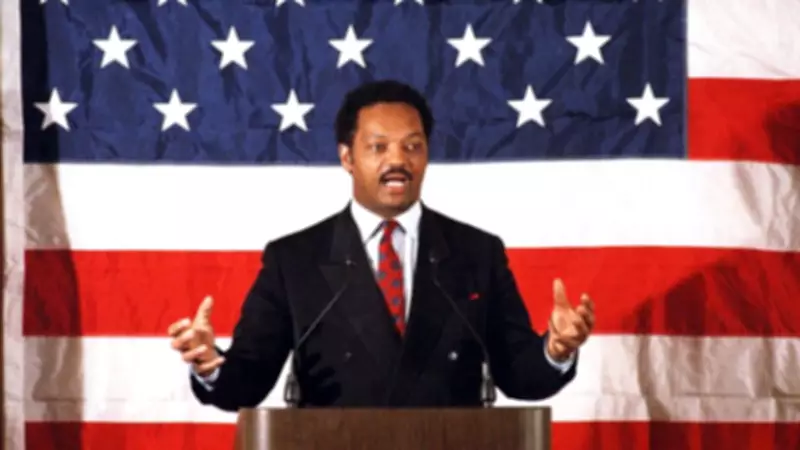
Jesse Jackson: A Presence Beyond Politics
News of Jesse Jackson's passing resonated not through headlines but through memories—the echo of rallies, the rhythm of sermons, and impassioned pleas for racial equality. He was never just a politician; he was a presence that shaped American history.
Stepping into the Shadow of a Legend
Jackson first entered the national consciousness in the long shadow of Martin Luther King Jr. Young, cool, sharp, and ambitious, he stood on the edge of history as it unfolded. King's assassination in 1968 fractured the civil rights movement and created a leadership vacuum. While no one could replace King, Jackson refused to let the movement fade into obscurity.
In the years that followed, he masterfully transformed protest into organization. Operation PUSH was more than a slogan; it was a strategic effort to translate street-level outrage into tangible negotiating power. Jackson understood the leverage needed to change the systemic inequalities that had shaped his childhood in a segregated South.

From Humble Beginnings to National Prominence
Born in Greenville, North Carolina, to a single teenage mother, Jackson grew up in a deeply segregated community. Despite these hardships, he excelled as a stand-out student, class president, and high school football quarterback. His achievements earned him a scholarship to the University of Illinois, and he later transferred to North Carolina State University, where he became involved in the civil rights movement at a historically black college.
Jackson rose to prominence as an aide to Martin Luther King Jr., witnessing his assassination at close quarters. This experience propelled him into a role as a visible advocate for racial equality, inheriting the mantle of leadership to some extent.
Building Coalitions and Shifting Politics
Jackson's National Rainbow Coalition became a powerful voice for the voiceless, advocating for black Americans, women, the LGB community, Native Americans, and Hispanics. His impact extended beyond advocacy; he had the courage to run for president in 1984 and 1988. His electrifying campaign speeches signaled a shift in the tectonic plates of American political identity, focusing less on electoral math and more on redrawing the boundaries of belonging.
These campaigns unquestionably paved the way for the eventual elections of Barack Obama as president and Kamala Harris as vice president. However, Jackson's relationship with Obama was complicated, marked by philosophical divides. Jackson's politics were rooted in prophetic confrontation, while Obama emphasized coalition building.
A Living Archive of Struggle
In later years, illness narrowed Jackson's physical world, but his symbolic presence remained strong. He stood as a living archive of the civil rights struggle—one of the last towering figures whose political instincts were forged in the marches and jail cells of the 1960s. While the architecture of segregation has largely fallen, the patterns it produced remain stubbornly intact.
To the very end, Jesse Jackson refused to be quiet. In a polarized nation often tempted by amnesia, he insisted on memory—the refusal to forget watching white children take the bus to school while he had to walk. His legacy is a testament to resilience, organization, and unwavering advocacy for justice.