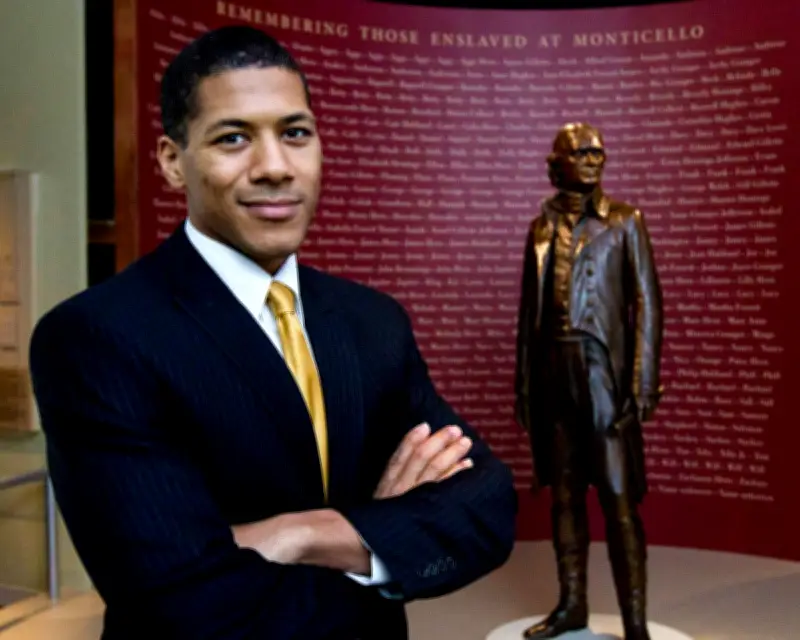
Shannon LaNier, the sixth great-grandson of Thomas Jefferson and a descendant of Sally Hemings, is grappling with the contradictions of his lineage as the United States marks its 250th anniversary. LaNier, 47, a television personality and co-author of Jefferson's Children: The Story of One American Family, acknowledges the hypocrisy of the founding father who wrote that "all men are created equal" yet owned more than 600 people.
A legacy of contradiction
"I wish he would have done more to free the enslaved people and practise what he actually preached," LaNier said by phone from New York. "I know he tried to but he was the most powerful man in the country and he could have done more and he was living a double life so it's unfortunate."
LaNier's relationship with his ancestor is conflicted. "Sometimes I appreciate what he's done for this country and how much of a genius he was," he said. "Other times I hate what he did and that he didn't do more, and the hypocritical aspects, because we could have been so much further along as a society if he would have done what was right instead of what was profitable."

Early awareness and a painful moment
LaNier has known about his lineage since childhood. In second grade, he proudly announced in class that he was Jefferson's great-great-great-great-great-great-grandson. "The class laughed and the teacher said: 'Sit down and stop telling lies!' That was a hurtful moment in my life," he recalled. The next day, his mother corrected the teacher, teaching him the importance of knowing who he is.
Growing up, LaNier saw Jefferson's name on mountain peaks, schools, streets, and a monument in Washington DC. But his sixth great-grandmother, Sally Hemings, was largely written out of history. Hemings was enslaved by Jefferson and bore several of his children, beginning when she was 14 in Paris.
Honoring Sally Hemings
LaNier now emphasizes Hemings' agency and resilience. Unlike most enslaved women, she negotiated the emancipation of her children with Jefferson. While in Paris, where she was legally free, she agreed to return to enslavement in Virginia only after Jefferson pledged to free their children when they turned 21.
"We know more about Jefferson but we have to give credit to Sally Hemings," LaNier said. "It's because of her that we know who we are today, that she didn't hide the story from her children, that she was able to negotiate for her kids to have freedom at the age of 21, that she was able to tell her story and make sure we were able to tell our stories."
Monticello's evolving narrative
LaNier points to Monticello, Jefferson's Virginia estate, as a model for historical institutions. In 2018, Monticello opened six exhibits highlighting the roles of Hemings and other enslaved families. "They're telling what happened: the good, the bad and the ugly, because you can't have one without the other. You need a full story and context," he said.
The threat of historical amnesia looms over the 250th anniversary, with rightwing attempts to reframe the American narrative. LaNier notes that July 4 is complicated for many African Americans, echoing Frederick Douglass's 1852 question: "What to the Slave is the Fourth of July?"
Why July 4 matters
"Some people in the Black community don't want to celebrate July 4 because they say we have Juneteenth and we weren't really free then," LaNier said. "But it's just as important to celebrate July 4 because, if we did not, it would make all the blood, sweat and tears of our ancestors in vain."
He added: "It's important that people know how involved people of colour were in the founding of this country, that we would not have a 250-year anniversary without people of colour slaving and labouring constantly. Who do they think built the White House? Who do they think was helping Jefferson with everything when he was writing the Declaration of Independence?"
Looking forward
July 4 also marks the bicentenary of Jefferson's death at Monticello in 1826, hours before John Adams died on the 50th anniversary of independence. Despite current political divisions, LaNier remains optimistic. "Sometimes you take two steps forward, you got to take two steps back," he reflected. "Hopefully when this era is over, we can take several leaps forward and get caught back up."

He concluded: "It's going to take some while to recover from what has been done but it's not impossible and, if we keep concerning ourselves with the words that Jefferson wrote, 'all men are created equal' – not just rich, land-owning white men – then we can get to a better place where this country can go through some healing and reconciliation. But we have to know our past, we have to know the mistakes that were made so we can move forward and not repeat those mistakes."