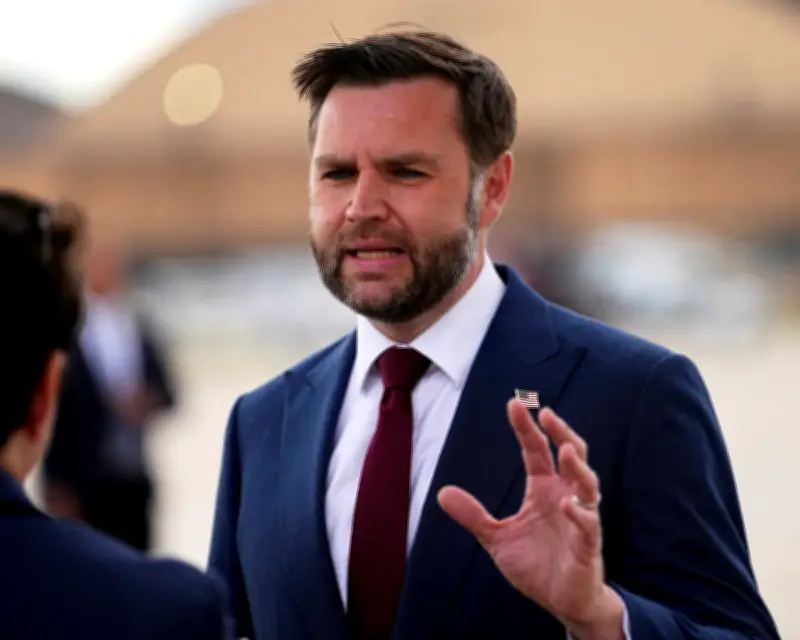
US Vice President JD Vance has stated that numerous issues regarding the agreement with Iran still require clarification, as many Republicans express doubt about the deal reached by Donald Trump and urge the White House to disclose further details.
Details of the Memorandum of Understanding
The memorandum of understanding (MOU), announced on Sunday to end the conflict in Iran, is scheduled for a ceremonial signing on Friday in Geneva. It focuses on reopening the Strait of Hormuz and lifting the US naval blockade in the region, alongside financial incentives for Iran contingent on meeting specific benchmarks.
In an interview with CNN on Monday, Vance described it as “a very general document,” with specifics to be determined during subsequent negotiations. “The MOU … is about a page,” Vance said. “On a number of issues, we are going to have to figure this stuff out during the technical negotiation phase.”

Republican Scepticism
His remarks came as several Senate Republicans returning to Washington on Monday voiced concerns about unanswered questions and the need for thorough briefings before finalisation. “I just don’t know enough about it,” said Republican John Thune, the Senate majority leader, who noted he had not been personally briefed on the deal. “I think the issues are going to be compliance, and how are you going to enforce that,” Thune added.
Thom Tillis of North Carolina echoed these concerns, questioning how a secret deal could be taken seriously. Trump has not yet clarified how the agreement will address Iran’s nuclear program, including verification of compliance and the disposal of highly enriched uranium buried under damaged nuclear sites.
Financial Incentives and Nuclear Program
The MOU also includes the potential release of Iran’s frozen funds, sanctions relief, and a $300 billion fund for reconstruction if Tehran meets certain benchmarks, US officials told reporters on Monday. However, the document has not been released. Thune emphasised the need to understand conditions on financial incentives, stating the deal would be “a good one” if they are tied to Iran winding down its nuclear program and eliminating enriched uranium.
Vance confirmed the $300 billion fund, noting it would be financed by neighbouring Gulf states. He assured that the White House would release the text this week, adding, “Iran doesn’t get a dime of money unless they perform their obligations.”
Historical Context and Reactions
Iran agreed to curtail its nuclear program in a 2015 deal with the Obama administration, from which Trump withdrew during his first term. That agreement allowed Iran to regain billions in frozen assets, which Trump has criticised as sending “pallets of cash” to Iran.
Senator Lindsey Graham, a Trump ally and Iran hawk, expressed scepticism, stating he wants to see the MOU and that Congress must review and vote on it. “The way Iran describes it, it’s awful. The way we describe it, it makes sense to me,” Graham said. Vance responded by cautioning against believing “hardliner propaganda in Iran” and urged focus on the actual agreement.