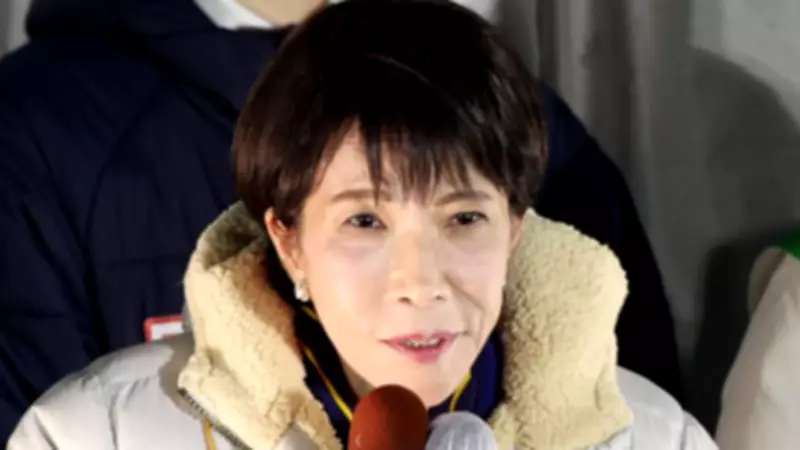
Japan's Unconventional Leader Faces Defining Moment in Snap Election
In the heart of Tokyo, mere hours before polling stations opened for a snap election called by Prime Minister Sanae Takaichi, hundreds of supporters braved frigid temperatures to gather in a local park. Despite the chill and obstructed views, the atmosphere crackled with anticipation, signalling a potentially transformative moment in Japanese politics.
Helen-Ann Smith, Asia correspondent, reported from the scene on Saturday 7 February 2026, capturing the unique energy surrounding Japan's first female prime minister.
A Departure from Tradition in Japanese Politics
Japanese political culture is typically characterised by politeness and understatement, which often leads Western observers to pay scant attention. However, the current electoral climate feels distinctly different, largely due to the singular figure at its centre: Sanae Takaichi.

Known for her background as a heavy metal drummer and motorbike enthusiast, Takaichi breaks the mould of her predecessors. Her dynamic stage presence, including singing to foreign leaders like Italy's Giorga Meloni, has captivated the public.
This outsized personality in a historically male-dominated and reserved political landscape has propelled her personal approval ratings. She boasts 2.6 million followers on X, and demand for her signature black handbag has created a year-long waiting list.
Revitalising the Liberal Democratic Party
Perhaps more significantly, Takaichi has orchestrated a remarkable turnaround for the struggling Liberal Democratic Party (LDP). Just four months after assuming leadership following her unpopular predecessor's resignation, the LDP appears poised to secure a majority in Japan's Lower House.
Yet, Takaichi defies easy categorisation. While her status as Japan's first female leader might suggest a liberal champion, her politics are firmly ultra-conservative.
She opposes gay marriage, vocally defends traditional gender roles, cites Margaret Thatcher as a role model, and taps into growing "foreigner fatigue" regarding immigrants and tourists. If she secures her own mandate in Sunday's election, this conservative vision will guide her agenda.
Domestic Support and Personal Connection
In her hometown of Nara, a converted minivan serves as a "battle bus," with supporters canvassing traditional streets, collecting signatures, and amplifying her name through megaphones. Locals describe her with familial affection.
"She's like a friendly neighbour or sister," recalled one elderly resident, reflecting on her political beginnings. When questioned about her conservative stance, a campaign team member reframed it: "Rather than labelling it conservatism, I think she is simply doing what is necessary to protect Japan."
Domestically, Takaichi advocates for tax cuts and increased public spending to stimulate Japan's sluggish economy. However, it is her foreign policy, particularly towards China, that has garnered the most attention and controversy.
Hawkish Foreign Policy and China Tensions
As a constitutionally pacifist nation, Japan has long relied on the United States for security. Takaichi has notably strengthened ties with Donald Trump's America, receiving his active endorsement during a notably warm visit last year.
Simultaneously, she has adopted a highly hawkish posture towards China. Her plans to bolster Japan's military spending are a sensitive issue, given China's historical grievances from the Second World War.
Tensions escalated sharply in November when Takaichi declared that a Chinese attack on Taiwan would constitute an "existential threat" to Japan, justifying military intervention. These remarks provoked outrage in Beijing, triggering retaliatory measures including bans on Japanese seafood imports, restrictions on rare metals access, and advisories against Chinese tourism to Japan.
Mixed Public Sentiment and Regional Implications
Relations between Tokyo and Beijing are at their lowest point in over a decade. While some Japanese citizens applaud their leader's firm stance against China, others express deep anxiety.
"Seeing China imposing economic sanctions, it proves how thoughtless her remarks were," commented one man at her rally. "It's definitely more dangerous."

Beyond the Instagrammable moments and personal charisma, Takaichi's China policy may prove the defining and most problematic aspect of her leadership. China is unlikely to let this disagreement fade.
Japan's shift towards right-wing nationalism under Takaichi could foster a renewed sense of national pride for some, but it also introduces significant geopolitical risks for the entire region. The outcome of this snap election will determine the trajectory of her provocative premiership.