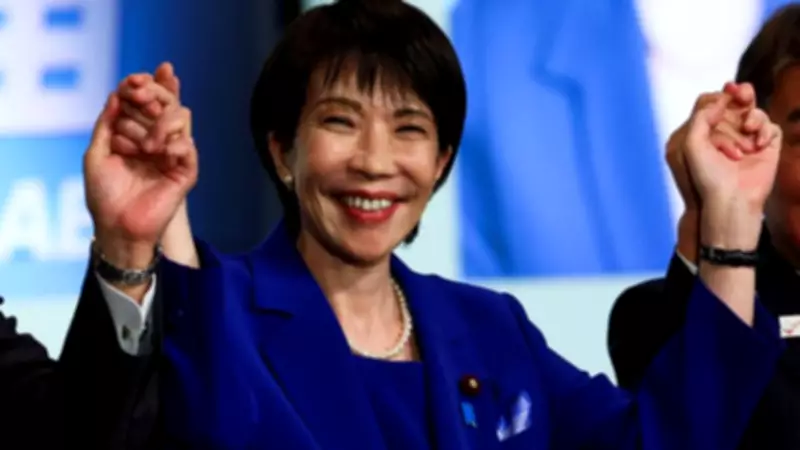
Japan is preparing for a crucial snap election this Sunday, marking the first major electoral challenge for the nation's groundbreaking first female prime minister, Sanae Takaichi. The ultra-conservative leader, who assumed office in October, is seeking to consolidate her political authority through a decisive mandate from voters.
The Rise of 'Sanamania' Among Younger Voters
Prime Minister Takaichi has cultivated remarkable popularity among Japan's youth demographic, with recent polling indicating approximately 90% support from voters under 30 years old. This phenomenon, dubbed "sanamania," has seen the 64-year-old leader develop a substantial social media following that dwarfs her political rivals, boasting 2.6 million followers on platform X compared to opposition leader Yoshihiko Noda's 64,000.
Her personal approval ratings stand at around 60% overall, nearly double that of her Liberal Democratic Party (LDP), according to NHK polling. This disconnect between leader and party popularity reflects Takaichi's distinctive personal brand, which includes her signature pink parliamentary pen, preferred shrimp rice crackers, and a £660 black leather bag that sparked a nine-month waiting list at manufacturer Hamano.

From Political Protege to 'Iron Lady' Aspirant
Sanae Takaichi's political journey represents a significant breakthrough in Japanese politics. A protege of the late prime minister Shinzo Abe, she secured the LDP leadership on her third attempt in October 2024, following predecessor Shigeru Ishiba's resignation after significant electoral losses. Her elevation made history as Japan's first female prime minister, leading a governing coalition with the right-wing Japan Innovation Party.
During her campaign, Takaichi explicitly referenced Margaret Thatcher, Britain's first female prime minister, expressing her ambition to become Japan's own "Iron Lady." Her background includes a mother who served as a police officer and a father employed in the automotive industry, with Takaichi herself having been a drummer in a heavy-metal band and motorbike enthusiast during her student years.
Controversial Policies and International Tensions
Prime Minister Takaichi's political platform combines traditional conservative positions with some modern elements. She advocates for strengthened military capabilities, increased fiscal spending to stimulate growth, nuclear fusion promotion, enhanced cybersecurity measures, and stricter immigration policies. Simultaneously, she maintains support for the imperial family's male-only succession tradition and opposes same-sex marriage legislation.
Her government has recently inflamed diplomatic tensions with China through remarks concerning Taiwan. In November, Takaichi suggested Japan might intervene militarily if China took action against Taiwan, describing such a scenario as "an existential threat." This prompted economic and diplomatic retaliation from Beijing, with even US President Donald Trump reportedly urging caution during a private November phone call.
Strategic Alliances and Electoral Calculations
The prime minister has cultivated international relationships with fellow right-wing leaders, particularly Italy's Giorgia Meloni. Their friendship was highlighted when Takaichi sang happy birthday to Meloni during a Tokyo meeting, presenting gifts and sharing an anime-style selfie that Meloni later posted with the caption: "Two distant nations, but ever closer. Friendship and harmony."
Her decision to call a snap election in January appears strategically timed to capitalise on her peak approval ratings of approximately 70%. Current projections suggest the LDP could secure around 300 seats in the 465-seat lower house, potentially achieving the supermajority required to bypass upper house opposition. This would represent significant improvement from the coalition's current razor-thin majority, which diminished after poor 2024 results and an upper house defeat last July.

Governing Challenges and Economic Concerns
Despite her popularity, Takaichi faces substantial governing challenges. Her cabinet recently approved a record 122.3 trillion yen (£565 billion) budget requiring parliamentary approval before April, designed to combat inflation, support low-income households, and stimulate economic growth. Opposition critics have accused her of delaying budget approval through the snap election timing.
Some analysts question whether youth enthusiasm will translate into actual votes, given historical patterns of lower turnout among younger demographics. Additionally, concerns persist about her promised fiscal policies contributing to the yen's depreciation, with opposition parties criticising her economic approach despite their fragmented political standing.
As Japan approaches this pivotal election, the outcome will determine not only Prime Minister Takaichi's political future but also the direction of one of the world's largest economies. Her unique combination of traditional conservative values and modern personal appeal continues to reshape Japanese political dynamics, creating an unprecedented test for the nation's first female leader.