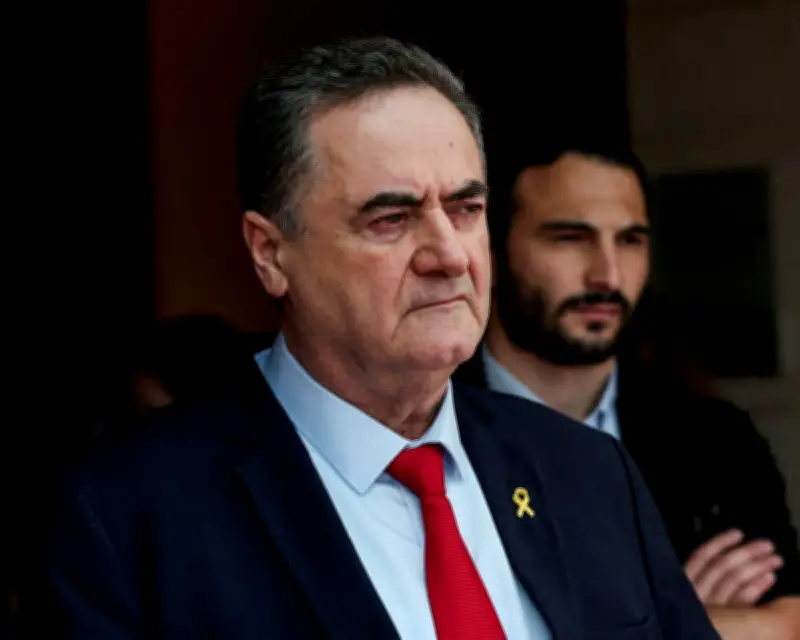
Israel's defence minister, Israel Katz, said on Wednesday that Israeli troops would not withdraw from southern Lebanon, further complicating US-Iran peace talks as the conflict in Lebanon remains a major obstacle to a permanent agreement.
Speaking at a conference in Tel Aviv, Katz stated, 'The IDF is prepared … and we are not retreating. We announced that in any case we are not withdrawing, and as of this moment – and this is a political achievement – there is no American demand for Israel to withdraw from Lebanon.'
US-Iran accord faces first hurdles
The US and Iran signed a memorandum of understanding (MOU) last week, extending a fragile ceasefire and setting the stage for 60 days of talks aimed at a permanent peace. However, the first hiccups emerged after Israel continued its military campaign in southern Lebanon, prompting Iran to threaten the closure of the Strait of Hormuz.
US President Donald Trump on Wednesday put a positive spin on the talks, saying Iran was 'being very nice' and 'agreeing to everything that I want.' But in reality, the US and Iran have significantly different interpretations of the MOU, particularly regarding Lebanon.
Iran links Lebanon ceasefire to broader deal
Iran has insisted that Israel must stop its war in Lebanon and withdraw its troops from the south, where Israel has occupied large areas in what it calls a 'security zone.' Iran's parliamentary speaker, Mohammad Bagher Ghalibaf, said on Wednesday, 'For us, a ceasefire in Lebanon is as important as a ceasefire in Iran and, further, an end to the war in Lebanon is as important as an end to the war in Iran.'
In the latest violence, an Israeli drone targeted a vehicle near the town of Kfar Rumman, killing two people on Wednesday, according to Lebanese state media. Hezbollah accused Israel of another 'violation' of the ceasefire. The Israeli military said it targeted two Hezbollah fighters near Nabatieh and later a vehicle 'carrying suspects,' stating it would continue operating to 'remove immediate threats.'
US-mediated talks between Israel and Lebanon
Israel and the Lebanese government are engaged in US-mediated talks to arrange an Israeli withdrawal from Lebanese territory. Israel seeks a phased approach, handing over territory to the Lebanese army, which is tasked with keeping the area free of Hezbollah fighters. However, these talks do not involve Hezbollah, raising questions about their effectiveness.
Fighting in Lebanon began after Hezbollah launched rockets at Israel on 2 March in retaliation for the killing of Iran's supreme leader, Ayatollah Ali Khamenei, triggering an Israeli invasion. Israeli strikes have killed more than 4,200 people in Lebanon since then, while Hezbollah attacks have killed at least 36 Israeli soldiers in Lebanon and three Israeli civilians.
Trump comments on missile attack and NATO
During remarks in the Oval Office, Trump suggested the US would deny involvement in a Tomahawk missile attack that struck a girls' elementary school on the first day of the war, killing more than 150 people. 'I have to wait for it to be completed,' he said of the investigation. 'I don't know they're ever gonna solve that problem. You could ask Pete. Maybe it wasn't our missile.' The US is the only party to the conflict with Tomahawk missiles.
Trump also indicated he would be willing to share F-35 fighter jet technology with Turkish President Recep Erdoğan as he planned to travel to Turkey for a NATO summit next month. 'I'm going to probably do something that's gonna make him very happy,' Trump said during a meeting with NATO chief Mark Rutte. 'Except for the fact that it was being held in Turkey by President Erdoğan, I don't think I would have gone to it.' He again suggested that the US had been 'let down' by NATO, which he admitted he had not informed of his plans to strike Iran.
Rubio's Gulf tour addresses allies' concerns
US Secretary of State Marco Rubio was on day two of a three-day tour of the Arab Gulf, aimed at allaying concerns that the Iran deal was too conciliatory. He arrived in Abu Dhabi on Tuesday, having lunch with UAE President Sheikh Mohammed bin Zayed Al Nahyan and other officials. Rubio is also slated to visit Kuwait and Bahrain.
Gulf countries, which suffered civilian deaths and economic damages from Iranian strikes during the four-month war, worry that a proposed $300bn fund to Iran and the waiving of sanctions would allow Iran to rebuild its military and pose future threats. Rubio emphasised the US's commitment to the UAE's security and discussed safe transit through the Strait of Hormuz, which was mostly shut by Iran during the war, disrupting shipping and sending energy prices soaring.
Asked about addressing allies' concerns, Rubio told journalists, 'We want to hear from our partners. We want to make sure that their views are taken into account, and we understand their security concerns, their regional economic concerns as well.'
Disagreements over inspections and Strait of Hormuz
Disagreements also emerged over inspections of Iran's nuclear sites. Trump said Iran had agreed to allow inspections 'into infinity,' but Iran's deputy foreign minister, Kazem Gharibabadi, said no meeting had been held with the International Atomic Energy Agency's chief and there were no plans for inspections until a final agreement was signed. Iran also pushes for transit fees for ships through the Strait of Hormuz, though Trump said Iran had told the US there would be no tolls.